
 Search Articles


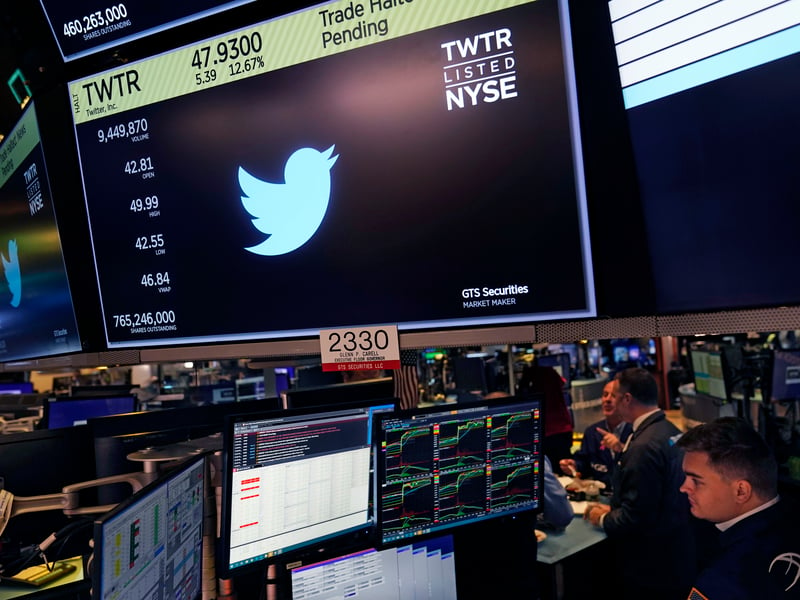
(CN) — A federal judge ruled Monday to advance a class action by Twitter investors against Elon Musk claiming that he manipulated Twitter stock leading up to his $44 billion buyout of the social media platform in April 2022.
Investors, including the lead plaintiffs Steve Garrett, Nancy Price, John Garrett and Brian Belgrave, say in a securities fraud class action from October 2022 that they suffered major losses when Musk deliberately made misleading statements about the presence of spam bot accounts on Twitter to drive down the company’s stock, in hopes of backing out of the acquisition deal or renegotiating more favorably for himself.
The investors claim that Musk attempted to artificially lower Twitter’s stock price after he and Twitter entered into an agreement to acquire the platform, while also failing to disclose when his Twitter stake exceeded 5% or that he had initially been invited to join Twitter’s board.
Twitter ultimately sold the company to Musk for $54.20 per share, only closing after the company sued Musk to force the deal to go through, while he accused the platform of hiding information about fake accounts.
U.S. District Court Judge Charles R. Breyer, in a 39-page ruling on Monday, found a series of statements from Musk in May 2022 following the announcement of his Twitter takeover either false or misleading. The judge said that Musk had waived due diligence in early days of negotiations, making several statements he made calling for evidence of bot information untrue.
“Even if he truly believed that Twitter had the contractual obligation to provide details about the company’s spam and bot data — which he argues he did — it was at least deliberately reckless to not investigate that obligation with the respect to the Merger Agreement before making his statements,” Breyer wrote.
In a May 13, 2022, tweet, Musk said that the deal was on hold, “pending details supporting calculation that spam/fake accounts do indeed represent less than 5% of users.” Twitter stock declined by over 9% on the day of the tweet, as investors say they interpreted the tweet to mean Twitter was hiding information.
Musk followed this up with a May 16 comment at a conference that fake and spam accounts made up at least 20% of Twitter users at the time, and tweeting a poop emoji when then Twitter CEO Parag Agrawal commented that there was no way for external parties to calculate this information. Musk tweeted the next day that the deal would not be moving forward until Agrawal provided evidence of bot numbers under 5%.
“Because Twitter did not have an obligation to provide this data to defendant under the terms of the merger agreement, defendant’s representation that Twitter did have this obligation in order for the deal to close was false,” Breyer wrote in his order.
Breyer also disagreed with Musk’s assertions that the statements made a difference to Twitter’s investors, writing that “a reasonable investor would likely find defendant’s access to and findings about Twitter’s data to be material to their investment decision-making.”
The investors also noted several other statements and tweets by Musk in their complaint which Breyer said that they had not sufficiently showed were misleading, though he granted leave to amend the complaint for those statements.
Since Musk’s acquisition of Twitter — which he has since renamed X, to much derision — he has also faced a series of legal actions, including fraud claims by the Securities and Exchange Commission, wrongful termination suits from fired former employees and for non-payment of Twitter bills.
Representatives for Musk did not respond to a request for comment.
Subscribe to our free newsletters
Our weekly newsletter Closing Arguments offers the latest about ongoing trials, major litigation and rulings in courthouses around the U.S. and the world, while the monthly Under the Lights dishes the legal dirt from Hollywood, sports, Big Tech and the arts.