
 Search Articles


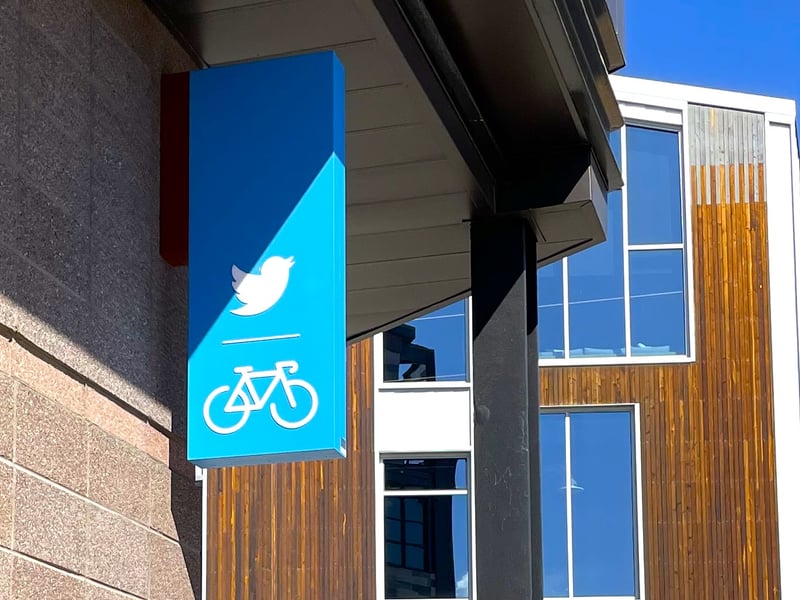
BOULDER, Colo. (CN) — It took $40 million and two years to turn the 64,557 square-foot railyards building in Boulder, Colorado, into Twitter’s new flagship headquarters, complete with a kitchen, showers for bike commuters and a grand staircase down the center to connect all four floors.
“There was no question that buildout was unorthodox,” attorney Jose Ramiez, who represents landlord Lot 2 SBO, said during opening arguments Monday. “One of the biggest issues the building is having now is that they cut a hole in the center of the building, they wanted all the floors connected by a staircase, but they cut through structural elements, so that has to go.”
In 2020, the landlord didn’t mind the eccentric changes because Twitter, now X, had committed to occupy the building for 10 years — with hints it would stay in the Colorado college town nestled in the foothills of the Rocky Mountains even longer.
What happened next is the subject of a five-day bench trial, with landlord Lot 2 SBO arguing it simply evicted the social media company for failing to pay four months’ rent, starting shortly after Elon Musk purchased Twitter in October 2022 and renamed the social media platform X.
The lease promised a monthly base rent of $199,866.88 through April 30, 2032, but the landlord also included a $90-per-square-foot tenant improvement allowance to induce the company to sign on while the building was under construction. According to X, the money could be used to cover moving expenses, architectural design, project management, relocation consultants and other soft costs.
In June 2023, X countersued, claiming the landlord knew the tech company intended to apply the improvement allowance to the rent.
On behalf of the landlord, Ramirez said the tenant improvement allowance at issue could only be applied to future rent, with permission from the building owner.
“Lot 2’s expectations were that in order for the TIA to be released, Twitter had to live up to it’s end of the bargain and pay it’s rent,” said Ramirez, who practices with Holland and Hart in Denver.
Today the building stands largely empty. Ramirez said the landlord has struggled to find another “unicorn” tenant who wanted the full building as is, and smaller renters have been wary of taking one that needs so much construction.
On behalf of X, attorney Jonathan Hawk countered that the landlord illegally evicted the company from the space after reading unrelated news reports of the company falling behind on rent at other locations.
Furthermore, Hawk said his client wasn’t served at its San Francisco headquarters, and only learned of Lot 2’s concerns after the landlord received a default judgment against the renter in court.
“Twitter only learned about this case when Twitter found an eviction notice on its office in Boulder,” Hawk said. “It was evicted from the office space it built out and earned $5.7 million in tenant improvements credits on.”
Hawk, who practices with the Los Angeles firm McDermott Will, argued the building improvements were necessary since Twitter had been given an empty shell.
At the start of the trial, 20th Judicial District Judge Nancy Salomone denied a motion for expanded media access due to the parties’ concerns about the abundance of confidential information being discussed on the witness stand.
“This is an open and public courtroom, and the media will report what the media will report,” added Salomone, an appointee of Democratic Governor John Hickenlooper.
According to the Colorado Secretary of State’s Office, Lot 2 SBO is owned by the Centennial-based legal services company CT Corporation. Because Lot 2 SBO has no employees of its own, commercial real estate manager The John Buck Company oversaw the buildout.
The trial is scheduled to run through Friday.
 Follow @bright_lamp
Subscribe to our free newsletters
Our weekly newsletter Closing Arguments offers the latest about ongoing trials, major litigation and rulings in courthouses around the U.S. and the world, while the monthly Under the Lights dishes the legal dirt from Hollywood, sports, Big Tech and the arts.