
 Search Articles


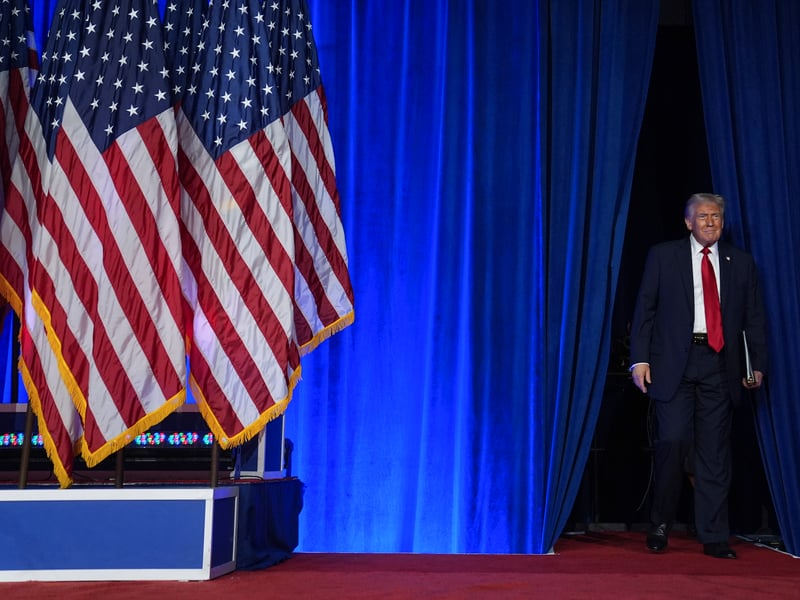
WASHINGTON (CN) — Following his 2020 electoral defeat and the Capitol riot on Jan. 6, 2021, Donald Trump’s political career appeared to be at an end, with Republicans in Congress and his own cabinet denouncing his destruction of the then-unbroken tradition of the peaceful transfer of power.
Four years later, Trump has completed the most stunning political comeback in American history, returning to the White House with a decisive victory over Vice President Kamala Harris, grabbing the popular vote and control of the Senate.
“America has given us an unprecedented and powerful mandate,” Trump said in an early Wednesday morning victory speech, with only Fox News calling the race at the time. “This is a movement like nobody’s ever seen before and, frankly, this was the greatest political movement of all time.”
Throughout his campaign, Trump has vowed to take revenge on his perceived political enemies for slights incurred over the last four years, and the likely first victims will be his federal criminal cases and special counsel Jack Smith.
Last August, Smith charged now President-elect Trump with attempting to overturn the 2020 election via a campaign of false election fraud claims and dubious schemes like creating a false slate of electors and the “Green Bay Sweep” to hand Trump the presidency on Jan. 6.
With his return to power, Trump will be able to outright end the case, as well as an ongoing appeal of Trump-appointee U.S. District Judge Aileen Cannon’s dismissal in his classified documents case. The question is how exactly he will do so.
According to federal regulations, the U.S. attorney general can fire the special counsel for “good cause, such as misconduct, dereliction of duty, incapacity, conflict of interest, or violations of DOJ policies.” While the president does not have direct authority to terminate the special counsel, Trump could order the regulations to be repealed and do it himself.
Otherwise, a more compliant attorney general can do it for him; Trump could instruct them to drop the charges against him in Washington and step back from defending Smith’s pending appeal in the classified documents case at the 11th Circuit Court of Appeals, thus allowing Cannon’s dismissal to stand.
Frontrunners for the job under Trump include Jeff Clark, who was behind Trump’s 2020 pressure campaign on Justice Department officials to prevent the transfer of power; Utah Senator Mike Lee, whom Trump in 2018 pegged as a potential Supreme Court justice; and John Ratcliffe, a former director of national intelligence.
The chances of a trial happening in Washington before last night’s election were slim from the outset, but dropped to zero when the case was paused while Trump argued for presidential immunity at the Supreme Court. Smith, however, has indicated that he would litigate the case to its full extent before Inauguration Day on Jan. 20, 2025.
Smith and Trump have been engaged in a back-and-forth in recent months over interpreting the Supreme Court’s decision to grant sweeping immunity for presidents as it applies to the Washington case, but with yesterday’s result, Trump’s scheduled Nov. 21 filings will reveal little new information.
Nonetheless, legal experts said any further developments in the case would be “pointless” and unlikely to stick around over the next four years.
Louis Seidman is the Carmack Waterhouse professor of constitutional law at the Georgetown Law Center. In an interview with Courthouse News, he said radical changes can be expected if Trump follows through on his campaign promises and rhetoric.
“We have somebody who’s been elected who, if he’s taken at his word, is going to fundamentally transform the nature of American government,” Seidman said. “We don’t know the extent to which he’ll be able to pull this off, but there is a very serious risk that he will, and if he does, we will not be living in the same country anymore.”
Seidman caveated that warning: Trump’s pre-election rhetoric could be just hyperbole, or he could face the same issues as his first stint in office and struggle to implement his more extreme policies.
Beyond the implications of Trump’s presidency for his own criminal charges, Siedman added that Trump could also use his regained power to tamp down potential protests and invoke the Insurrection Act — as his supporters urged him to do during Jan. 6 — to use the military as a domestic police force.
 Follow @Ryan_Knappy
Subscribe to our free newsletters
Our weekly newsletter Closing Arguments offers the latest about ongoing trials, major litigation and rulings in courthouses around the U.S. and the world, while the monthly Under the Lights dishes the legal dirt from Hollywood, sports, Big Tech and the arts.