
 Search Articles


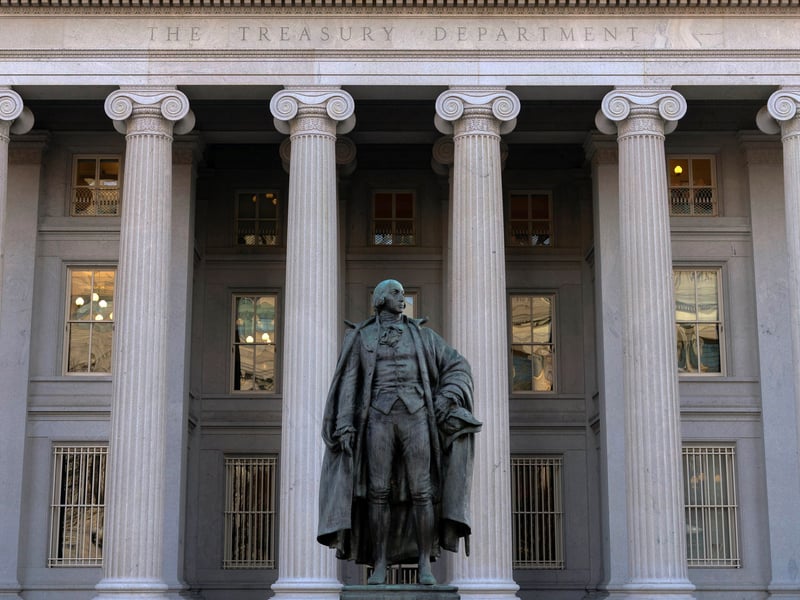
(CN) — President Donald Trump wants the U.S. to create a “sovereign wealth fund” — a kind of enormous national piggy bank to be invested for future needs, much like a 401(k) plan. But while the idea has potential benefits, it raises a lot of difficult questions, including where the money will come from, who will oversee it, how it will be invested, how to avoid conflicts of interest and what it will ultimately be used for.
Trump signed an executive order on Feb. 3 requiring the Treasury and Commerce departments to submit a plan for a fund within 90 days, with the goal of starting it within a year. Last week, Treasury Secretary Scott Bessent appointed JR Gibbens, a private equity executive, to head up the effort.
Sovereign wealth funds aren’t new. More than 90 such funds around the world manage over $8 trillion in assets, according to the International Forum of Sovereign Wealth Funds, and many U.S. states have one, with the largest in Alaska and Texas.
But the vast majority of funds were created due to a sudden financial windfall from natural resources. The largest — Norway’s, worth $1.8 trillion — began after oil deposits were discovered in the North Sea. Other enormous funds operate in petroleum-rich Saudi Arabia, Kuwait and the United Arab Emirates.
By contrast, the U.S. has no financial windfall and is more than $36 trillion in debt, so it’s far from clear where the money would come from.
Trump suggested in a speech to the New York Economic Club in September that “tariffs and other intelligent things" could provide funding.
But tariffs are a “non-starter” because they’re not a consistent mechanism, said Patrick Schena, who teaches international business at Tufts University and has written numerous articles on sovereign wealth funds.
“The idea has been thrown around, but I don’t see a coherent tariff strategy” by the Trump administration, he said. “They’ve been wielded as a way to encourage policy actions by others, and when there’s been movement, they’ve been rolled back.”
At the executive order signing ceremony, Bessent said: “We are going to monetize the asset side of the U.S. balance sheet for the American people. We are going to put the assets to work.”
Those assets include national parks and other public lands. Interior Secretary Doug Burgum stated in his confirmation hearing that U.S. public lands could be worth as much as $200 trillion.
It’s not clear how that value could be extracted short of selling the land, which would likely be politically unpopular. Leasing for oil, gas, timber, mining and grazing brought in $16.45 billion last year, much of which is distributed to states and Native American tribes.
The government could offer bonds backed by the land, but they would be competing with other Treasury offerings and the glut of supply could increase the interest rates the country has to pay.
The tens of billions of dollars in savings Elon Musk’s Department of Government Efficiency has claimed are another potential source of funds. However, Trump would face numerous hurdles trying to divert money into a rainy-day fund that Congress has allocated for different purposes.
Another controversial idea is to tap into the Federal Reserve’s balance sheet, which currently stands at about $6 trillion and is used to manage monetary policy. This is “one of the more viable options,” said Salar Ghahramani, a Penn State business professor who has written widely on sovereign wealth funds — although “the marriage of fiscal and monetary policy could have all kinds of repercussions, and it’s not clear how Wall Street would react. Trump watches the markets and doesn’t want a panic.”
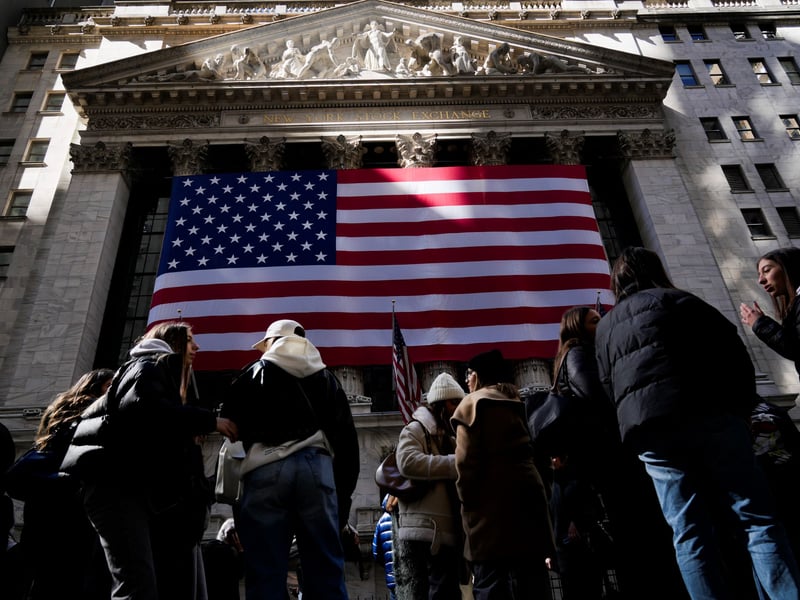
Trump recently suggested that the U.S. could take a substantial share in TikTok and that asset could go into a sovereign wealth fund. But the idea raises another issue: How could the U.S. government credibly regulate a social media company — or, for that matter, any company — when it’s also a major shareholder?
Other countries live with this sort of conflict of interest. One of China’s sovereign wealth funds is the largest investor in the Chinese stock market, noted Winston Ma, executive director of the Global Public Investment Funds Forum at New York University. And the Singapore sovereign wealth fund is the majority shareholder in Singapore Airlines.
But those countries have a different regulatory culture. In the U.S., there’s legitimate fear of a “potential for graft and undue influence,” said Ghahramani.
If the fund managers are appointed directly by Congress or the president, then political considerations would almost certainly play into how the money is managed and which companies or sectors receive investments: Defense? Green energy? AI? Bitcoin?
But if management is farmed out instead to investment banks, hedge funds or private equity groups, there could be a loss of transparency and accountability.
Another question is how active the management should be. The Norway fund, for instance, uses its stockholdings to cast votes for directors and raise matters before boards, which could create additional conflict-of-interest issues.
Some funds avoid the conflict problem by prohibiting funds from investing in their own country’s businesses, noted Robert Howse, who teaches international law at New York University. But with the U.S. accounting for about 60% of the world’s equity markets, avoiding domestic companies could prove very limiting.
Corruption is also a possibility; both Libya and Malaysia have had major embezzlement scandals involving their sovereign wealth funds.
To avoid such problems, a number of countries subscribe to the Santiago Principles, a set of good-governance guidelines created by the International Monetary Fund in 2008. But the guidelines have no legal force, and some nations have recently departed from them on the grounds that they’re outdated, according to Ghahramani.
It’s “unlikely” that Trump would be willing to submit to the Santiago rules, he said. In general, “this administration has been very clear about taking a step back from international agreements.”
But a more fundamental question is, what would be the purpose of the fund? What is it intended to do?
Some countries invest their funds to make as much money as possible to shore up public pension systems and develop major infrastructure projects. These could be “among the better uses as far as the U.S. is concerned,” said Ghahramani, especially if it means protecting Social Security and Medicare.
California has a public pension fund, CalPERS, that is similar to a sovereign wealth fund, noted Howse. It manages about $500 billion in assets.
On the other hand, if that’s the goal, it’s not clear that investing through a wealth fund is better than simply paying down the national debt. The U.S. might in theory get a rate of return higher than the Treasury’s borrowing costs, but the overall benefit after expenses would be unlikely to amount to much, Schena believes.
Howse, however, thinks the idea is worth exploring because the U.S. has low borrowing costs compared to the rest of the world. “The U.S. dollar is unique,” he said. “No other country could be reasonably confident that its cost of borrowing would allow for success.”
One danger is that if a huge amount of money is suddenly invested in U.S. markets, Schena said it could create “massive operational problems” and distort asset values. “You don’t want to crowd out other investors. It has to be nondisruptive,” he added.
If the money isn’t set aside for Social Security and Medicare, it could function as an all-purpose rainy-day fund. During the pandemic, Mexico, Colombia and Peru emptied their entire sovereign wealth funds to get through tough times.
Some countries are less concerned about absolute return and instead focus their investments abroad to project “soft power” in other parts of the world. For instance, a Chinese sovereign wealth fund contributes to the international “Belt and Road Initiative” designed to expand Chinese influence in global trade.
Saudi Arabia’s wealth fund has spent $13.5 billion on international sports — including $2 billion on LIV Golf in the U.S. — in an apparent attempt to improve the country’s public relations. The fund has also invested $500 million in Disney, the parent company of ABC News, plus another $500 million in Facebook.
Quite a few foreign countries’ wealth funds employ lobbyists in the U.S., according to Ghahramani.
If the U.S. wanted to follow this path, it could transfer money from USAID to the U.S. International Development Finance Corp., an existing agency that partners with private entities to underwrite projects in the developing world, and use it like a sovereign wealth fund. This Trump administration is apparently already discussing this idea.
Trump’s nominee to head the agency — Ben Black, a son of billionaire investor Leon Black — co-wrote an essay in January suggesting such a policy and specifically proposing investments in Greenland.
“Greenland needs infrastructure and investment to build ports and mines,” he wrote. “Backed by DFC financing, American mining, shipping, and resource-dependent businesses could step in, bringing capital and expertise.”
Howse believes that a similar idea was behind Trump’s proposal to partner with Ukraine to develop rare-earth minerals. He cautions, though, that requiring foreign entities to use American contractors — known as “tied aid” — sounds good but could limit the success of the projects because other suppliers might be more effective.
Schena has another suggestion — the fund could be used to promote strategic research that could eventually create profitable products of high value to the country but that requires the kind of patient investing that markets often can’t sustain.
“We could create 15-to-20-year technology investments that address longer-term U.S. competitive challenges” such as artificial intelligence, health care, overcoming mineral constraints and climate mitigation, he said.
“What we need is deep strategic thinking and foresight,” Schena added. “However, there’s no evidence yet that that is the case.”
Subscribe to our free newsletters
Our weekly newsletter Closing Arguments offers the latest about ongoing trials, major litigation and rulings in courthouses around the U.S. and the world, while the monthly Under the Lights dishes the legal dirt from Hollywood, sports, Big Tech and the arts.