
 Search Articles


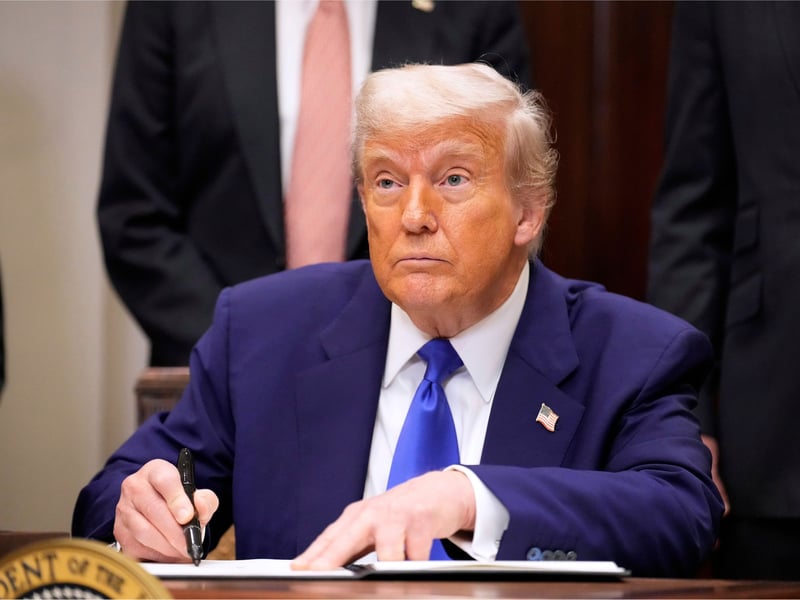
MANHATTAN (CN) — President Donald Trump is dragging his feet to get deposed in his case against his niece Mary Trump, she claims in a new court filing.
Both parties are “at an impasse” with respect to the president’s deposition, they said in a joint Thursday letter to New York Supreme Court Justice Robert Reed. The case’s discovery period is set to expire on Oct. 10. Despite that, Mary Trump claims she has been unable to get her uncle scheduled for his mandatory deposition to progress the case.
“While President Trump is obligated to sit for a deposition, as the court has already recognized, defendant has been unable to secure President Trump’s agreement — despite at least five requests in the past 10 weeks — to appear for a deposition on any specific date or dates before the close of discovery,” she says in the letter.
Donald Trump brought the $100 million suit against his now 60-year-old niece in 2021. He claims that she conspired with a trio of New York Times reporters in an “insidious plot” to obtain and publicize his tax records for a Pulitzer Prize-winning 2018 probe into his finances.
He initially sued the three Times journalists — Susanne Craig, David Barstow and Russell Buettner — alongside Mary Trump. But those claims were dismissed in 2023, and he was ordered to pay nearly $400,000 in legal fees to the New York Times. His case against Mary Trump, whom he accuses of violating a decades-old family estate agreement, still stands.
It is standard for plaintiffs to be deposed in any civil action. The president contends that he’s willing and able to do so, but that counsel needs to be willing to work around his “unique and pressing obligations” that come with his gig in the White House.
“President Trump has not refused to appear for a deposition, and counsel is working to identify mutually agreeable dates with President Trump,” he argues in the letter.
New York City criminal defense attorney Ron Kuby told Courthouse News on Friday that disputes over deposition schedules are rather common, albeit less so on the side of the plaintiff. Still, as the president, Donald Trump “has better excuses than most people” to raise issues, Kuby said.
Kuby added that, even as the plaintiff, stalling the four-year-old case could still be beneficial to Donald Trump.
“He doesn’t file these lawsuits to win them,” Kuby said. “He files them, both as an individual and now as the head of the Justice Department, to wear down the opposition through attrition.”
It’s a tall task; Mary Trump is being represented by a multinational $3 billion law firm in Gibson Dunn.
The parties are due to meet next week to discuss the discovery process. In addition to Donald Trump’s deposition schedule, counsel is expected to discuss potential third-party deponents.
Donald Trump also indicated in the Thursday letter that he intends to depose his nephew Fred Trump III — who, like his sister Mary Trump, is a fervent critic of the president.
He also floated depositions into literary agent Jay Mandel and Simon & Schuster Vice President Eamon Dolan, both of whom worked with Mary Trump on “Too Much and Never Enough: How My Family Created the World’s Most Dangerous Man,” her 2020 book about the Trump family.
The four-year-old case is moving forward despite efforts from Mary Trump to put it on ice. Last month, she asked the court to stay the case until the end of Donald Trump’s presidential term, citing an “unmistakable imbalance of power” that exists between her and her commander-in-chief uncle.
Reed rejected her move, though he did acknowledge that Donald Trump might have to “make a choice” if the lawsuit starts interfering with his presidential duties. He also said that Mary Trump is free to push for the case’s dismissal if Donald Trump fails to comply with discovery, such as sitting for a deposition.
Donald Trump claims that Mary Trump “smuggled” his tax records out of her attorney’s office after gaining access to them in a 2001 agreement over the estate of Donald Trump’s father, Fred Trump.
That agreement contained a confidentiality clause, Donald Trump claims, which prohibits family members from divulging its details. He does not dispute that Mary Trump had the right to have access to the records, only that she breached the agreement by sharing them with the Times.
The newspaper’s Pulitzer-winning piece held a light to Donald Trump’s longstanding claims of being a self-made billionaire by disclosing how he dodged taxes and received hundreds of millions of dollars from his father throughout his lifetime.
At the time, the Times attributed the tax records to a confidential source, but Mary Trump later identified herself as that source in her 2020 tell-all, which Donald Trump also sued her over in a bid to keep the book unpublished.
He lost that effort, and the book was released in July of that year.
 Follow @Uebey
 Follow @uebey.bsky.social
Subscribe to our free newsletters
Our weekly newsletter Closing Arguments offers the latest about ongoing trials, major litigation and rulings in courthouses around the U.S. and the world, while the monthly Under the Lights dishes the legal dirt from Hollywood, sports, Big Tech and the arts.