
 Search Articles


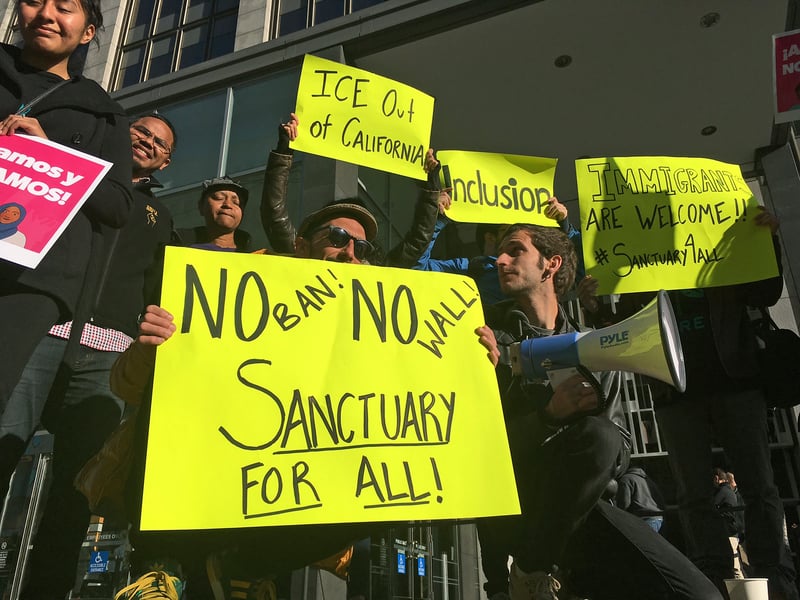
SAN FRANCISCO (CN) — The Trump administration pushed a Ninth Circuit panel on Friday to lift a lower court pause on two executive orders that freeze federal funding to sanctuary cities, arguing any cuts should be challenged in court on a case-by-case basis.
A three-judge panel heard arguments for and against blocking two orders signed shortly after President Donald Trump took office in January. They direct every federal agency to ensure that “federal payments” to localities do not, by design or effect, “abet so-called ‘sanctuary’ policies that seek to shield illegal aliens from deportation.”
The plaintiffs in the original lawsuit — San Francisco, Santa Clara County and 14 other cities and counties around the nation — sued the administration earlier this year, claiming that Trump was attempting to commandeer local law enforcement to help round up immigrants. Signed in 1989, San Francisco’s sanctuary law largely prohibits police from using any city funds or resources to assist immigration agents unless it’s required by federal or state law.
During oral arguments, U.S. Circuit Judge Ryan Nelson didn’t find the two parties were in dispute about if the executive orders could stop funds in some instances. The Trump appointee hinted the likely outcome would be narrowing the injunction to allow the administration to make cuts on a case-by-case basis and include the right to challenge a specific agency’s actions to stop funds.
“You both seem to have the exact same position,” Nelson said. “We just need to clarify the order.”
Nelson also gave the example of the current litigation between several counties and cities against the U.S. Department of Housing and Urban Development as a way to challenge the executive order, once the funds have stopped.
In April, U.S. District Judge William Orrick, a Barack Obama appointee, ordered an injunction halting what the plaintiffs considered to be a possible blanket freeze of federal funds based on sanctuary city status.
“The authority to do this is relatively narrow,” U.S. Circuit Judge Marsha Berzon said.
But while Berzon agreed with the president that the idea of challenging each case in court is plausible, the Bill Clinton appointee also noted it could tie up cities and agencies in litigation for a long time. “Meanwhile, how do they run their city?” she asked.
The Trump administration argued the counties and cities that filed suit and sought the injunction did so before any funds were halted, and the executive orders to freeze funds were “consistent with applicable law.”
However, the language of the executive orders allows for broad interpretation and the defunding process remains disputed, said San Francisco Deputy City Attorney Karun Tilak, representing the plaintiffs.
Tilak said the executive orders amount to a “categorical directive” from the administration to the cabinet and federal agencies demanding a stoppage of funds.
“The clear and specific directive to ensure that sanctuary jurisdictions do not receive federal funds is unconstitutional,” Tilak said in an argument for the injunction.
U.S. Circuit Judge Daniel Collins, another Trump appointee, wasn’t convinced the executive order should be — or currently is — interpreted by the administration and its agencies in the way Tilak illustrated.
“If you arrived as a new administration, and wanted to attach immigration restrictions to as many programs as you can, and you wanted to give that directive, wouldn’t it look like this?” Collins asked.
Subscribe to our free newsletters
Our weekly newsletter Closing Arguments offers the latest about ongoing trials, major litigation and rulings in courthouses around the U.S. and the world, while the monthly Under the Lights dishes the legal dirt from Hollywood, sports, Big Tech and the arts.