
 Search Articles


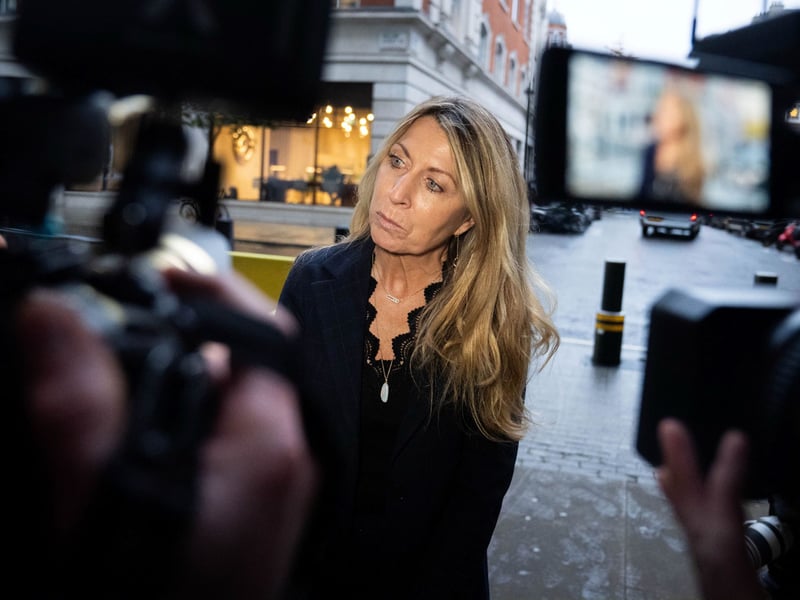
MANCHESTER, England (CN) — President Donald Trump threatened legal action against the BBC Monday after its director general and head of news resigned amid claims of bias in the British broadcaster’s coverage of his speech on Jan. 6, 2021.
The president sent a letter to the BBC threatening a $1 billion legal action if there isn’t a retraction of the documentary in question, while White House Press Secretary Karoline Leavitt described the broadcaster as “100% fake news” and a “propaganda machine.”
Tim Davie, the BBC’s director general, and Deborah Turness, chief executive of BBC News, stepped down on Sunday night after the leak of an internal memo that sharply criticized the broadcaster’s editorial standards.
The 19-page memo, written by former BBC independent adviser Michael Prescott, accused the broadcaster of what he called “troubling matters” that included “anti-Trump” bias and “systemic problems within BBC Arabic” that he said reflected anti-Israel bias.
The dossier also accused the broadcaster of publishing “one-sided” coverage of transgender issues. Prescott wrote that the BBC had often run stories “celebrating the trans experience without adequate balance or objectivity” and had ignored certain voices.
Jan. 6 speech
Prescott’s main charge focused on a 2024 documentary that edited together sections of a speech Trump gave on Jan. 6, 2021, making it appear he had urged supporters to “walk down to the Capitol and I’ll be there with you and we fight. We fight like hell.”
In fact, the broadcast combined phrases from parts of the speech delivered nearly an hour apart and omitted Trump’s call for protesters “to peacefully and patriotically make your voices heard.”
Trump was impeached by the U.S. House of Representatives for “incitement of insurrection” over the Capitol riot and later acquitted by the Senate.
Trump has sued several U.S. news organizations during his second term. Notably, Paramount Global, parent company of CBS News, agreed in a July 2025 settlement to pay $16 million to end a lawsuit filed by Trump over the editing of a “60 Minutes” interview with then-Vice President Kamala Harris.
A catalog of errors
Speaking on Monday, Turness said she resigned because “the buck stops with me,” but defended her newsroom. “BBC News is not institutionally biased,” she said. “Of course our journalists aren’t corrupt. Our journalists are hardworking people who strive for impartiality and I will stand by their journalism.”
The BBC has faced months of criticism over its editorial judgment, from its coverage of Gaza to its handling of Glastonbury Festival broadcasts — where it aired footage of rapper Bob Vylan performing to chants of “Death to the IDF,” referring to the Israeli military, prompting complaints.
Turness said the broadcaster had “badly” responded to crises throughout the summer, including that incident.
BBC Chair Samir Shah has apologized for an “error of judgement” in how the broadcaster edited Trump’s speech.
In an interview on the BBC, Shah said: “We have taken action, it ranges from all sorts of things, from overseeing corrections where we have got it wrong to … more extreme cases,” such as changes in leadership.
The important thing, Shah added, “is to start putting in place the new leadership as soon as is proper, and do it properly in order to do it smoothly and make sure that we address the challenges facing us.”
Downing Street backed the broadcaster on Monday. A spokesperson for Prime Minister Keir Starmer said: “The BBC has a vital role in an age of disinformation … where there’s a clear argument for a robust, impartial British news service.”
It added: “It’s important that the BBC acts swiftly to maintain trust and correct mistakes quickly when they occur.”
Ed Davy, leader of the Liberal Democrats, Parliament’s third largest party, wrote to the prime minister in a public statement describing Trump’s “assault on the BBC.”
“President Trump’s assault on the BBC is a serious threat to our national interest, and I urge you to join me in standing up against it,” he said.
Struggle over future funding
BBC News is commonly cited as the most trustworthy source of news not only in the U.K. but around the world.
This series of controversies come at a sensitive time for the broadcaster, which is publicly funded and faces greater scrutiny than its commercial rivals.
Its Royal Charter, which governs its operations and how it’s funded, expires in December 2027. Culture Secretary Lisa Nandy has said alternatives to the license fee in which TV owners pay about $230 annually, are under discussion, while right-wing groups call for its privatization.
Half a million people cancelled their licence last year, as younger audiences turned to streaming and social media for news.
Courthouse News reporter James Francis Whitehead is based in England.
 Follow @jayfranklinlive
Subscribe to our free newsletters
Our weekly newsletter Closing Arguments offers the latest about ongoing trials, major litigation and rulings in courthouses around the U.S. and the world, while the monthly Under the Lights dishes the legal dirt from Hollywood, sports, Big Tech and the arts.