
 Search Articles


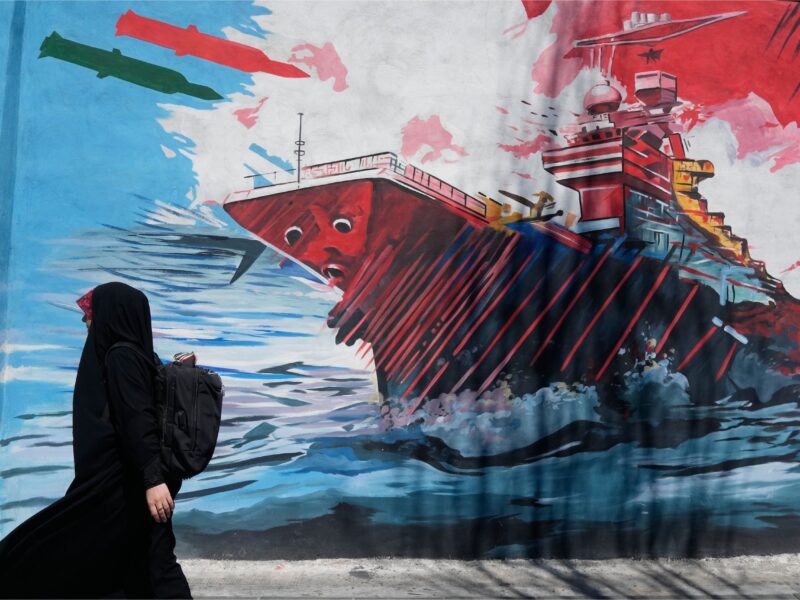
DUBAI, United Arab Emirates (AP) — The United States launched airstrikes Wednesday against Iran, and President Donald Trump said more were coming, as Tehran fired back at countries in the region. The escalating attacks threatened to derail efforts to end the war, with Trump warning that Tehran would “pay the price” for stalled negotiations.
Trump’s warnings at the White House and on social media came hours after Bahrain, Kuwait and Jordan — all of which host U.S. troops — came under Iranian fire. It was the second time this week that back-and-forth strikes have tested a two-month ceasefire. On Monday, Iran and Israel targeted each other.
“We’re going to hit them again hard today,” Trump told reporters at the White House hours after the U.S. said it struck Iranian military sites.
Shortly after Trump spoke, the U.S. military said it had fired on an oil tanker attempting to transport oil from Iran in violation of its blockade on Iranian ports.
Trump wouldn’t say whether he planned to follow through on threats he made earlier in the war to attack bridges and utility plants in Iran. He urged Iran to sign a deal to end the war.
“We were really close to a deal but they keep tapping us along,” Trump said.
Trump’s comments underlined the American leader’s whipsaw approach to the war. He suggested on Monday that a deal to end the conflict could be reached in a matter of days.
Iran, meanwhile, has proved resilient despite having faced weeks of heavy bombing. It is betting that its ability to effectively close the Strait of Hormuz — a crucial passageway for the world’s oil and natural gas — gives it a strong bargaining chip.
Still, both countries seem to be looking for a way to end the conflict — if they can manage to sell it as a win at home. But Israeli Prime Minister Benjamin Netanyahu appears intent on pursuing much more difficult goals: the collapse of Iran’s theocratic government, the elimination of its nuclear program, and the destruction of the Iranian-allied Hezbollah militant group in Lebanon. That will make compromise much harder.
Strikes by the US and Iran shake the Mideast
Since the U.S. and Israel started the war with attacks on Iran on Feb. 28, the conflict has shaken the global economy, driven up energy prices around the world, and made food and other basics more expensive. The international benchmark for crude oil traded above $92 a barrel on Wednesday, up more than 25% since the start of the war.
The U.S. military said Wednesday an American aircraft fired “precision munitions” into the engine room of the Palau-flagged vessel M/T Settebello as it attempted to breach the naval blockade with a shipment of Iranian oil. It was the eighth merchant vessel disabled by U.S. forces in waters off Iran.
India’s foreign ministry said that three Indian crew members aboard the Settebello were missing after the ship was struck, while 21 other Indian sailors were rescued. Its statement did not mention the U.S. military or the blockade.
In strikes earlier Wednesday, the U.S. military said its fighter jets targeted “air defense, ground control stations, and surveillance radar sites.
Iran said U.S. strikes hit two water reservoirs in its southern city of Sirik, temporarily cutting off water to thousands of people. Iran’s state media published video of what it said was a damaged reservoir, though The Associated Press could not immediately verify the footage.
U.S. Central Command did not immediately respond to a request for comment.
Tehran later claimed attacks in Kuwait, Bahrain and Jordan.
Jordan said it shot down five incoming missiles, which Iran said targeted an air base hosting American military aircraft. Jordan’s state-run Petra news agency reported there were no injuries.
Bahrain and Kuwait said they intercepted incoming fire, without elaborating.
Iranian Foreign Minister Abbas Araghchi condemned the American attacks as a violation of Iranian sovereignty. Foreign Ministry spokesperson Esmail Baghaei said in televised comments that, following the new attacks, Iran would review its stance on negotiations to end the war.
Efforts to mediate a deal continued. Following consultations with the U.S., a delegation from Qatar arrived in Tehran for talks on Wednesday, according to an official with knowledge of the visit who requested anonymity due to the sensitivity of the talks.
The exchanges of fire came a day after a U.S. Army attack helicopter crashed near the Strait of Hormuz. The helicopter collided with an Iranian drone, according to a U.S. official, who spoke on condition of anonymity to discuss an ongoing investigation. It wasn’t clear whether the collision was intentional.
A drone boat rescued both of the helicopter’s crew, and Trump said they were uninjured.
Big disagreements stand in the way of a quick peace deal
Wary of high gas prices in the run-up to congressional elections in November, Trump seems to be looking for a quick win. But he is also making demands that will be tough for Iran to swallow.
The U.S. wants to see Iran give up its stockpile of highly enriched uranium. While Iran insists its nuclear program is peaceful, that uranium is a short, technical step from weapons-grade levels.
Iran is refusing to give up the uranium and demanding relief from sanctions. It also wants the release of frozen assets even before a final agreement is in place, something Trump rejected.
It’s not clear how those differences can be bridged — and Trump has repeatedly threatened to walk away from the talks. His Truth Social post Wednesday accused Iran of taking “too long to negotiate a deal that would have been great for them, now they will have to pay the price!!!”
Meanwhile, Iran has continued to insist that any deal to end the war must also end fighting between its ally Hezbollah and Israel. Instead, Israel has intensified its military campaign against the Lebanon-based militant group.
An airstrike on a village east of Tyre killed at least six people, Lebanon’s state-run National News Agency reported. It said two others were killed by an Israeli drone strike on a car in the southern city of Sidon.
By JON GAMBRELL and MICHELLE L. PRICE Associated Press
Price reported from Washington. Associated Press writers Konstantin Toropin and Will Weissert in Washington; Natalie Melzer in Nahariya, Israel; David Rising in Bangkok; Bassem Mroue in Beirut; Michelle L. Price in New York and Russ Bynum in Savannah, Georgia, contributed to this report.
Subscribe to our free newsletters
Our weekly newsletter Closing Arguments offers the latest about ongoing trials, major litigation and rulings in courthouses around the U.S. and the world, while the monthly Under the Lights dishes the legal dirt from Hollywood, sports, Big Tech and the arts.
Additional Reads


 Pakistan launches deadly strikes on Afghanistan June 10, 2026