
 Search Articles


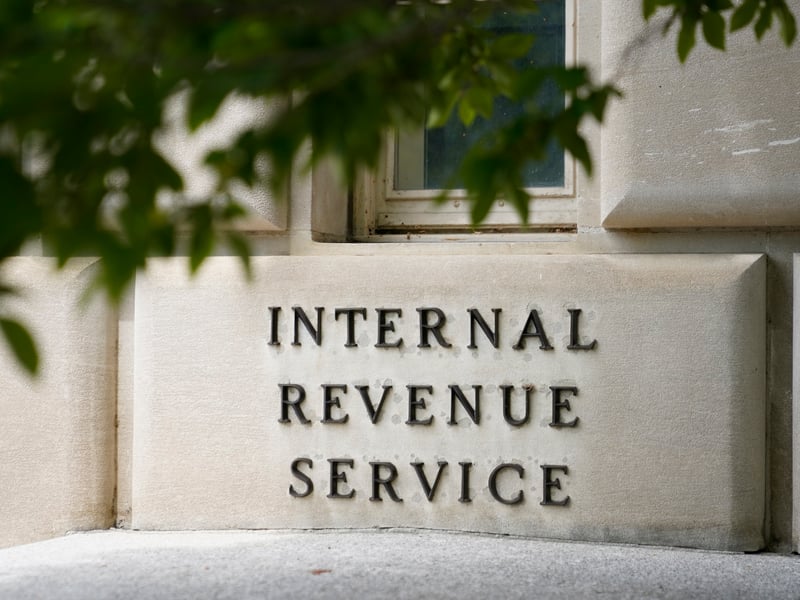
WASHINGTON (CN) — An ex-Internal Revenue Service contractor sentenced to five years in prison for leaking President Donald Trump’s tax records to the press argued before a D.C. Circuit panel Tuesday that he should be resentenced because a federal judge had “predetermined” his punishment.
U.S. District Judge Ana Reyes sentenced Charles Littlejohn to five years behind bars in January 2024 after he pleaded guilty to a single felony count for the unauthorized disclosure of tax return information, which also included the returns of Elon Musk, Florida Republican Senator Rick Scott and 7,600 others.
At his sentencing, the Joe Biden appointee slammed Littlejohn’s targeting of Trump during his first term in office as “an attack on democracy,” and compared him to Jan. 6 defendants, saying both represent an apparent trend in society where people feel the need to break the law to “further their political goals.”
Celia Goetzl, a federal public defender and representing Littlejohn, argued before a three-judge panel that Reyes “determined Littlejohn’s sentence should be the statutory maximum before he ever appeared in court,” pointing to a series of off-the-record meetings without Littlejohn or even a court reporter present.
According to Goetzl’s brief, Reyes emailed the parties in the days leading up to sentencing, indicating she planned to vary upward from Littlejohn’s sentencing guidelines range due to the number of returns involved and asking whether it would be unreasonable to impose a sentence outside the guidelines since Littlejohn pleaded guilty.
Reyes also received a letter from 25 members of the House’s chief tax-writing committee urging her to sentence Littlejohn to the five-year maximum, which was also off-the-record and not docketed.
U.S. Circuit Judge Justin Walker, a Trump appointee, seemed skeptical that the court could vacate Reyes’ sentence just based on the fact she held off-the-record meetings, noting that the meetings seemed to be a chance for Reyes to probe the government’s conduct and assess Littlejohn’s cooperation in regard to his plea deal.
To him, Walker said, that was similar to when he and his colleagues provide a general sense of the questions attorneys can expect at oral arguments, and not the plain error necessary to vacate and remand.
“We didn’t make the argument that her holding off-the-record proceedings were in and of themselves error requiring reversal, but we do think that they are, because they just demonstrate that she approached sentencing backwards and that the proceedings were fundamentally flawed from the inception,” Goetzl said.
Senior U.S. Circuit Judge Judith Rogers, a Bill Clinton appointee, seemed receptive to the idea that the “appearance of impropriety” could be enough for the panel to side with Littlejohn.
Goetzl agreed and said it’s highly unlikely a federal judge would explicitly say they’ve predetermined a sentence, but the appearance of impropriety had irrevocably tainted the proceedings and the sentence.
Justice Department attorney William Winn urged the court to reject Littlejohn’s request, arguing there was no evidence to suggest Reyes went into the proceedings with a closed mind, and if there had been Littlejohn could have withdrawn his plea and instead faced trial, which he did not do.
He said the sentencing guidelines for Littlejohn’s felony count did not account for the unique experience and knowledge the defendant had regarding the sensitivity of such tax returns and his willful decision to release them.
“Not only did he know that he was violating the law, he knew that his crime was going to have a real world, tangible impact on his victims, and that was not accounted for by the guidelines,” Winn said.
U.S. Circuit Judge Neomi Rao, a Trump appointee, rounded out the panel.
In the Justice Department’s sentencing memorandum, prosecutors described Littlejohn as intentionally applying to work at the IRS in 2017 to gain access to the then-president’s tax returns, because he viewed Trump as “dangerous and a threat to democracy,” and release them to the public.
Littlejohn created a plan to secretly download Trump’s tax returns, extract the data from the IRS database, upload them to a private website, download them to his personal computer and copy them onto an iPod he had configured into a personal hard drive.
According to the Justice Department, Littlejohn contacted the New York Times in May 2019, then began disclosing Trump’s tax returns between August and October 2019. The news organization published its first article on the disclosure on Sept. 27, 2020.
Littlejohn then leaked the tax returns of thousands of the nation’s wealthiest individuals dating back over 15 years to ProPublica in September 2020, mailing the organization a password-protected device containing the records. ProPublica began publishing a nearly 50-article series on the records in June 2021.
Both the New York Times and the ProPublica articles showed how Trump and the richest Americans paid little to no federal taxes for years.
At sentencing, Littlejohn apologized for his actions, specifically addressing Scott and the thousands affected by the leaks, and briefly explained his reasoning.
“We as a country make the best decision when we are all properly informed,” he said, adding that he knew his actions would result in serious consequences.
 Follow @Ryan_Knappy
Subscribe to our free newsletters
Our weekly newsletter Closing Arguments offers the latest about ongoing trials, major litigation and rulings in courthouses around the U.S. and the world, while the monthly Under the Lights dishes the legal dirt from Hollywood, sports, Big Tech and the arts.