
 Search Articles


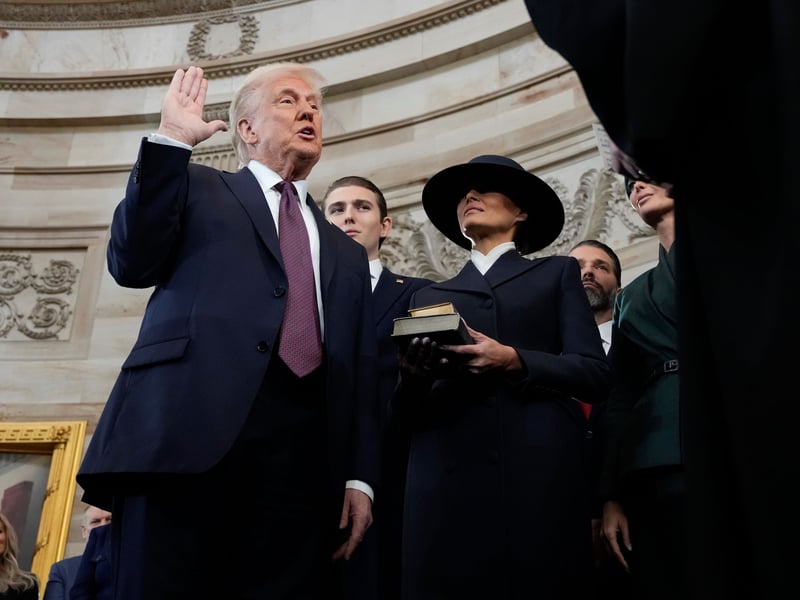
WASHINGTON (CN) — President Donald Trump signed a slew of executive orders upon taking office on Monday, issuing broad and sweeping decrees on issues ranging from the border, the climate and pardons for Capitol rioters, among others.
Trump signed 41 orders, both before a cheering crowd of supporters at the Capital One Arena in downtown Washington and upon his return to the Oval Office, including withdrawals from the World Health Organization and the Paris Climate agreement, pausing the TikTok ban for 75 days and a freeze on all pending regulations.
While presidents have broad authority to issue such orders as directions to federal agencies and the military, there are certain limitations on the power. Trump’s first order, the reversal of 78 executive actions taken by former President Joe Biden over the last four years, is one such limit on the orders’ lasting effect.
Among the reversals include Biden’s recent orders removing Cuba’s designation as a state sponsor of terror and his permanent ban of new oil and gas drilling along the coasts of the Atlantic and Pacific oceans as well as portions of the Northern Bering Sea in Alaska.
It is unclear what effect Trump’s move will have, as Biden specifically invoked a provision of the 1954 Outer Continental Shelf Lands Act that only grants presidents the authority to bar drilling, not to revoke an established ban.
When Trump tried to reverse a similar ban by former President Barack Obama in 2019, Chief U.S. District Court Judge Sharon Gleason for the District of Alaska rejected the effort. The Obama appointee ruled that the ban could not be undone without an act of Congress.
Many orders will, and some already do, face legal challenges in federal court where judges can stay the orders’ effects pending further review and following appeals.
The American Civil Liberties Union filed an immediate lawsuit Monday night challenging Trump’s order seeking to strip birthright citizenship from the children of undocumented immigrants in the country. The ACLU filed the suit in the U.S. District Court for the District of New Hampshire, and argues the order flouts the 14th Amendment and longstanding Supreme Court precedent.
Trump also issued orders requiring his attorney general to pursue the death penalty once again, place the military in charge of securing the border rather than law enforcement, freezing all new hires at federal agencies outside of the military, immigration enforcement, or social security and ordering federal workers return to full in-person work.
Trump’s orders also included certain directives intended to deliver on campaign promises regarding the high costs of fuel, groceries, housing and health care.
According to the order, Trump will direct federal agencies to take certain actions to: “lower the cost of housing and expand housing supply; eliminate unnecessary administrative expenses and rent-seeking practices that increase health care costs; eliminate counterproductive requirements that raise the costs of home appliances; create employment opportunities for American workers; and eliminate harmful, coercive ‘climate’ policies.”
Trump also targeted what he has repeatedly decried as the “weaponization” of the government against him and his supporters since his 2020 electoral defeat, equating the Justice Department’s prosecution of the Jan. 6 attack to Black Lives Matter protests in the summer of 2020. He also sharply criticized the dismissal of their cases.
According to a 2021 analysis by the Associated Press, more than 120 defendants had pleaded guilty or were convicted at trial of federal crimes including rioting, arson and conspiracy. Of the more than 70 defendants who had been sentenced at that time, each received an average of 27 months in prison, with at least 10 receiving terms of five years or longer.
Trump’s order directs Attorney General-nominee Pam Bondi to review the activities of the Justice Department, the Securities and Exchange Commission and the Federal Trade Commission over the last four years and identify any instances “contrary to the purposes and policies of this order.”
Director of National Intelligence-nominee Tulsi Gabbard was also tasked with reviewing the actions of the intelligence community over the last four years.
Trump’s slew of orders follows a bevy of orders by Biden before Trump’s inauguration on Monday, including an announcement that the Equal Rights Amendment was ratified, the commutation of Indigenous activist Leonard Peltier’s life sentence for the 1975 killings of two FBI agents and preemptive pardons for five members of his family.
Because the president’s pardon and commutation power are essentially unlimited, Trump cannot reverse such last-minute moves. However, Biden’s announcement that the 28th Amendment, which enshrines equal rights for women, was ratified, is likely to face swift legal challenges.
 Follow @Ryan_Knappy
Subscribe to our free newsletters
Our weekly newsletter Closing Arguments offers the latest about ongoing trials, major litigation and rulings in courthouses around the U.S. and the world, while the monthly Under the Lights dishes the legal dirt from Hollywood, sports, Big Tech and the arts.