
 Search Articles


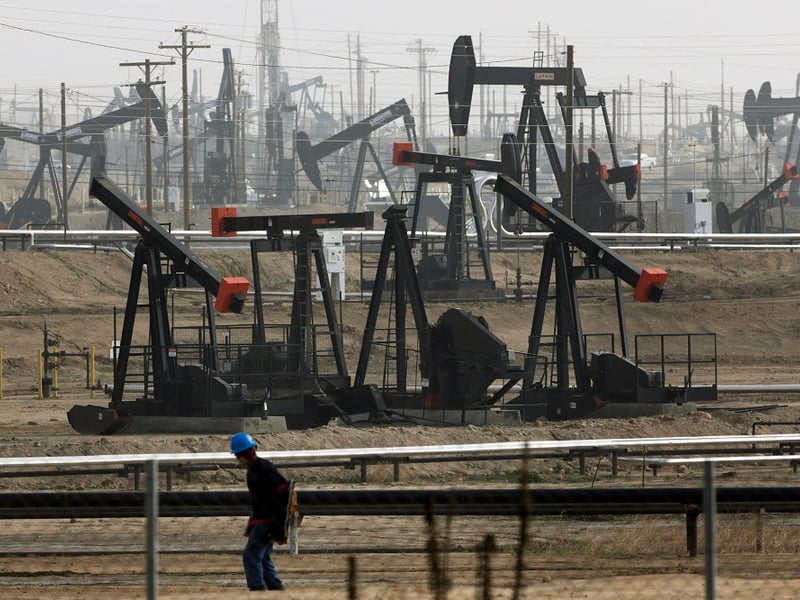
(CN) — New York and Vermont threaten to undermine America’s domestic energy production and will violate federal law if they enforce climate change laws against fossil fuel companies, the Trump administration claimed in a pair of lawsuits filed Thursday.
Excessive regulations imposed by both states have driven up energy prices for Americans and are preempted by the Clean Air Act, the administration says in its complaints, similar to two other lawsuits filed Wednesday against Michigan and Hawaii.
Trump’s “National Energy Emergency” and “Protecting American Energy from State Overreach” executive orders are cited in the lawsuits, in which he claims he has standing under the parens patriae doctrine, which allows a government to take legal action to protect the interests of its citizens.
“The United States has parens patriae standing to protect the economic well-being of its citizens and the national energy market from Michigan’s attempts to impose extraterritorial and excessive burdens on fossil fuel companies, which will raise energy costs for consumers nationwide and disrupt the uniform regulation of fossil fuel production,” Trump says in the complaint.
Notably, parens patriae standing was used by the state of Alaska in the wake of the 1989 Exxon Valdez oil spill, as well as a series of lawsuits against tobacco industry leaders that resulted in a 1998 settlement agreement with Philip Morris.
In the lawsuits filed against the states of New York and Vermont, Trump attacked both states’ Climate Change Superfund Acts — passed in 2024 — and claimed they seek to “regulate nationwide airspace and indeed the entire globe.”
The laws would impose fees on fossil fuel companies to help offset the effects of climate change, but Trump described them in his lawsuit as “transparent monetary-extraction schemes.”
The president also cited the need to stabilize and ultimately decrease the cost of fossil fuels for Americans in the complaints, which effectively seek to hamstring states’ ability to enforce air quality standards.
“The United States’ proprietary interests include its economic interests in revenue from fossil fuel leasing on federal lands, which generated over $13.8 billion in 2024, and its costs for purchasing fossil fuels, which will increase if Michigan and other states seek damages from fossil fuel companies,” he said.
As for the legal basis for its action, the administration says all four states’ restrictive air quality standards are preempted by and “interfere with” the Clean Air Act.
The prospective lawsuits against fossil fuel companies go beyond the states’ authority to limit out-of-state pollutant sources, the administration claims.
“By targeting major fossil fuel businesses, many of which operate on federal lands or supply federal agencies, Michigan’s anticipated lawsuit would raise costs for federal operations and consumers nationwide, obstructing the Clean Air Act’s goal of balancing environmental protection with economic growth,” the administration said.
The states’ intention to go after production and refining facilities in other states also violates the Commerce Clause, according to the administration.
“Michigan would disrupt the national market for fossil fuels, and its request for damages would increase energy costs for consumers and businesses nationwide, as these costs are passed through the interstate energy market,” it said.
Michigan Attorney General Dana Nessel unequivocally rebuked President Trump’s preemptive lawsuit in a statement.
“Donald Trump has made clear he will answer any and every beck and call from his Big Oil campaign donors, but this latest favor is perhaps the most surprising debasement of both the White House and Department of Justice yet. It stands to reason the prospective defendants in our to-be-filed complaint have ample resources to defend themselves in court without coopting the federal Department of Justice, though perhaps if they are desperate enough to request this unprecedented preemptive intervention, they are more concerned over our potential claims than they have led on.
“As my office’s anticipated lawsuit in this arena is not yet filed and our claims unknown to the administration — as conceded directly in their complaint — this lawsuit is at best frivolous and arguably sanctionable. If the White House or Big Oil wish to challenge our claims, they can do so when our lawsuit is filed; they will not succeed in any attempt to preemptively bar our access to make our claims in the courts. I remain undeterred in my intention to file this lawsuit the president and his Big Oil donors so fear,” Nessel said.
Linked in the Michigan lawsuit is an October 2024 article from Michigan Capitol Confidential that claims Nessel intends to “wage war” on fossil fuel companies with “activist litigation,” although Nessel has yet to file any such suits.
Hawaii Attorney General Anne Lopez decried the Trump administration’s legal action in a statement, while her office also filed its own lawsuit against BP, Chevron, and other industry leaders.
“We have an obligation to the people of Hawaii, to do everything in our power to fight deceptive practices from these fossil fuel companies that erode Hawaii’s public health, natural resources, and economy. The federal lawsuit filed by the Justice Department attempts to block Hawaii from holding the fossil fuel industry responsible for deceptive conduct that caused climate change damage to Hawaii,” she said.
The suits were filed by the Acting Assistant Attorney General Adam Gustafson, Deputy Assistant Attorney General Robert Stander, and Justin Heminger from the U.S. Department of Justice, Environment and Natural Resources Division.
Through a multitude of executive orders, Trump has tried to ramp up domestic energy production in his second term as president, including four signed at the beginning of April that allowed aging coal plants to remain open and fast-tracked funding permits for new coal-fired facilities.
 Follow @kkoeninger44
Subscribe to our free newsletters
Our weekly newsletter Closing Arguments offers the latest about ongoing trials, major litigation and rulings in courthouses around the U.S. and the world, while the monthly Under the Lights dishes the legal dirt from Hollywood, sports, Big Tech and the arts.