
 Search Articles


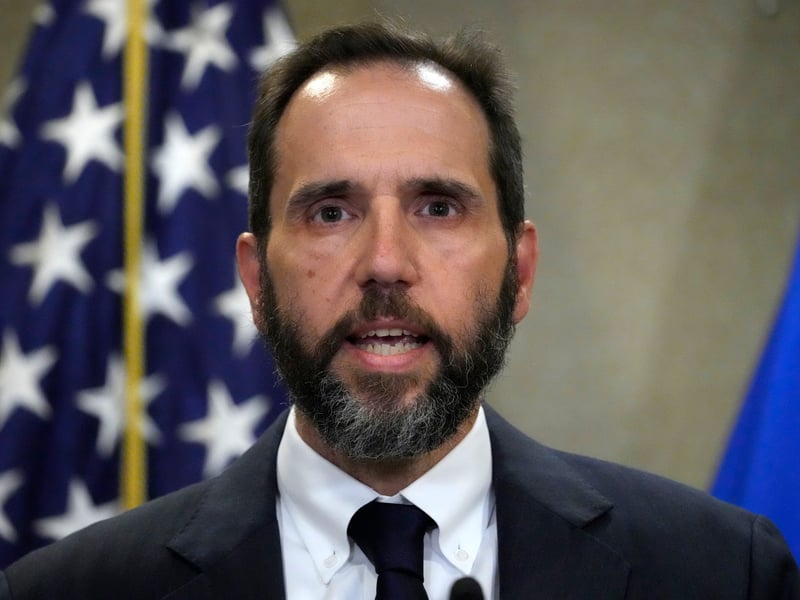
WASHINGTON (CN) — A federal judge granted special counsel Jack Smith’s request on Friday to vacate the remaining deadlines in Donald Trump’s election subversion case, all but bringing the case to an anticlimactic close.
Following Trump’s electoral victory early Wednesday morning, Smith and Justice Department officials discussed how to wind down the case, along with a pending appeal before the 11th Circuit Court of Appeals in Trump’s parallel classified documents case.
U.S. District Judge Tanya Chutkan, who had repeatedly emphasized her desire to prevent the election from interfering with the case, issued a brief order just minutes after Smith made the unopposed one-page request.
“As a result of the election held on Nov. 5, 2024, the defendant is expected to be certified as president-elect on Jan. 6, 2025, and inaugurated on Jan. 20, 2025,” Smith said in the filing. “The government respectfully requests that the court vacate the remaining deadlines in the pretrial schedule to afford the government time to assess this unprecedented circumstance and determine the appropriate course going forward consistent with Department of Justice policy.”
The Barack Obama appointee set a Dec. 2 deadline for Smith to file a status report discussing the proposed course for the remaining 73 days until Inauguration Day.
Friday’s filing is a clear sign that Trump’s longtime strategy in his criminal cases to delay as much as possible succeeded.
With his “unprecedented and powerful mandate" after Americans granted him and his party the White House, the popular vote, the Senate and potentially the House of Representatives, Trump’s legal woes clearly did not affect his electability in any significant way.
In a 2000 legal memorandum affirming a 1973 conclusion, the Department of Justice said that a sitting president cannot be indicted or criminally prosecuted.
Prior to the election, Smith and Trump had been engaged in a back-and-forth seeking to interpret the Supreme Court’s 6-3 decision granting [presidents the presumption of immunity](https://www.courthousenews.com/supreme-court-rules-for-broad-presidential-immunity-in-donald-trump-election-subversion-case/(opens in a new tab)) for all official acts taken while in office.
Over the last month, Smith had filed a massive, 165-page brief intended to shield his superseding indictment from the decision, with more than 90 pages of new details describing how Trump tried to overturn his 2020 electoral defeat.
The superseding indictment, filed Aug. 27, cut out any mention of Trump’s pressure campaign on the DOJ, conduct the justices found to be core official acts and therefore immune from prosecution.
Smith asserted that all of Trump’s efforts were private or made as a political candidate and thus not covered by his presidential immunity. As part of the brief, Smith filed a key immunity dossier totaling 1,889 pages, which included testimony from figures who had communication with Trump between the November 2020 election and Jan. 6, 2021.
Trump was set to file his response on Nov. 21, when he was expected to reassert his position that the immunity decision foreclosed the criminal prosecution completely and that the charges should be dismissed outright. Specifically, Trump and his lawyers had argued that all communications with former Vice President Mike Pence should be deemed core official conduct, and that without that foundation the entire case would fall.
Smith maintained that, because the discussions centered on Pence’s ceremonial role as president of the Senate during the election certification — a process Trump would have no role in — any discussions could not fall into either the president’s core official duties or his responsibilities within the outer perimeter of his official duties.
Without any additional briefing, the immunity question is likely to remain vague and undefined, leaving in place the Supreme Court’s opaque three-bucket test, that either grants absolute immunity, the presumption of immunity or no immunity to any action a president takes while in office.
After Trump takes office on Jan. 20, that issue could only be addressed at the end of his four years, if any of his actions were to be considered criminal and lead to fresh charges.
Another unanswered question is the constitutionality of the special counsel’s office, which Trump was also expected to argue in the Nov. 21 filing. He has asserted that the office of the special counsel does not have the authority to prosecute a case such as this.
Trump successfully argued the same in his classified documents case, where U.S. District Judge Aileen Cannon, a Trump appointee, granted his request to dismiss the case on such grounds.
Smith has asserted that the argument should be dead on arrival in Washington, as Trump never indicated he planned to make such a dismissal argument prior to the necessary deadlines. Even if Chutkan were to consider it, long-standing D.C. Circuit precedent upheld the constitutionality of the special counsel’s office.
Chutkan may try to address these questions before January, but it will depend on whether Smith decides they need to be answered in his upcoming Dec. 2 status report.
 Follow @Ryan_Knappy
Subscribe to our free newsletters
Our weekly newsletter Closing Arguments offers the latest about ongoing trials, major litigation and rulings in courthouses around the U.S. and the world, while the monthly Under the Lights dishes the legal dirt from Hollywood, sports, Big Tech and the arts.