
 Search Articles


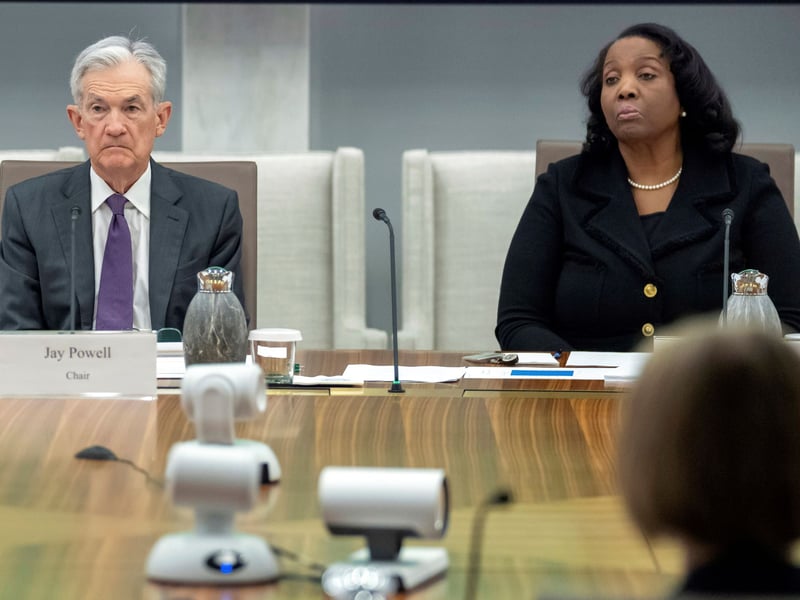
WASHINGTON (CN) — A federal judge on Friday grappled with how to address President Donald Trump’s challenged termination of Federal Reserve Board of Governors member Lisa Cook, noting a lack of legal clarity in such an unprecedented dispute.
U.S. District Judge Jia Cobb, a Joe Biden appointee, noted that Cook’s lawsuit filed Thursday is the first of its kind, as no president has moved to terminate a member of the traditionally independent central bank, putting the court in a unique position.
Cobb declined to issue any ruling, but set an expedited schedule to determine whether a temporary restraining order, a preliminary injunction or summary judgment could resolve the issue. The Justice Department indicated that Cook would not be forced out before further briefing.
In her lawsuit, Cook challenged her sudden removal from the board in a lawsuit as an “unprecedented and illegal” attack on the central bank’s independence and in response to her and her colleagues’ decisions not to lower interest rates.
Cook argued that the only causes for removal are inefficiency, neglect of duty, malfeasance in office or comparable misconduct. She said immediately firing her violated her due process rights.
Abbe Lowell, representing Cook from Lowell & Associates, argued Friday that while the Federal Reserve Act does not explicitly define what sort of conduct amounts to cause, it’s clear that Trump’s reasoning does not meet any reasonable definition.
“Whatever it is, it’s not this,” Lowell said.
Principal Deputy Assistant Attorney General Yaakov Roth argued that, without an explicit definition of cause in the statute, the president could articulate any reason beyond a clear policy dispute as cause for removal.
He repeatedly cited the 1901 Supreme Court case Reagan v. United States, where the Supreme Court upheld the removal of William Reagan, a U.S. Indian Territory Commissioner, a position with no specific causes for removal defined by law.
The high court held that a federal judge of the territory possessed the inherent authority to remove Reagan, as an inferior officer, at will.
Under that decision, Roth argued, any review of Trump’s decision to remove Cook should be treated with deference, and should not delve too deeply into his reasoning.
In an Aug. 25 Truth Social post, Trump published a letter addressed to Cook that said her termination was “effective immediately.”
Trump cited accusations by Federal Housing Finance Agency Director William Pulte, a Trump appointee, who has said Cook engaged in mortgage fraud. In an Aug. 15 criminal referral to Attorney General Pam Bondi and Special Attorney Ed Martin, Pulte said Cook had wrongfully claimed two different houses as her main residence in 2021 to obtain better loan terms.
Lowell argued that Cobb did not have to dive very deep into the president’s reasoning to determine that Cook’s removal was pre-textual and likely illegal.
He pointed to the president’s attacks against Federal Reserve Chair Jerome Powell, claiming that the $2.5 billion renovation of its headquarters was riddled with fraud, as part of Trump’s frustration that the central bank has declined to lower interest rates.
When Powell did not react to the pressure, Lowell said, Trump instead moved to Cook, digging up decades-old accusations of mortgage fraud as a way to create the cause necessary to remove her, nominate her replacement and install his own majority at the central bank.
“A bad motive can illuminate that there was not real cause to begin with,” Lowell said. He added that a solid cause “can overcome bad motives,” while a bad motive itself does not make a removal pretextual.
Pulte has made similar claims of mortgage fraud against California Senator Adam Schiff, a longtime Trump adversary, and New York Attorney General Letitia James, who brought the civil fraud case in New York against Trump.
Cook has denied any wrongdoing, noting that the conduct occurred before her Senate confirmation hearings in 2022 and did not sink her nomination.
Lowell argued that Pulte’s referral included flimsy language, referring to her conduct as “potentially criminal,” and was only made public 30 minutes before Trump’s Truth Social post, providing her no opportunity to contest the charges.
Roth further said that Cook has had plenty of time to respond in the five days since Trump’s post, yet there was no explanation of the highlighted conduct, either in court documents or in public.
Cobb seemed taken aback by the argument, pushing Roth as to whether he thought that Trump’s post satisfied usual due process requirements to provide someone actual notice of the accusations and of any deadline to respond. She noted there was no indication in Trump’s post that Cook should respond before Friday’s hearing.
Roth said that Trump’s post made clear she should respond as soon as possible. He also questioned the need for any avenue for Cook to challenge the accusations of mortgage fraud.
“What’s the point of saying the president needs to hear her out — what is she going to say, and what is he going to do?” Roth asked. “Either it was intentional and criminal, or it was negligent and still grounds for removal.”
 Follow @Ryan_Knappy
Subscribe to our free newsletters
Our weekly newsletter Closing Arguments offers the latest about ongoing trials, major litigation and rulings in courthouses around the U.S. and the world, while the monthly Under the Lights dishes the legal dirt from Hollywood, sports, Big Tech and the arts.