
 Search Articles


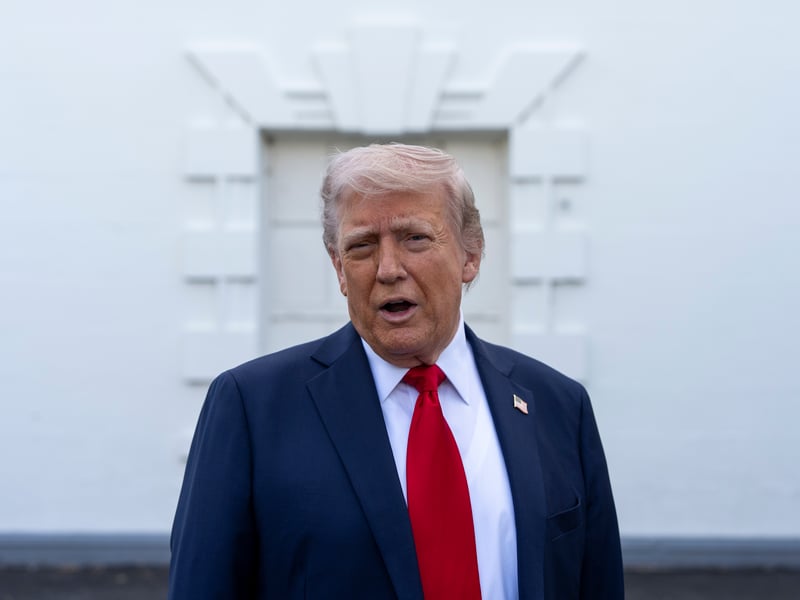
SAN FRANCISCO (CN) — A federal judge blocked President Donald Trump from enforcing part of a March executive order, which federal labor unions say was used to strip them of bargaining protections for criticizing the president’s policies.
U.S. District Judge James Donato found that the six plaintiff unions, which represent over one million federal employees, had raised a “serious question” that their First Amendment rights have been violated by the White House.
“ For more than 60 years, Americans who worked for the federal government as civil servants have had the right to unionize and collectively bargain for the conditions of their employment,” the judge said.
The judge acknowledged that his decision for a preliminary injunction on the president was an “extraordinary remedy” and that the executive branch’s judgments on national security should usually be given “deference and significant weight.”
“Even so, the federal courts ‘do not defer to the government’s reading of the First Amendment,’ including when national security interests are said to be at stake,” Donato wrote.
The order prevents the government from excluding these labor unions from collective bargaining protections under federal law until the case can be decided in court, following the president’s categorization of their activity as “national security” concerns.
The unions claim that Trump’s order stripped them of their protections under federal law specifically for criticizing his efforts to “decimate the federal workforce” with mass firings and “fundamentally restructure the federal government,” using the national security argument as an excuse.
On March 27, President Trump issued an executive order that exempted certain federal agencies from Chapter 71, Title 5 of the U.S. Code, also known as the Federal Service Labor-Management Relations Act.
The federal law, passed by Congress in 1978, grants federal employees the right to organize, join or assist labor unions “without fear of penalty or reprisal,” and establishes procedures for collective bargaining between federal agencies and their unions.
Although the law prohibits certain employee activities like labor strikes, it does generally require that unions and federal agencies negotiate over the terms and conditions of their employment.
Overall, Trump’s directive exempted over 40 cabinet departments, agencies and subdivisions across the federal government from these collective bargaining rights, including the Departments of Justice, Energy and State.
In the Tuesday night ruling, Donato called Trump the first president since the enactment of the law to order the exclusion of cabinet-level departments in their entirety from the statute.
Although previous presidents have carved out exemptions to the law, including President Jimmy Carter in 1979, Donato agreed that it’s never been done in such a sweeping fashion as it has under Trump.
Trump argued that the agencies exempted by his executive order primarily functioned as national security and intelligence organizations, but Donato questioned the government’s efforts to target agencies that had no apparent ties to national security or intelligence gathering, like the National Allergy Institute.
“Can you tell me how a bunch of allergy researchers are going to violate national security by using their time at work for collective bargaining?” the Barack Obama appointee asked at a previous hearing.
Donato pointed to a “fact sheet” the White House published on the day of the executive order, explaining its actions, as proof of a likely First Amendment violation.
The White House document calls out federal unions for their vocal opposition to President Trump’s agenda, saying they “have declared war on President Trump’s agenda.” The document concludes by saying that “President Trump supports constructive partnerships with unions who work with him,” but “will not tolerate” unions opposed to his agenda.
“All of this is solid evidence of a tie between the exercise of First Amendment rights and a government sanction,” Donato said.
According to Donato, there’s enough of a connection between the White House’s actions and its justifications to support a preliminary injunction until the matter can be decided in court.
The judge also said that the president’s orders could have a “chilling effect” on federal employees, who may feel pressure to conform to the administration’s political views, be reluctant to raise health and safety concerns or otherwise criticize agency management, for fear of retaliation — like losing out on overtime or even their jobs.
National Nurses United, one of the unions in the case, celebrated the decision in a statement.
“We will fight for our veterans who put their lives on the line for us. All federal workers deserve collective bargaining rights,” said Irma Westmoreland, chair of National Nurses United’s VA Division, which represents more than 15,000 nurses in Veterans Affairs hospitals nationwide.
The unions first sued the White House in early April, one week after the executive order was issued. The court previously denied their motion for a temporary restraining order, saying that they hadn’t established an immediate need for one at the time.
The six unions in the lawsuit are National Nurses United, Service Employees International Union, National Association of Government Employees, the National Federation of Federal Employees, the American Federation of Government Employees and the American Federation of State, County & Municipal Employees.
This case was filed in the Northern District of California.
Subscribe to our free newsletters
Our weekly newsletter Closing Arguments offers the latest about ongoing trials, major litigation and rulings in courthouses around the U.S. and the world, while the monthly Under the Lights dishes the legal dirt from Hollywood, sports, Big Tech and the arts.