
 Search Articles


WASHINGTON (CN) — A cascade of security failures stemming from the U.S. Secret Service enabled an assassination attempt on former President Donald Trump over the summer, a House task force said in a report published Monday.
Lawmakers have for months investigated the circumstances surrounding the July 13 attempt on Trump’s life at a campaign rally in Butler, Pennsylvania. Members of Congress from both sides of the aisle have argued that the Secret Service, charged with protecting current and former presidents, allowed major lapses in security protocols that put Trump in the line of fire.
Now, those complaints have been formalized in a preliminary report penned by a bipartisan House working group probing the incident.
In the survey, published Monday, lawmakers contended that the Secret Service failed to adequately communicate with state and local law enforcement ahead of the Butler rally, and that the agency’s security perimeter for the event conspicuously did not include the vantage point from which the would-be assassin — 20-year-old Thomas Matthew Crooks — fired eight shots at the former president.
“Put simply, the evidence obtained by the Task Force to date shows the tragic and shocking events of July 13 were preventable and should not have happened,” lawmakers said in the report.
The task force’s findings were based on information gathered from a laundry list of federal agencies including the Secret Service, the Department of Homeland Security and the Justice Department, as well as from state and local law enforcement and emergency services. Lawmakers also visited the Butler rally site in August, where they interviewed nearly two dozen witnesses.
According to the lawmakers, the Secret Service did not effectively manage interagency communications before or during the July rally. The agency did not hold a joint meeting with state police and local law enforcement on the day of the event, lawmakers said. During the rally, Secret Service agents and local police maintained two separate command posts without a dedicated radio link between them.
That communications breakdown became apparent as the attempted assassination unfolded, lawmakers said. An internal review conducted by the Secret Service found that agents at the rally relied on cell phones instead of radio to convey information about possible threats. Radios used by Secret Service agents couldn’t communicate with those used by local law enforcement.
And though local police had been aware of Crooks’ presence and eventually identified him as a threat, the task force found no evidence to suggest that the Secret Service team on stage with former President Trump was alerted until the would-be assassin started shooting.
Further, lawmakers said, the building from which Crooks fired at Trump, a warehouse owned by AGR International, was not included in the Secret Service’s security perimeter despite its elevation and clear sight lines relative to the rally stage. This exclusion allowed onlookers to gather around the building without being subjected to security measures.
The House survey found that local law enforcement had raised concerns about security around the complex, but that those issues were not “meaningfully addressed” by Secret Service. Even after local police raised concerns about manpower, they were largely left to coordinate security for the areas outside of the Secret Service perimeter without guidance from federal law enforcement.
Sniper teams from local police units were stationed inside the AGR building but were assigned to survey the rally site and not to secure the building itself, lawmakers said. Crooks fired at Trump from the roof of the building, outside the snipers’ line of sight.
Monday’s report is only the first review to emerge from the House’s dedicated Trump assassination task force. Lawmakers plan to release more findings based on interviews with federal officials and other witnesses — and are also preparing an investigation into a second possible attempt on Trump’s life in September at his Florida golf course.
Congressional probing of the Butler assassination attempt has already resulted in some major changes at the Secret Service. Former agency director Kimberly Cheatle resigned from her post in July, after facing a bipartisan grilling from House lawmakers just a week after the incident.
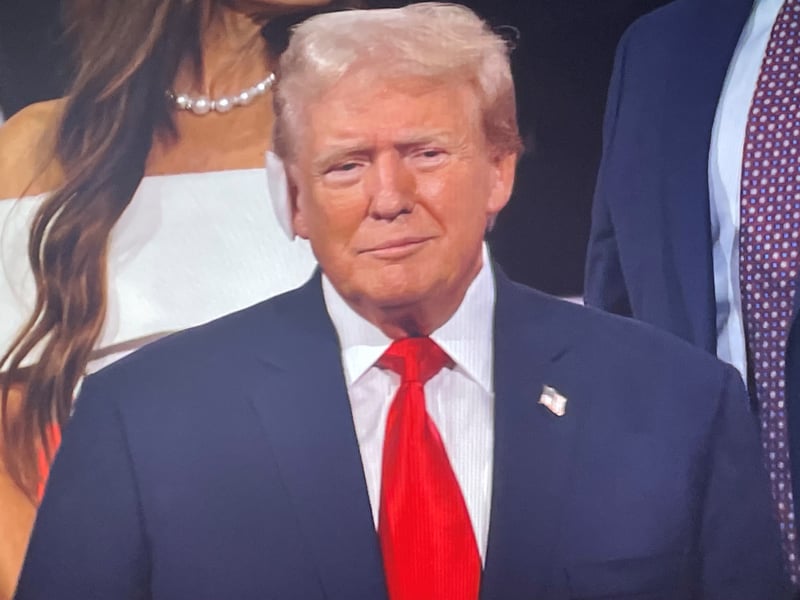
The attempt on Trump’s life over the summer left him with minor wounds to his ear. Just weeks later, sporting a large bandage over his right ear, he accepted the Republican nomination for president during the party’s campaign convention in Milwaukee.
 Follow @BenjaminSWeiss
Subscribe to our free newsletters
Our weekly newsletter Closing Arguments offers the latest about ongoing trials, major litigation and rulings in courthouses around the U.S. and the world, while the monthly Under the Lights dishes the legal dirt from Hollywood, sports, Big Tech and the arts.