
 Search Articles


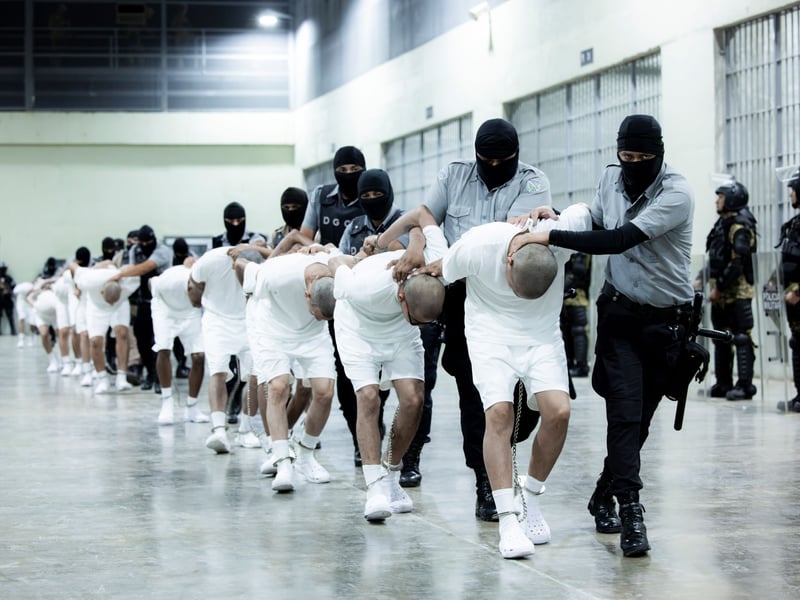
(CN) — A Trump-appointed federal judge in Texas ruled Thursday that the president has unlawfully invoked the Alien Enemies Act to send Venezuelans the administration claims are gang members to a prison in El Salvador.
U.S. District Judge Fernando Rodriguez Jr. of the Southern District of Texas, whom President Donald Trump appointed to the federal bench during his first term, found the Trump administration had not sufficiently alleged the existence of an “invasion” or “predatory incursion” to assert authority under the act. He issued a permanent injunction barring the administration from removing Venezuelans detained or residing in the Southern District of Texas under the Alien Enemies Act.
American Civil Liberties Union attorney Lee Gelernt, the lead counsel for the plaintiffs in the case, celebrated the ruling in a statement.
“The court ruled the president can’t unilaterally declare an invasion of the United States and invoke a wartime authority during peacetime," Gelernt said. “Congress never meant for this 18th-century wartime law to be used this way. This is a critically important decision that prevents more people from being sent to the notorious CECOT prison.”
White House Spokesman Kush Desai told Courthouse News in a statement that Rodriguez’s ruling “is undoubtedly shocking to the over 77 million Americans who gave President Trump a decisive Election Day mandate to enforce our immigration laws and deport terrorist illegal aliens—and yet time and again we see federal courts try to stop the President from exercising his lawful authorities to protect the American people.”
“The Trump administration is committed to unapologetically using every lever of power endowed to the executive branch by the Constitution and Congress to deliver on this mandate, and we are confident that we will ultimately prevail for the American people,” Desai said.
The Alien Enemies Act is an 18th-century law that has been invoked only a handful of times in U.S. history. It allows the president to detain or deport noncitizens from enemy nations “whenever there is a declared war between the United States and any foreign nation or government, or any invasion or predatory incursion is perpetrated, attempted, or threatened against the territory of the United States by any foreign nation or government.”
In March, President Trump issued a proclamation declaring Venezuelan citizens in the U.S. that his administration declares to be members of the gang Tren de Aragua to be subject to removal under the act. Trump declared that the gang has close ties with Venezuelan President Nicolás Maduro and that it operates as a “hybrid criminal state.”
“TdA has engaged in and continues to engage in mass illegal migration to the United States to further its objectives of harming United States citizens, undermining public safety, and supporting the Maduro regime’s goal of destabilizing democratic nations in the Americas, including the United States,” Trump wrote in the declaration.
At least 137 Venezuelans have been sent to El Salvador under the proclamation, where the U.S. is paying the government $6 million to hold them in its brutal Terrorism Confinement Center (CECOT). This move has been widely condemned by human rights groups, and serious doubts have been raised about the validity of the evidence used to show gang membership for many of the individuals Trump has removed under the act.
The Trump administration has argued that the courts have no authority to review Trump’s invocation of the Alien Enemies Act, as whether to invoke the act is a “political question” that is outside the realm of judicial review.
Rodriguez disagreed, ruling that, while the court could not second-guess the factual assertions made by the administration in invoking the act, it did have the authority to interpret the wording of the statute and decide whether the president had asserted sufficient grounds for invoking it.
“Allowing the president to unilaterally define the conditions when he may invoke the AEA, and then summarily declare that those conditions exist, would remove all limitations to the executive branch’s authority under the AEA, and would strip the courts of their traditional role of interpreting congressional statutes to determine whether a government official has exceeded the statute’s scope,” Rodriguez wrote. “The law does not support such a position.”
Rodriguez found that the Trump administration had not sufficiently asserted that the U.S. was experiencing an “invasion” or “predatory incursion” under the ordinary meaning of those terms when the act was passed. He found that invasion means “an entry into the nation’s territory by a military force or an organized, armed force, with the purpose of conquering or obtaining control over territory” and that predatory incursion refers to “a military force or an organized, armed force entering a territory to destroy property, plunder, and harm individuals, with a subsequent retreat from that territory.” Neither applies to the situation Trump alleged in his proclamation, Rodriguez ruled.
“While the proclamation references that TdA members have harmed lives in the United States and engage in crime, the proclamation does not suggest that they have done so through an organized armed attack, or that Venezuela has threatened or attempted such an attack through TdA members,” Rodriguez wrote.
Last month, the Supreme Court revoked a D.C. federal judge’s nationwide temporary restraining order blocking further Alien Enemies Act removals, finding that the proper mechanism for challenging such removals is habeas cases filed in the district where the prospective deportee is being held.
Following this, the ACLU quickly filed class action habeas petitions on behalf of prospective Alien Enemies Act deportees in the Southern District of New York and the Southern District of Texas. It has since filed similar cases in Colorado, Nevada, the Northern District of Texas, the Western District of Pennsylvania and the Middle District of Georgia.
Subscribe to our free newsletters
Our weekly newsletter Closing Arguments offers the latest about ongoing trials, major litigation and rulings in courthouses around the U.S. and the world, while the monthly Under the Lights dishes the legal dirt from Hollywood, sports, Big Tech and the arts.