
 Search Articles


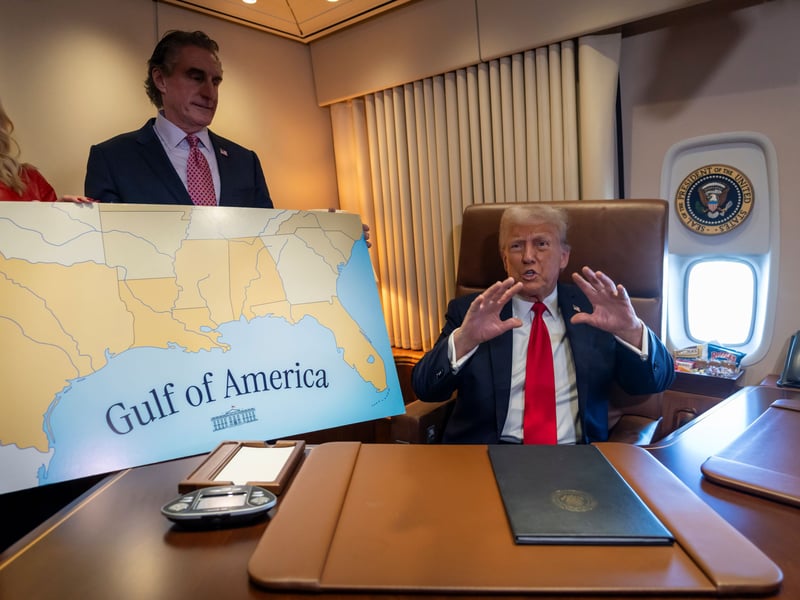
WASHINGTON (CN) — A D.C. Circuit panel opened the door for President Donald Trump to bar the Associated Press from the White House again on Friday, pausing a court order that deemed the ban a clear violation of the First Amendment.
The three-judge panel ruled 2-1 to grant the Trump administration’s motion for a stay pending the appellate court’s ultimate decision, finding that the AP did not have a First Amendment right to “be in the room where it happens.”
U.S. Circuit Judge Neomi Rao, a Trump appointee, wrote in the panel’s order that the Trump administration would likely succeed on its position that restricted presidential spaces, like the Oval Office and the East Room, are not First Amendment forums that require “reasonable” speech restrictions.
“The White House therefore retains discretion to determine, including on the basis of viewpoint, which journalists will be admitted,” Rao wrote. “Moreover, without a stay, the government will suffer irreparable harm because the injunction impinges on the president’s independence and control over his private workspaces.”
U.S. Circuit Judge Gregory Katsas, also a Trump appointee, joined Rao in the ruling.
U.S. District Judge Trevor McFadden, a Trump appointee, ruled on April 8 that the ban violated the First Amendment guarantee of press freedom because the government cannot block certain journalists from events based on their viewpoints, even in the Oval Office or the East Room.
In his ruling, McFadden noted the ban was clearly based on viewpoint discrimination, a textbook violation of the First Amendment, adding that the Trump administration had been “brazen” in stating the ban was because the outlet “refuse[d] to adhere to what the president believes” regarding the Gulf of Mexico’s name.
On April 14, the first day McFadden’s injunction was in effect, the AP was denied access to the Oval Office leading the news outlet to seek a motion to enforce the injunction. McFadden ultimately denied the motion, after the White House implemented a new policy that abolished a spot on the press pool for wire services, finding it was facially neutral.
While McFadden found the Oval Office, Air Force One and similar restricted spaces to be nonpublic forums, and thus the AP ban on the basis of their viewpoint violated the First Amendment, the appellate panel found the spaces are not forums at all and thus the First Amendment does not apply.
Rao explained that, when the White House opens up a space to press generally, like it does in the Brady Briefing Room, it cannot exclude any reporters based on their viewpoint. However, granting access to the Oval Office
“If President Trump sits down for an interview with Laura Ingraham, he is not required to do the same with Rachel Maddow,” Rao wrote. “It is a time honored and entirely mundane aspect of our competitive and free press that public officials ‘regularly subject all reporters to some form of differential treatment based on whether they approve of the reporters’ expression.’”
Rao expressed concern that adopting the AP’s argument that its reporting activities in the Oval Office transform the space into a nonpublic forum would turn any government space where smart phones or computers are allowed also into nonpublic forums.
Further, Rao dismissed the AP’s First Amendment retaliation claim, finding the White House’s decision to exclude them from limited-access presidential events was not the type of action that “counts as materially adverse” to warrant a retaliation claim.
U.S. Circuit Judge Cornelia Pillard, a Barack Obama appointee issued a dissent, writing that her colleagues just upheld the first example of participation in the century-old White House press corps being conditions on one’s viewpoint.
She wrote that the panel’s decision wrongfully asserts a “novel and unsupported exception” to the First Amendment’s bar on viewpoint restriction of private speech, while accepting an “equally unprecedented” idea that the ban was necessary to protect the president’s independence.
By adopting the administration’s legal theories, the court allows the White House to continue excluding the AP based solely on their viewpoint in the short term. Ultimately, Pillard warned, it could lead to a White House press pool limited to conservative outlets like Fox News during a Republican administration, and MSNBC under a Democrat.
“More to the point, each and every member of the White House press corps would hesitate to publish anything an incumbent administration may dislike,” Pillard said. “Factually accurate journalism unflattering to the incumbent administration would not long endure.”
The White House did not respond to a request for comment.
 Follow @Ryan_Knappy
Subscribe to our free newsletters
Our weekly newsletter Closing Arguments offers the latest about ongoing trials, major litigation and rulings in courthouses around the U.S. and the world, while the monthly Under the Lights dishes the legal dirt from Hollywood, sports, Big Tech and the arts.