
 Search Articles


(CN) — A coalition of 23 states on Friday won a preliminary injunction barring the Trump administration from slashing more than $11 billion in public health funding approved by Congress during the Covid-19 pandemic.
The federal jurist behind the ruling, U.S. District Judge Mary McElroy of Rhode Island, was appointed to the bench in 2019 by President Donald Trump.
“While the court acknowledges the government’s position that it may be forced to spend money inconsistent with the executive’s agenda, an injunction would strongly serve the public interest in maintaining the states’ healthcare systems and initiatives,” McElroy wrote in a 60-page order blocking the cuts as the case proceeds.
State officials sued the Trump administration in April after the Department of Health and Human Services announced it would pull grant funding from public health initiatives like vaccine distribution and the tracking of infectious diseases.
“The Covid-19 pandemic is over, and HHS will no longer waste billions of taxpayer dollars responding to a non-existent pandemic that Americans moved on from years ago," the department announced in March.
But the states claim that the funding, which Congress greenlit at the height of the Covid-19 pandemic, goes further than fighting that single virus. In their complaint, they said that the grants backed “a wide range of urgent public health needs” like mental health support and research into emerging health risks like bird flu and measles.
They argue that the executive branch is unlawfully trampling over Congress for slashing the approved grant funding “with no advance notice or warning.”
McElroy agreed.
“Agencies do not have unfettered power to further a president’s agenda,” she wrote. She cited the administration’s lack of procedure in slashing funding as problematic.
Her ruling is consistent with nearly all of the several dozen challenges to the Trump administration’s deep, sudden cuts to federal grant funding. Earlier this month, for example, another federal judge in Rhode Island ruled that the administration was “ignor[ing] congressionally appropriated funds” with its attempts to cut spending for libraries and museums.
In her Friday order, McElroy also gave credence to the states’ claims that their harm could be far-reaching if the department’s directive was allowed to stand.
“The states have submitted copious examples of irreparable harm flowing directly from HHS’ decision to terminate this funding directly to their local health jurisdictions,” the judge wrote.
Minnesota, one of the 23 suing states, stands to lose 200 employees, or 12% of the state’s health department. The layoffs include epidemiologists, research scientists, and “other highly skilled and trained workers,” according to court records.
Washington would also lose an estimated 200 employees. And Colorado is poised to lose all but one of its workers in a statewide vaccination program.
“Without these employees, the state[s] would be at greater risk for a variety of infectious diseases, some of which cause severe illness, disability, or death,” McElroy wrote.
Her ruling extends an existing block on the Trump administration’s ability to enforce the cuts. Last month, she granted the states a temporary restraining order, noting in a court hearing on April 5 that “the balance of equities are to maintaining the funding as it is.”
Since the states now have a preliminary injunction, the administration cannot pull the funding as the litigation proceeds.
The coalition of plaintiffs includes officials from Colorado, Rhode Island, California, Minnesota, Washington, Arizona, Connecticut, Delaware, Hawaii, Illinois, Kentucky, Maine, Maryland, Massachusetts, Michigan, Nevada, New Jersey, New Mexico, New York, North Carolina, Oregon, Wisconsin, Pennsylvania and the District of Columbia.
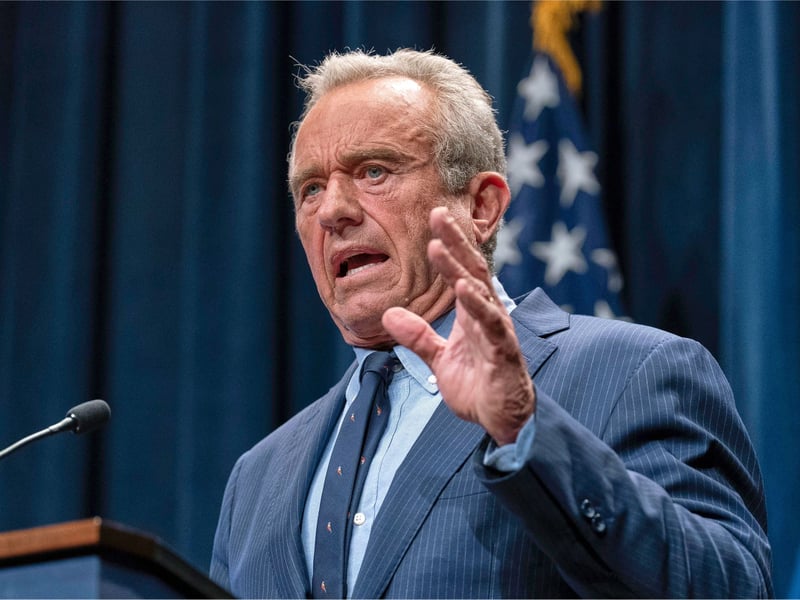
The Department of Health and Human Services and its secretary Robert F. Kennedy, Jr. are the named defendants.
 Follow @Uebey
 Follow @uebey.bsky.social
Subscribe to our free newsletters
Our weekly newsletter Closing Arguments offers the latest about ongoing trials, major litigation and rulings in courthouses around the U.S. and the world, while the monthly Under the Lights dishes the legal dirt from Hollywood, sports, Big Tech and the arts.