
 Search Articles


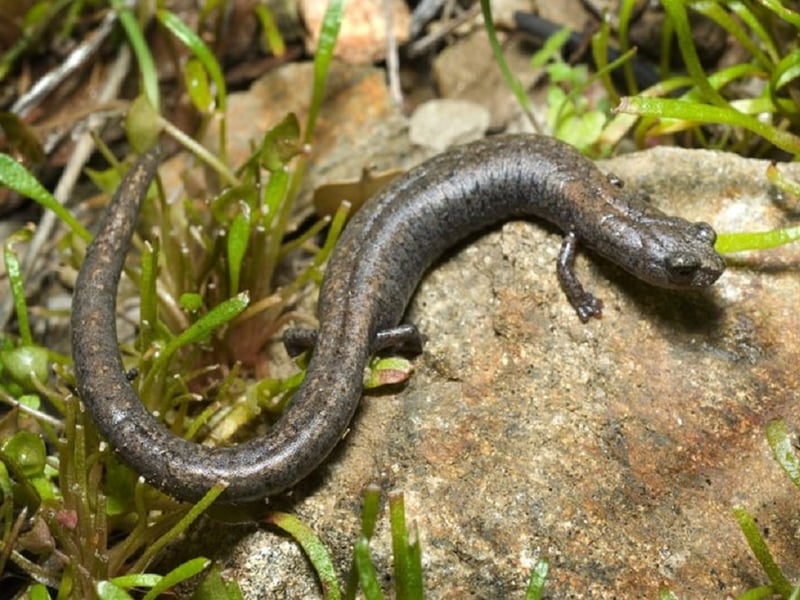
(CN) — The Center for Biological Diversity sued the U.S. Fish and Wildlife Service on Thursday for dragging its feet in granting environmental protection to two salamander species.
The center and the federal government fought a decadelong legal battle over whether Kern Canyon slender salamander and relictual salamander qualify as endangered species. The agency finally proposed adding the pair to the list in 2022 but has yet to finalize their protection.
According to the center, the delay violates the Endangered Species Act’s one-year deadline from the time of proposal to the listing of the species. The agency extended the comment period by one year, and the deadline for that extension and publication of the final rules came and went in 2024.
Senior advocate for the center and California resident Tara Zuardo said the center gave the agency a grace period under President Joe Biden. They fear action is unlikely under President Donald Trump.
“The concern here is that no critters are going to be listed,” Zuardo said in an interview. “I mean, what we’ve seen thus far, you know, we’ve seen executive orders that have already gone after all of our environmental laws.”
In January, Trump and the so-called Department of Government Efficiency under Elon Musk initiated funding freezes across the federal government, including the Fish and Wildlife Service. The Trump administration fired 1,712 Department of the Interior employees, most of whom were offered reemployment following a Rhode Island judge’s granting of a national preliminary injunction maintaining the status quo.
On Wednesday, the First Circuit Court of Appeals became the latest court to denythe Trump administration’s motion to stay the injunction which prevented Trump from freezing $3 trillion in federal spending.
“They’re very blatantly chipping away at the federal government and at programs that Americans overwhelmingly support,” Zuardo said. “The concern is that what we’ve seen thus far is we’ve seen executive orders that have gone after our basic environmental protections, and then we’ve seen not warranted findings where the administration decides not to list an animal.”
The center claims its standing comes from over 200,000 California members and supporters who value seeing the lungless animals.
“Center member Gordon Nipp lives in California near Kern Canyon and regularly hikes and explores the natural world within the habitat range of these two salamanders. Nipp regularly visits Mill Creek trail, Lucas Creek on the Flume Trail, and Stark Creek – areas that would serve as critical habitat for the salamanders,” the center says in its complaint. “Nipp is harmed by the Service’s failure to timely protect these salamanders because the potential loss of the Kern Canyon and relictual slender salamanders would lessen his experience in nature and because he has not yet had the opportunity to observe the species within their habitat.”
The Fish and Wildlife Service’s 2022 proposal would have marked 2,051 acres of critical habitat for the Kern Canyon slender salamander near Sequoia National Park and 2,685 acres for the relictual slender salamander. The Kern Canyon slender salamander occupied 18 sites but now occupies only nine and is becoming more uncommon within its range. Scientists have identified relictual slender salamanders at 13 sites in the Sequoia National Forest, including five sites in the Lower Kern River Canyon that are all presumed to be extinct.
The center claims the salamander’s greatest threats include grazing, recreation, fire and climate change, leading to habitat loss. Zuardo said the species were first flagged as needing protection in 1982 and 1994, respectively.
“They’ve disappeared altogether from a number of sites where they did, at one point, inhabit,” Zuardo said. “They needed protection years ago.”
The terrestrial salamanders catch invertebrates with their projectile tongues. They are found close to water under objects such as logs, leaf litter and rocks. The salamanders’ practice of living in small, isolated communities puts them at risk of extinction through events like forest fires.
The center seeks an injunction compelling the agency to issue the final rules by a specific date. Representatives from the agency declined to comment.
Subscribe to our free newsletters
Our weekly newsletter Closing Arguments offers the latest about ongoing trials, major litigation and rulings in courthouses around the U.S. and the world, while the monthly Under the Lights dishes the legal dirt from Hollywood, sports, Big Tech and the arts.