
 Search Articles


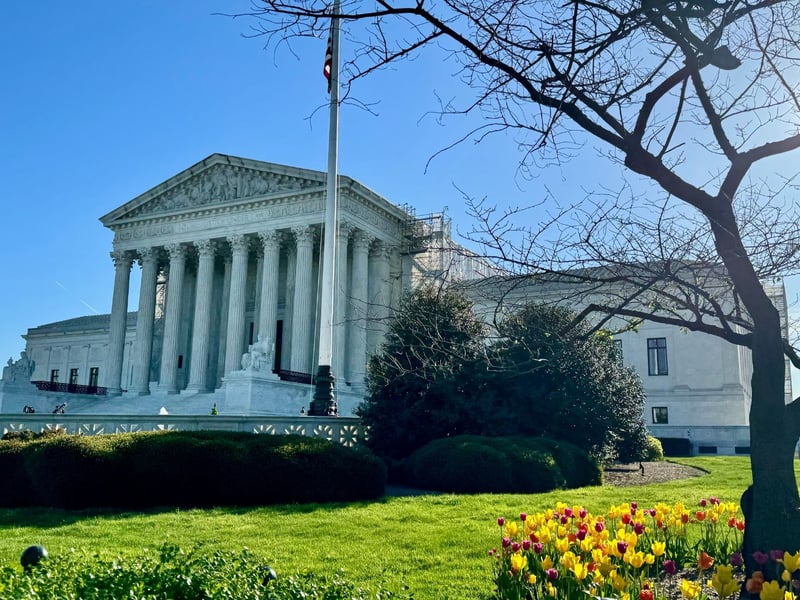
WASHINGTON (CN) — The Supreme Court ruled on Thursday to hold the government responsible for covering more health care costs for Native American tribes.
The Indian Health Service is in charge of overseeing tribal health care, but several tribes have contracts with the agency to carry out those duties themselves. Under these contracts, tribes get funds for overhead and administrative costs — but they do not get paid to collect program income from Medicaid, Medicare and private insurers.
In a 5-4 ruling, the Supreme Court agreed with the Northern Arapaho Tribe and the San Carlos Apache Tribe that the government must cover these costs, since the tribes contractually obligated to collect insurer income.
The ruling affirms two lower courts, finding that the government owed tribes money to cover the cost of implementing their health care programs.
“The self-determination contracts of the San Carlos Apache Tribe and Northern Arapaho Tribe require them to collect and spend program income to further the functions, services, activities, and programs transferred to them from IHS,” Chief Justice John Roberts wrote for the majority. “When the tribes do so and incur administrative costs, ISDA requires IHS to pay those support costs.”
The George W. Bush appointee said tribes that take advantage of the Indian Self-Determination and Education Act should receive the same funding as the Indian Health Service.
“Contract support costs are necessary to prevent a funding gap between tribes and IHS,” Roberts wrote. “By definition, these are costs that IHS does not incur when it provides healthcare services funded by congressional appropriations and third party income.”
During oral arguments in March, the San Carlos Tribe told the justices that the funding would only go to boost tribal health care since it has to be used according to the guidelines in the contract.
The government argued that Congress did not intend for tribes to receive additional funds, but the high court found that, by forcing the tribes to cover these costs on their own, the Indian Health Service had created a systematic funding shortfall.
“If IHS does not cover costs to support a tribe’s expenditure of program income, the tribe would have to divert some program income to pay such costs, or it would have to pay them out of its own pocket,” Roberts wrote. “Either way, the tribe would face a systemic funding shortfall relative to IHS — a penalty for pursuing self-determination.’
Roberts said tribes are required to spend program income on furthering federal programs usually handled by the Indian Health Service.
“When the tribe does so — as IHS did when it operated the program, function, service, or activity — and incurs administrative and overhead expenses, those expenses are incurred ‘in connection with the operation of the federal program, function, service, or activity pursuant to the contract,” Roberts wrote.
In dissent, Justice Brett Kavanaugh wrote that the court’s ruling upended a long-settled understanding of tribal health care contracts.
“As I see it, the relevant statutory provisions do not support the court’s decision,” the Donald Trump appointee wrote. “And the extra federal money that the court today green-lights does not come free.”
Justices Clarence Thomas, Samuel Alito and Amy Coney Barrett joined Kavanaugh’s dissent.
Kavanagh said the price tag for the court’s decision could be up to $2 billion annually, and Congress will have to divert funding from poorer to richer tribes to come up with the money.
“That is because poorer tribes are less likely to administer their own healthcare programs and therefore do not receive third-party income from Medicare, Medicaid, and private insurers,” the Trump appointee wrote.
The dissenting justices said lawmakers, not the court, should make funding decisions.
“In my view, the court should leave those difficult appropriations decisions and tradeoffs to Congress and the president in the legislative process, and not now upset the settled legal understanding that has prevailed for the last 30 years,” Kavanaugh wrote.
Following the ruling, Department of Health and Human Services Secretary Xavier Becerra urged Congress to shift the Indian Health Service’s funding from discretionary to mandatory “to protect the overall appropriation for the Indian Health Service and create more adequate and stable funding into the future.”
“The court has rendered its decision, and we remain firmly committed to executing our obligations under federal law and supporting tribal self-determination and sovereignty,” Becerra said in a statement.
 Follow @KelseyReichmann
 Follow @kelseyreichmann.bsky.social
Subscribe to our free newsletters
Our weekly newsletter Closing Arguments offers the latest about ongoing trials, major litigation and rulings in courthouses around the U.S. and the world, while the monthly Under the Lights dishes the legal dirt from Hollywood, sports, Big Tech and the arts.