
 Search Articles


RICHMOND, Va. (CN) — After four days of trial and amid mounting incriminating evidence and testimony, a Virginia high school graduation shooter pleaded guilty in state court to first-degree murder on Thursday.
The case stemmed from a 2023 graduation ceremony for Huguenot High School in Richmond, Virginia, that devolved into a chaotic shooting — leaving two dead and 17 more injured.
The defendant, Amari Pollard, claimed self-defense. Both prosecutors and the judge found his arguments unconvincing.
“A defendant can’t justify shooting an unarmed victim in the back,” Chief Circuit Court Judge Reilly W. Marchan told the defense.
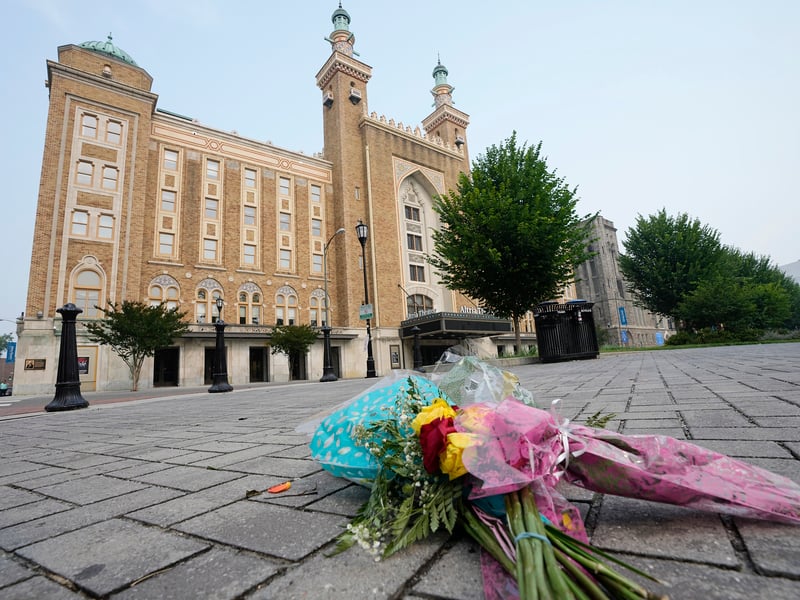
Amari Pollard will serve 25 years in prison for shooting and killing 18-year-old Shawn Jackson, a childhood friend, moments after he walked the stage at Altria Theater on June 6 last year.
The plea came in just before closing arguments and after Marchan ruled the jury could not consider self-defense. Likely facing an unfavorable verdict, Pollard cut his losses.
Pollard also pleaded guilty to the use of a firearm in commission with a felony, receiving a 43-year sentence with 18 suspended.
“It’s factually a tragic case,” Marchan said in court on Thursday. “It’s also factually a complex case.”
The defense spent four days trying to convince a 14-person jury that Jackson and his friends’ threatening behavior gave Pollard reason to be scared for his life and left him with no option but to shoot.
“It’s not premeditation when someone says ‘I’m gonna kill you,’ and it’s five of you and one of him,” defense attorney Jason Anthony told the court.
As the case unfolded, jurors learned Pollard shot Jackson in the back — putting his self-defense argument on thin ice. Pollard also admitted during cross-examination that he hadn’t seen Jackson or any of his friends handling a weapon opening fire.
“By the time you see someone else’s guns, you are already dead,” Anthony argued.
Pollard claimed Jackson had lifted his graduation gown in an apparent effort to threaten him. Prosecution found this version of events unlikely, considering Jackson never had a gun.
Prosecutors showed that Pollard shot Jackson six times — a number that Marchan said rose above what was necessary for self-defense.
“How about [the] fourth shot,” Marchan asked. “Is he dead enough?”
The first bullet that entered Jackson’s body pierced his spinal cord, medical examiner Dr. Renne Robinson testified, immediately paralyzing him before Pollard fired five more bullets. A firearms examiner told the jury that Pollard’s gun jammed after the sixth bullet, leading the prosecution to suggest he would have fired even more.
Pollard testified Thursday that Jackson yelled “shoot him” in the lead-up — but prosecutors pressed him for not sharing that important tidbit during his initial interview. The defense, meanwhile, argued Pollard left details out of his interview because he still didn’t know if his family and friends were safe and because his mind was racing. Authorities interviewed him less than an hour after the shooting.
Pollard changed his story over the course of the investigation and trail. Initially, he said he only saw Jackson’s friend wearing a backpack he suspected contained firearms. Later, he claimed he saw an unidentified person reaching into the bag and grabbing something.
“I felt like I was in a trap,” Pollard told the jurors. “Like I was in a death trap or something.”
In denying the defense’s last-ditch effort to strike the first-degree charge and allow the jury to consider a self-defense claim, Marchan pointed to Virginia case law, which holds that threatening words and attitudes don’t meet the threshold for acceptable reasons to use deadly force.
In trying to prove Pollard premeditated his killing, the prosecution focused on Pollard and Jackson’s falling out over the murder of Pollard’s friend, 18-year-old Devion Elliot, in 2021. Elliot died attempting a drive-by shooting on Jackson’s friend Malachi Mann, who shot and killed Elliot in what was determined to be a justifiable killing.
During his initial interview with a detective, Pollard said he had been trying to avoid Jackson and his friends Jamon Flowers, Dominque Fowler and Mann — even going so far as staying away from their side of town.
“I knew I should have stayed home today,” Pollard told Richmond Police Detective Jeffrey Crewell hours after the shooting.
Jackson’s stepfather, Renzo Smith, was also shot and killed during the incident in what the defense described as friendly fire from Jackson’s friends.
Video shows Smith, Fowler and Flowers shooting more than 20 bullets in Pollard’s direction as he ran to a nearby parking garage, injuring several bystanders. The government has not charged anyone in connection with the shootings of the other victims.
Pollard ostensibly went to the ceremony to see his cousin graduate. After Jackson walked the stage but before the graduation ended, Smith, Jackson’s friends and Pollard all separately retrieved firearms from their vehicles.
When the ceremony ended — and as graduates began spilling out of the Altria Theater and into Monroe Park across the street for pictures and goodbyes — Jackson and his friends, along with Pollard and his family, had an oral confrontation that devolved on a scuffle.
Video evidence showed that Pollard went around a group of people to shoot Jackson, who had begun walking towards his mother in the opposite direction.
Jurors watched an eerie 90-minute clip of Pollard’s conversation with Crewell that included what Pollard said when he was alone in the room.
“I ruined my cousin’s graduation,” Pollard said to himself. “I ruined so many people’s graduation.”
Jackson’s mother, grandmother and other loved ones attended nearly every minute of the trial and said they were satisfied with how it ended. Before Pollard was taken away, he told his family, who also came to show support during the trial, that he loved them.
Subscribe to our free newsletters
Our weekly newsletter Closing Arguments offers the latest about ongoing trials, major litigation and rulings in courthouses around the U.S. and the world, while the monthly Under the Lights dishes the legal dirt from Hollywood, sports, Big Tech and the arts.