
 Search Articles


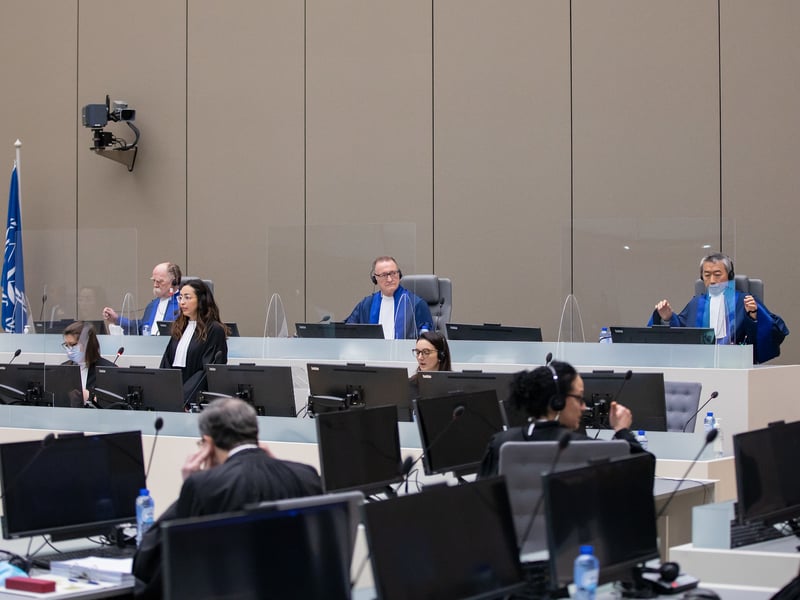
THE HAGUE, Netherlands (CN) — Prosecutors at the International Criminal Court on Monday began their closing arguments in the trial of two pro-Christian militia leaders charged with murder, torture and the use of child soldiers.
Alfred Yékatom and Patrice-Edouard Ngaïssona are facing maximum sentences of life in prison if they are convicted of war crimes and crimes against humanity for leading Christian militia members and directing attacks on Muslim civilians.
“This is a very important date for us and for justice, the justice that the Central African Republic has been awaiting for so long,” the court’s deputy prosecutor Mame Mandiaye Niang told judges, speaking in French.
According to the prosecution, Ngaïssona, a wealthy businessman, was part of the inner circle of ex-President François Bozizé, who was ousted from power in a coup by pro-Muslim groups known as the Seleka. Ngaïssona described himself as the spokesperson of the so-called anti-Balaka forces, Christian militias that began in opposition to the Seleka.
“I do not recognize myself in the charges,” Ngaïssona told the court after the 16 counts of war crimes and 16 counts of crimes against humanity against him were read aloud at the start of the trial in 2021.
Prosecutors say a group led by Yékatom used grenades, machetes and guns to attack Muslim traders at a market, killing around a dozen people. The group then destroyed the city’s mosque and burned houses belonging to Muslims, forcing civilians to flee.
He is charged with 10 counts of war crimes and 11 counts of crimes against humanity. Both men pleaded not guilty to all charges.
Last month, judges at the court unsealed an arrest warrant for another anti-Balaka member, Edmond Beina. He is accused of leading rebel groups that killed Muslim civilians between 2013 and 2014.
In 2023, the prosecution withdrew charges against Maxime Mokom, a former government minister from the Central African Republic. He had faced 20 counts of murder, rape, pillaging and torture for his supposed role in the nation’s sectarian violence in late 2012, but the court’s chief prosecutor said there was insufficient evidence of his guilt.
Mokom was arrested in Chad in 2022 and sent to The Hague, where he remained in detention for nearly two years until the charges were withdrawn last year. After the proceedings were terminated, Mokom spent 43 days under house arrest in a hotel in The Hague before an undisclosed country agreed to take him in and allow him to apply for asylum.
Civil war in the Central African Republic has been ongoing since late 2012, shortly before Seleka forces ousted Bozizé and took control of the capital. Christian militias began to organize attacks against the primarily Muslim militias in 2013. Last month, the ICC arrested its first Seleka commander when Mahamat Said Abdel Kani turned himself in.
This is the ICC’s second investigation into crimes in the former French colony. The court previously looked into events that took place before 2012, ultimately convicting Jean-Pierre Bemba, the vice president of the neighboring Democratic Republic of the Congo, for ordering his forces to rape and murder civilians in the Central African Republic.
Bemba’s landmark conviction, the first time the court focused on the use of sexual violence during war, was overturned on appeal in 2018 as a result of legal errors. He was later convicted of witness tampering.
Violence has broken out in the Central African Republic again, following parliamentary elections on Sunday. The conflict has killed more than 5,000 people and left more than 1.1 million displaced in a country of 5 million.
 Follow @mollyquell
Subscribe to our free newsletters
Our weekly newsletter Closing Arguments offers the latest about ongoing trials, major litigation and rulings in courthouses around the U.S. and the world, while the monthly Under the Lights dishes the legal dirt from Hollywood, sports, Big Tech and the arts.