
 Search Articles


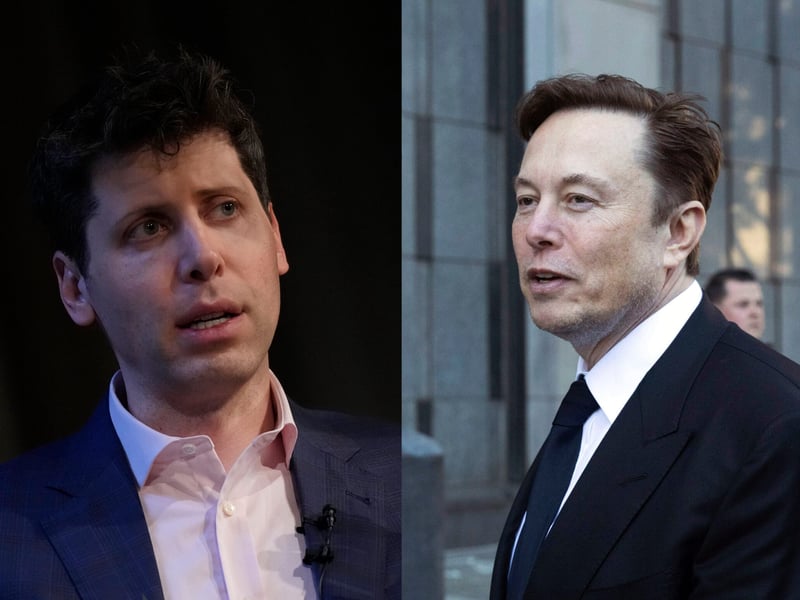
OAKLAND, Calif. (CN) — A federal judge signaled Wednesday that Elon Musk’s lawsuit against OpenAI will go to trial after hinting to the court she would deny the artificial intelligence company’s motion for summary judgment.
U.S. District Judge Yvonne Gonzalez Rogers had a no-nonsense demeanor while hearing arguments by OpenAI’s attorney William Savitt, saying she didn’t agree with the defendant that there wasn’t enough evidence for Musk to bring fraud and unjust enrichment claims to trial.
Musk and Sam Altman, who cofounded OpenAI in 2015 and later clashed over who should lead it, have had a long-running feud over the startup’s direction ever since Musk stepped down from the company board in 2018.
Musk, an early investor, sued OpenAI CEO Altman and his company in 2024, seeking a court order to prevent it from going through with for-profit restructuring. Musk claimed the move violated OpenAI’s nonprofit mission and breached the terms of his previous donations to the company, approximately $45 million.
“There were assurances made that it was going to be not-for-profit, and a jury may find that compelling," said the Barack Obama appointee about the plaintiff’s evidence. “It’s circumstantial, but that’s how that works."
Previously, the court denied Musk’s bid for an order that would block OpenAI’s conversion from a nonprofit into a completely for-profit business in March 2025.
It also further thinned Musk’sclaims against OpenAI in May but allowed the fraud claims to survive.
Musk attorneys Steven Molo and Robert Kry argued Altman made false promises to Musk in emails to induce him to give more donations while, at the same time, restructuring the company and taking a $10 billion investment from Microsoft.
In the lawsuit, Musk also accused OpenAI of violating multiple antitrust laws, including the Sherman Act, through its close partnership with Microsoft, as well as other noncompetitive behaviors such as exclusivity agreements with investors that prevent them from funding other competitors in the AI market.
Microsoft is also a defendant in the suit, over claims of aiding and abetting, breach of fiduciary duty and unjust enrichment, with Musk claiming Microsoft benefited from his early donations.
Microsoft’s attorney Russell Cohen said the claims should be granted summary judgment in favor of Microsoft because the company did not have a contractual agreement or obligation to Musk, and if there was any obligation, it was OpenAI’s alone.
Rogers also heard a dispute on the statute of limitations. Both parties claim different times for when the statute of limitations should start: in 2017, when Musk, by that year, gave a majority of the donations, or between 2019 and 2020, when Musk continued to make donations but in a far smaller amount.
Because OpenAI did not adequately inform Musk of its plans and deals were conducted in secret to mislead him, Molo claimed, he wasn’t given proper notice and continued donating money.
“This is a question of the plaintiff’s notice, and it’s extremely difficult to prove notice,” Molo said. “It’s a classic jury question and one I feel confident we are going to prevail.”
Rogers agreed, based on the evidence, that “much was done in secret” and told the court she was considering a bifurcation of the case, meaning the dispute on the statute of limitations would be heard first. If a jury found that the statute of limitations had passed — it’s generally four years for private federal antitrust cases — then the case wouldn’t need to be heard on the other claims, Rogers said.
In counterclaims upheld by the court in August, OpenAI accused Musk of unlawfully disrupting the ChatGPT developer’s business relationships during the lawsuit by orchestrating a “sham bid” to buy the company for about $97.4 billion in February 2025.
OpenAI argued Musk’s offer letter, which was also provided to The Wall Street Journal around the time of sending, was merely a “commercial tactic” designed to interfere in OpenAI’s business, generate maximum buzz and consume the company’s time and resources in responding to it.
Altman quickly rejected the deal on Musk’s social platform X, saying, “No thank you, but we will buy Twitter for $9.74 billion if you want.”
The jury trial is tentatively scheduled for March 30.
Subscribe to our free newsletters
Our weekly newsletter Closing Arguments offers the latest about ongoing trials, major litigation and rulings in courthouses around the U.S. and the world, while the monthly Under the Lights dishes the legal dirt from Hollywood, sports, Big Tech and the arts.