
 Search Articles


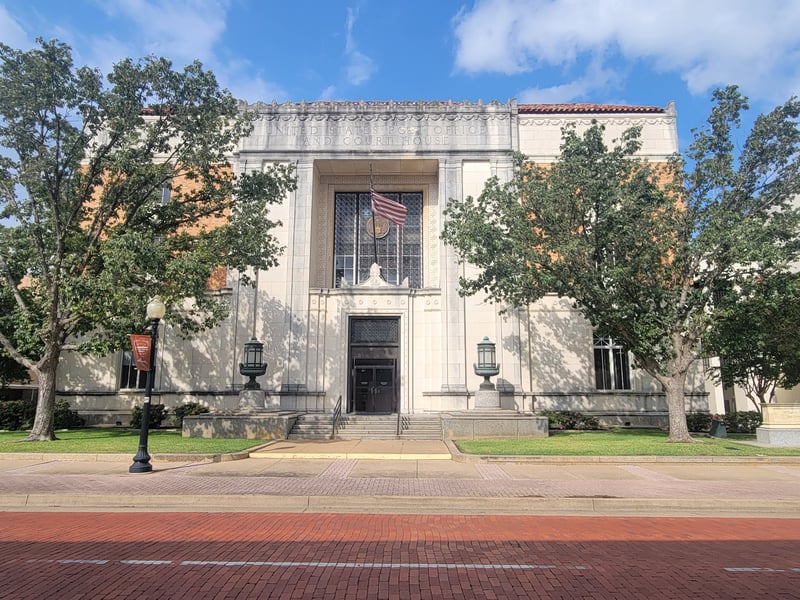
TYLER, Texas (CN) — Texas went to trial Tuesday against the Biden administration’s plan to allow over 550,000 undocumented spouses and stepchildren of American citizens to apply for permanent residency without having to leave the country, arguing it will force Texas to spend more money on healthcare, education and prisons.
Sixteen Republican-led states sued the Department of Homeland Security in August in the Eastern District of Texas challenging the Keeping Families Together program, which allows applicants to “parole in place” on a case-by-case basis rather than risk splitting up a family unit.
Undocumented immigrants are eligible if they got married to a citizen before June 17, have lived in the United States continuously since June 2014 and have no serious criminal record.
U.S. District Judge J. Campbell Barker issued a temporary stay on the program through Aug. 26 and a restraining order through Nov. 8. DHS has continued accepting applications since the stay and projects 500,000 spouses and 50,000 stepchildren could be eligible.
During Tuesday’s three-hour consolidated hearing and bench trial, Barker meticulously questioned attorneys with the Texas attorney general and Department of Justice as to whether Texas has standing to bring this lawsuit. Texas argues the sheer number of parolees “will cause quantifiable financial harm” and that even “a dollar or two” of injury clears the hurdle imposed by the take care clause of Article III of the U.S. Constitution.
“The plaintiff states cannot recover their increased costs from the federal government, which they would otherwise not incur if the federal government enforced the law,” the 56-page complaint states. “The affects each state’s sovereign interests in its territory and its ability to properly carry out such interests on behalf of its citizens.”
Justice Department attorney Brian Ward said the plaintiffs states “have not brought forth evidence of an injury” in the case, downplaying their claims of future injury if the stay is lifted.
The judge noted how attorneys for both sides agree that very few program applicants would leave the United States even if Keeping Families Together did not exist, citing social and familial relationships built during their time here.
“This rule is not really about keeping families together, it is about relieving the stress,” Barker said.
Over 30 people were seated in the courtroom gallery, 15 of whom are Keeping Families Together applicants from outside of Texas. Barker acknowledged the impact his ruling would have on families.
“This is an important rule since over 500,000 people will be affected,” he said. “But we aren’t here to argue over whether it is important, we are here to argue over whether it is legal.”
Vanessa Rivas-Bernardy, an attorney representing intervenor defendant Coalition for Humane Immigrant Rights, showed the judge images of families that would be split without Keeping Families Together. She highlighted Carmen Miranda, an American citizen with multiple sclerosis who depends on her undocumented spouse for care and income.
The judge noted how Rivas-Bernardy focused on the separation aspect of striking down the program, but reminded her that both Texas and the Biden administration agree most applicants would not leave the country without the program anyway.
Barker was appointed to the bench by Donald Trump in 2019. He ruled against the Biden administration’s Covid-19 eviction moratorium in 2021 and ruled against the National Labor Relations Board’s joint-employer rule in March.
The bench trial came two weeks after a group of 19 Democrat-led states and the District of Columbia filed an amicus brief in support of Keeping Families Together.
The judge is expected to rule quickly, as his restraining order expires in three days.
 Follow @davejourno
Subscribe to our free newsletters
Our weekly newsletter Closing Arguments offers the latest about ongoing trials, major litigation and rulings in courthouses around the U.S. and the world, while the monthly Under the Lights dishes the legal dirt from Hollywood, sports, Big Tech and the arts.