
 Search Articles


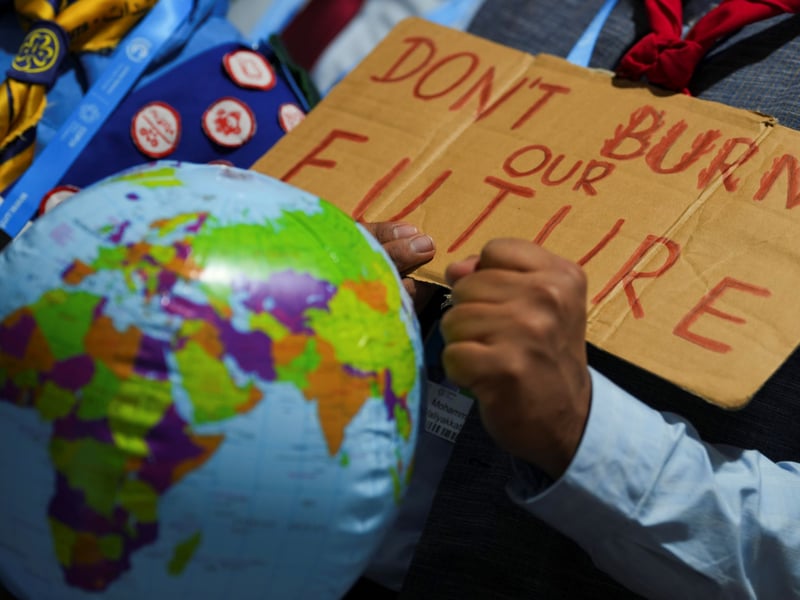
THE HAGUE, Netherlands (CN) — The highest court of the United Nations on Monday opened hearings delving into the climate crisis, with nearly 100 countries expected to participate in the historic proceedings.
In 2023, the U.N. General Assembly voted to ask the International Court of Justice for an advisory opinion on countries’ legal obligations to combat climate change and what they must do to repair existing environmental damage.
Leading the push for an advisory opinion is the island nation of Vanuatu, a chain of some 80 islands about 500 miles long in the South Pacific Ocean.
“The conduct is unlawful, it must cease, and its consequences must be repaired," Vanuatu’s special envoy for climate change, Ralph Regenvanu said in his opening remarks. “It is the most consequential case in the history of the court.”
Indeed, it is the largest case ever undertaken by The Hague-based court. Judges will hear from 99 countries over two weeks — ranging in scale from the United States to Fiji — as well as 11 organizations, including the Organization of the Petroleum Exporting Countries and the World Health Organization.
Outside of the courtroom, hundreds of climate activists gathered, holding signs that said “uphold human rights” and “climate justice now.”
The idea of seeking an opinion from the ICJ began in 2021 in a Fiji classroom. Law students at the University of the South Pacific became convinced they had found the best path to force the global community to curb greenhouse emissions.
“For our generation and for the Pacific Islands, the climate crisis is an existential threat. It is a matter of survival, and the world’s biggest economies are not taking this crisis seriously,” Vishal Prasad, the director of Pacific Islands Students Fighting Climate Change, told reporters.
But not all countries want aggressive measures. On Monday afternoon both Saudi Arabia and Australia argued that the Paris Agreement and United Nations Framework Convention on Climate Change were the defining legal agreements on climate change and the court should defer to them.
The hearings start just a week after the end of the annual United Nations climate summit known as COP, where richer countries agreed to pay $300 billion a year by 2035 to help with climate change mitigation — substantially less than the $1.3 trillion a year that vulnerable countries say is needed.
By February 2025, all U.N. member states will have to submit plans for reducing emissions and adaptation measures.
Though nonbinding, advisory opinions carry significant legal and political weight. The court previously has taken up questions about the independence of Kosovo, the separation of Chagos from Mauritius and Israel’s occupation of Palestinian territories.
In July, judges found that a myriad of Israeli policies — including backing settlements and exploiting natural resources — violate international law and said all countries who assist Israel with its illegal activities are also in breach of their obligations.
Also pending before the ICJ is the International Labor Organization’s request for the high court to determine whether workers have a right to strike.
Requests for advisory opinion can come from the General Assembly, the Security Council and around 20 other U.N.-affiliated organizations.
In May, the Hamburg-based International Tribunal for the Law of the Sea found in a separate advisory opinion that countries must take action to fight back against rising global temperatures and increasingly destructive storms. The world’s top maritime tribunal was asked by the Commission of Small Island States — a body formed in 2021 solely to pursue the advisory opinion that includes Antigua and Barbuda, Niue, Palau, Saint Vincent, Tuvalu and Vanuatu — to weigh in on sea level rise.
Other courts have also found that states have obligations to combat climate change. In its first international court decision, the European Court of Human Rights in April sided with a group of senior Swiss women who argued their government violated their rights by failing to protect them from the impact of a warming planet.
Climate activists in the Netherlands and Germany have also succeeded in bringing cases against their governments for failing to act. The Dutch Supreme Court in 2019 ordered the government to reduce greenhouse gas emissions in the landmark Urgenda decision.
 Follow @mollyquell
Subscribe to our free newsletters
Our weekly newsletter Closing Arguments offers the latest about ongoing trials, major litigation and rulings in courthouses around the U.S. and the world, while the monthly Under the Lights dishes the legal dirt from Hollywood, sports, Big Tech and the arts.