
 Search Articles


(CN) — Weeks after the United States disbanded peace negotiations over the mounting conflict in Sudan, a top State Department official is meeting with regional leaders in Africa to discuss the violence that the United Nations warned is devolving into full-scale civil war.
Assistant Secretary of State Molly Phee’s visit to Addis Ababa, Ethiopia, on Monday and Tuesday will include talks with representatives of countries in the region, the Intergovernmental Authority on Development and the African Union Commission. Notably absent from the discussions, however, are representatives of the warring Sudanese Army and the Rapid Support Forces paramilitary, which could render moot any progress in the meetings.
The conflict between the army and the RSF, which has been raging since April 15, fully derailed a Western-brokered transition to democracy after decades of military and authoritarian rule.
Phee, who oversees African relations at the State Department, is also meeting with Sudanese civilians “committed to ending the conflict and restoring democratic governance in Sudan,” the department said. Matthew Miller, a spokesperson, did not provide specifics on Monday about which civilians are involved or how they were selected.
“We think it’s important to engage a number of parties in the region, governments in the region, especially those that have their own relationships with the warring parties,” Miller said. “It’s also important for us to engage … with civilian authorities and civilian representatives in Sudan to make it clear that we don’t believe there is a military solution to this conflict.”
Analysts have warned that the violence in Sudan could send it careening into a failed state that would destabilize the region. Libya, which shares a small southeastern border with Sudan, is reportedly funneling supplies to the RSF. The Russian Wagner Group private military company has a facility in the country close to the fighting, and has also been accused of backing the paramilitary.
U.S. politicians have warned that if the RSF prevails, it will likely give Russia access to Port Sudan, opening a key access point on the Red Sea.
The U.S. and Saudi Arabia were coordinating negotiations in Jeddah, Saudi Arabia, to end the fighting, but the Sudanese army pulled out of the process on May 31. The negotiations generated several ceasefires that were repeatedly violated and the countries officially disbanded the talks on June 21.
“We have engaged with both of the factions since day one and the point that we’re at now is that we’ve seen both factions continually agree to ceasefires and then either violate those ceasefires or refuse to extend them when the ceasefires expired,” Miller said. “We will continue to send a message to them that we don’t believe there’s a military solution.”
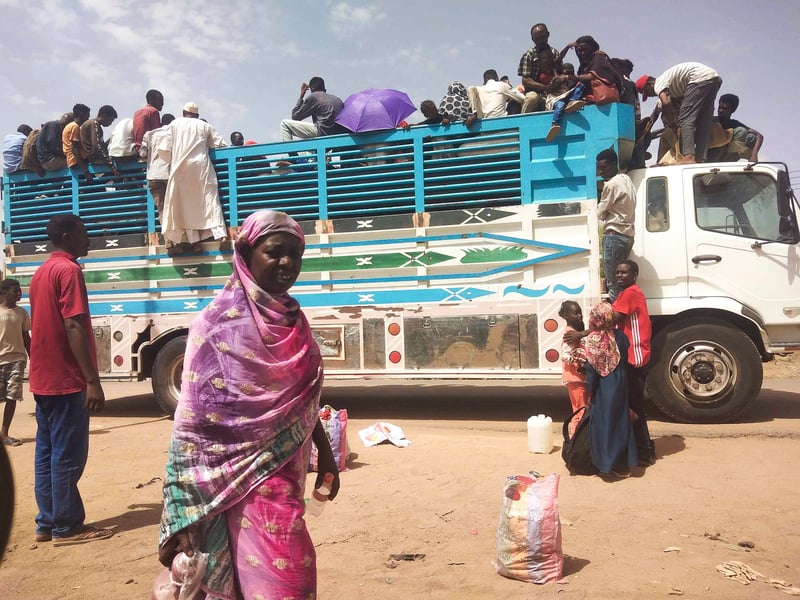
The conflict has wrought destruction on the capital of Khartoum, triggered widespread violence in other urban areas and reignited ethnic violence in Darfur, displacing more than 2.9 million people. Refugees are already putting a humanitarian strain on surrounding countries, particularly South Sudan.
The Sudanese health minister last month estimated that at least 3,000 people have been killed and 6,000 wounded since fighting broke out, but cautioned that the toll is likely much higher.
U.N. Secretary-General Antonio Guterres warned Sunday that the country is careening toward “full-scale civil war” as clashes continued unabated.
“There is an utter disregard for humanitarian and human rights law that is dangerous and disturbing,” Guterres said, according to The Associated Press.
Martin Griffiths, the U.N.’s under-secretary for humanitarian affairs, called Monday for a new forum to broker a ceasefire.
“We don’t have a place, a forum, where the two parties are present,” Griffiths told the AP, “where we can broker the kind of basic agreements that we need to move supplies and people.”
 Follow @TheNolanStout
Subscribe to our free newsletters
Our weekly newsletter Closing Arguments offers the latest about ongoing trials, major litigation and rulings in courthouses around the U.S. and the world, while the monthly Under the Lights dishes the legal dirt from Hollywood, sports, Big Tech and the arts.