
 Search Articles


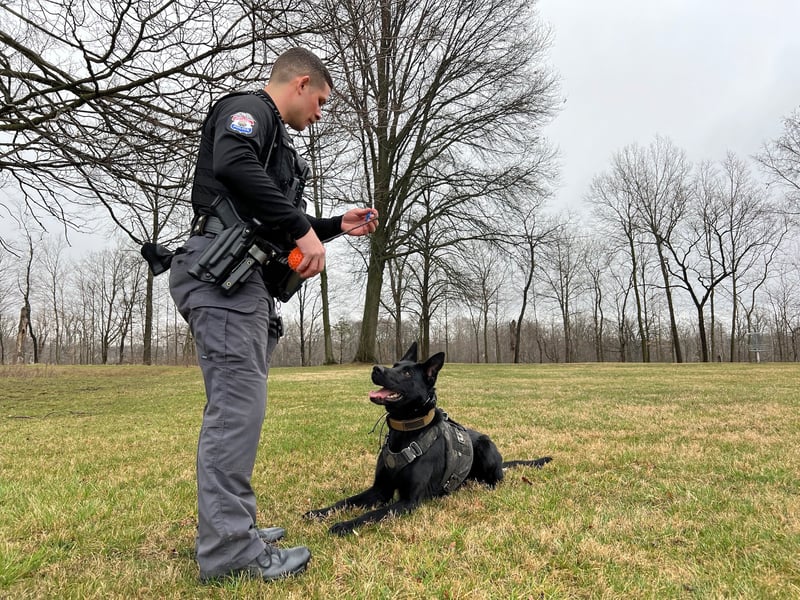
SAINT PAUL, Minn. (CN) —The Minnesota Supreme Court ruled Wednesday that the state specifically waived its sovereign immunity with respect to claims over police dog attacks, breathing life into a case brought by a car dealership employee who was bitten when a state trooper came to her workplace for service.
Language of Minnesota’s dog-bite statute “plainly, clearly, and unmistakably waives sovereign immunity” for claims brought under it, the court found in its 4-2 majority ruling that reinstated Cristina Berrier’s claim and overruled the Minnesota Court of Appeals.
The statute imposes liability on the owner of any dog who attacks or injures without provocation “any person who is acting peaceably in any place where the person may lawfully be.”
At oral arguments before the Minnesota Court of Appeals and Supreme Court, assistant attorneys general argued that state agencies like the Minnesota State Patrol were shielded from that liability by the state’s sovereign immunity, since the Legislature hadn’t specifically named the state as a potential owner.
The court disagreed. “There is no sign that the phrase is limited to non-state or business entities who own dogs,” Justice Margaret Chutich wrote in the court’s opinion. “Further, in previous opinions we have recognized the state as an ‘owner’ within the meaning of the statute.”
Attorney Grant Borgen, who represents Berrier, said he was pleased but not surprised by the Supreme Court’s decision.
“We thought the district court had it right from the get-go, and we were surprised by the Court of Appeals’ decision, but it was rewarding to see the Supreme Court go with the plain-language analysis,” he said Wednesday.
Berrier was bitten by a State Patrol narcotics detection dog when a trooper brought his patrol car to the dealership where she worked for repairs. “The state patrol trooper had this dog and this situation where it wasn’t a law-enforcement encounter,” Borgen said of the event. “In this situation, where the state patrol is acting just like a member of the public, it should be held accountable, just like any other member of the public.”
The sovereign immunity dispute emerged on the eve of trial over Berrier’s dog-bite claim and a negligence claim, Borgen said. Judge Ross Leuning denied the State Patrol’s motion to dismiss the dog-bite claim, prompting the State Patrol to appeal. Now that the appeal is resolved, Borgen said he expects to go to trial on both claims.
Justice Karl Procaccini penned a dissenting opinion, arguing that while Berrier could still pursue her common-law negligence claim, sovereign immunity should be considered waived only when there is no doubt that the Legislature intended to waive it. He pointed to a law declaring that unless a law leaves no doubt as to that intent, the state is not bound by its passage.
“The majority concedes that the ‘no doubt’ standard is exacting but then asserts that we cannot apply the standard’s plain language,” he wrote. “instead, the majority claims that— when applying the standard— we must consider its purpose, the context in which it was codified, and the circumstances in which it is applied.
“In other words," he continued, “the majority dismisses the text that the Legislature wrote to direct the interpretation of its own acts, substituting that text for the court’s assessment of what ‘no doubt’ means.”
Justice Sarah Hennesy, a new addition to the seven-member court, did not take part in the decision.
Subscribe to our free newsletters
Our weekly newsletter Closing Arguments offers the latest about ongoing trials, major litigation and rulings in courthouses around the U.S. and the world, while the monthly Under the Lights dishes the legal dirt from Hollywood, sports, Big Tech and the arts.