Search Articles


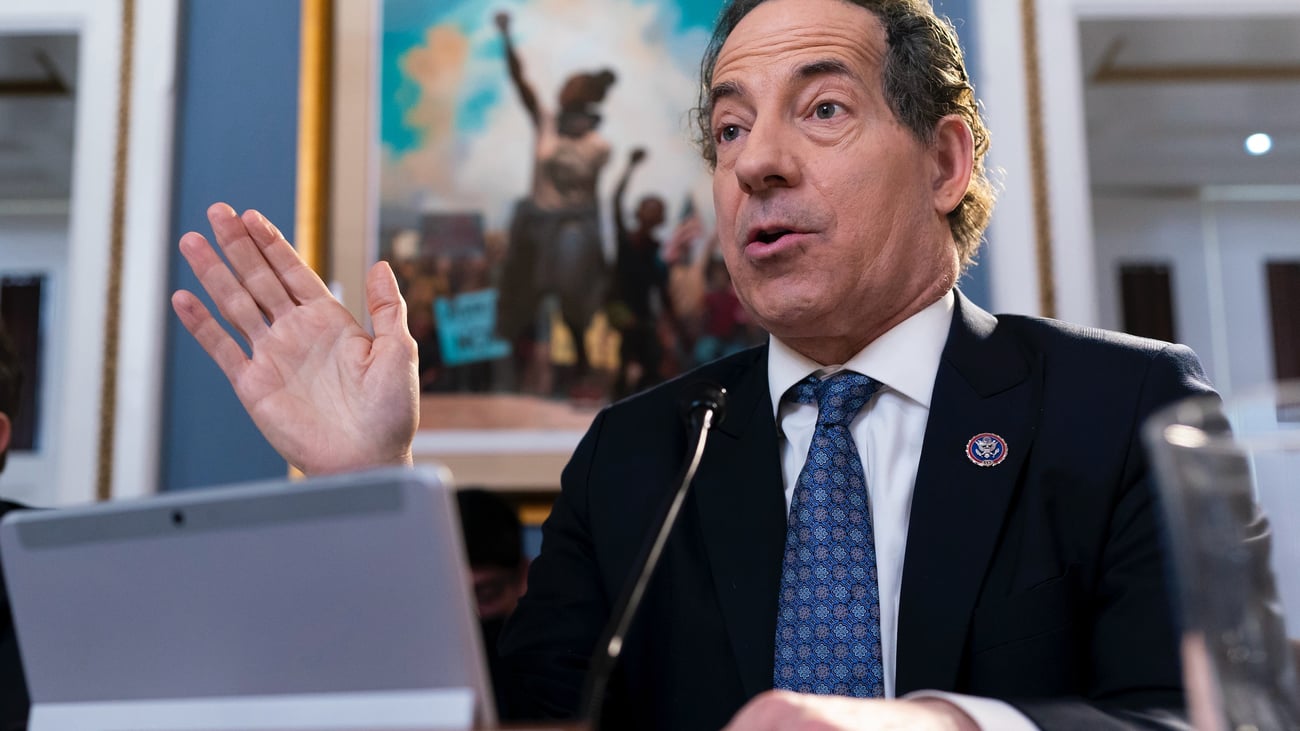
WASHINGTON (CN) — A top House Democrat on Thursday said he would move to force a vote on a bill to put down the Trump administration’s billion-dollar “anti-weaponization” fund once and for all, weeks after the White House said the plan was dead.
The move comes as lawmakers on both sides of the aisle have sought legislative assurance that the administration cannot revive the Justice Department program, which drew broad consternation on Capitol Hill and threatened to sink a piece of must-pass Republican budget legislation.
Maryland Representative Jamie Raskin, the top ranking Democrat on the House Judiciary Committee, said in a meeting with House Minority Whip Katherine Clark Thursday morning that he would bring his tranche of slush fund-slaying legislation to the chamber floor as a privileged motion — a House procedural tool that allows lawmakers to fast-track urgent matters.
Raskin said he planned to file the privileged motion on Friday. If he manages to capture the 218 signatures required to move his bills, House rules dictate the chamber must hold a vote within two legislative days.
“The people’s representatives must decide whether to uphold the rule of law and protect taxpayer dollars — or stand aside as this unprecedented corruption spins out of control,” Raskin said in a statement.
Democrats and Republicans alike were rattled earlier this month after the Justice Department announced it would set up a $1.8 billion fund to compensate victims of what Trump has long called “government weaponization.” Lawmakers worried the fund — established as part of a settlement between President Donald Trump and the Internal Revenue Service — could be used to hand out cash payments to violent criminals.
Following bipartisan backlash, acting Attorney General Todd Blanche announced the Justice Department would not “move forward” with the weaponization fund.
But despite such commitments from the administration, Raskin’s package of legislation, verbosely dubbed the No Corrupt Agreements Requiring Taxpayer Expenditures Benefitting Lawbreakers and Assorted Non-Prosecution Covenants, Handouts and Emoluments, or NO CARTE BLANCHE, Act, would put a final nail in the slush fund’s coffin.
If made law, the measures would, among other things, block the use of any federal funds for the program. The act would also wall off taxpayer funds for similar efforts to pay the president, vice president, political appointees or people convicted for crimes related to the Jan. 6, 2021, Capitol riot.
A second bill in the package would also make it illegal for a sitting president to recover damages or other awards from a settlement agreement with the U.S. government unless such a deal first undergoes an independent judicial review. Under the proposed law, such settlements would only be valid if they represent a legitimate legal dispute or serve the “interest of justice.”
Raskin on Thursday called on his colleagues to act, saying Congress needed to step in to shut down what he called a “shameful shakedown” of the U.S. government via the fund.
“They are determined to compensate Trump’s private street-fighting militia and create 1,600 MAGA millionaires with our money,” the Maryland Democrat added, alluding to the 1,600 Capitol rioters granted a sweeping pardon by Trump last year.
If his discharge petition accrues enough support, the House could vote on Raskin’s tranche of bills as soon as Tuesday.
Blanche earlier this month walked back the $1.8 billion weaponization fund as the controversial program stalled Senate negotiations on a budget reconciliation bill aimed at ending an extended partial shutdown of federal immigration enforcement agencies. Key Republican lawmakers, including North Carolina Senator Thom Tillis and Louisiana Senator Bill Cassidy, complained the proposed cash reserve could be available to people convicted of breaching the Capitol.
Even after the Justice Department said it would drop the weaponization fund, Senate lawmakers attempted to write additional guardrails into the reconciliation bill. The upper chamber, however, ultimately passed the sweeping spending legislation without any such safeguards.
Blanche, for his part, has insisted that the billion-dollar fund is dead but has so far resisted calls to issue a written order rescinding the program.
The Justice Department rebuked an order from a federal judge in Virginia demanding the acting attorney general submit a signed declaration that the fund would not move forward. Agency lawyers said last week such a request was “unnecessary” and argued the judge had overstepped her legal authority.
The Trump administration held up its anti-weaponization fund as a “systematic process” for people who believed they were unfairly targeted by the federal government to seek financial redress. The reserve, bankrolled via the Justice Department’s judgment fund, emerged from a settlement between Trump and the IRS over the 2019 leak of his tax returns.
 Follow @BenjaminSWeiss
Subscribe to our free newsletters
Our weekly newsletter Closing Arguments offers the latest about ongoing trials, major litigation and rulings in courthouses around the U.S. and the world, while the monthly Under the Lights dishes the legal dirt from Hollywood, sports, Big Tech and the arts.