
 Search Articles


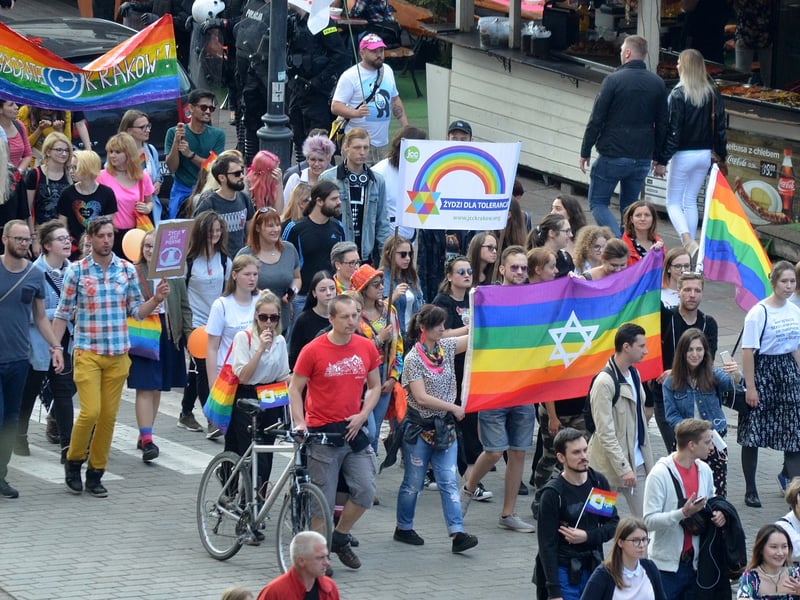
(CN) — Poland should honor the rights of same-sex couples who got married in other EU countries, a legal adviser to the bloc’s top court said Thursday.
EU advocate general Jean Richard de la Tour wrote in an advisory opinion for the European Court of Justice that the country should register the marriage certificate of two Polish citizens who wed in 2018 in Germany, where same-sex marriage is legal. In Poland, it is not.
The couple planned to move to Poland, but a clerk refused to transcribe their certificate into the civil register. Officials say gay marriage runs contrary to the fundamental principles of the Polish legal order.
The adviser noted that member states regulate the status of persons, including rules on marriage, meaning they don’t ordinarily have to transcribe same-sex certificates. However, countries also have to follow EU law.
Richard de la Tour said that since Poland doesn’t offer another way to legally recognize a same-sex marriage, the country should transcribe the marriage certificate. He wrote that the refusal to do so infringes on the right of EU citizens to move freely within the bloc and could threaten the right to respect for private and family life.
The opinions of advocates general are not binding, but the court often rules in line with the recommendations.
Artur Kula, one of the couple’s lawyers, alongside Pawel Knut, told Courthouse News that they’re enthusiastic about today’s conclusion and hope that the European Court of Justice will align with Richard de la Tour’s opinion.
“I think that this is the way to overcome the legal deadlock that we have in Poland,” he said. “The state’s opinion is so important to us because it finally provides some kind of recognition of same-sex partnerships.”
The case highlights Poland’s long track record against LGBTQ+ rights; experts hope an eventual favorable ruling might pave the way for more equality.
“LGBTQ+ rights are part of the Democratic pro-European package,” Annamaria Linczowska, an advocacy and litigation officer at the Campaign Against Homophobia, told Courthouse News. “I think that today’s case … is just an example that Poland, wanting to be considered as a progressive European country, should introduce some guarantees for LGBTQ+ people and make sure that law treats everybody equally.”
Poland continuously ranks among on its LGBTQ+ rights in the ILGA-Europe’s yearly index. It’s one of just five EU countries that doesn’t legally recognize same-sex couples at all, along with Lithuania, Romania, Bulgaria and Slovakia.
Sinéad Gough, a strategic litigation officer at the ILGA-Europe, is hoping that the European Court of Justice will align with Richard de la Tour’s opinion.
“We hope that this will provide an alternative to the current legal vacuum and regulate the fundamental aspects of the lives of same-sex couples in Poland,” she told Courthouse News. “This lack of recognition in the law deprived many of the practical rights that derive from the transcription of marriage certificates and civil registries — those include property rights, taxation rights, inheritance rights.”
Kula said that one of the claimants was going through a security clearance, and authorities were challenging him on why he used one surname in Germany, and another in Poland.
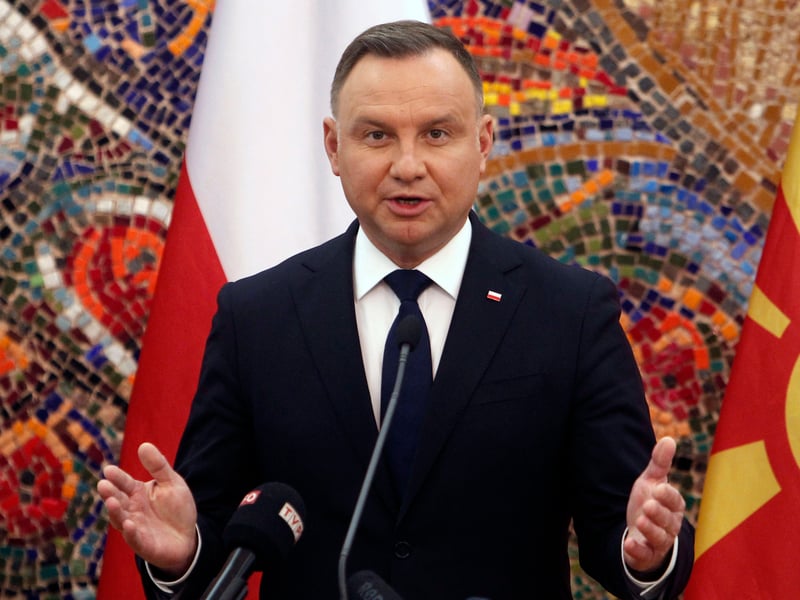
The country’s president, Andrzej Duda, sparked outrage when he said “LGBT is not a people, it’s an ideology,” while running for reelection in 2020. Jaroslaw Kaczynski, a co-founder of the PiS political party, said that the rights are an “import.”
Around this time, Poland also established “LGBT-ideology-free zones,” which soon turned into hundreds of municipalities and accounted for roughly one third of the country rejecting the LBGTQ+ community.
The Warsaw Voivodship Administrative Court has since repealed these zones.
Linczowska said it’s important to make a distinction between the Polish government and society; its citizens are more supportive and accepting than its leaders.
“According to numerous polls, the support for civil unions and for marriage equality is increasing — last year we had the support of civil unions at over 65%,” she said. “We’re not talking about something like special rights for the LGBTQ+ community, we’re just talking about basic equality, basic regulations that can guarantee some protection, basic safety for all families and all partnerships.”
In Oct. 2024, the government presented a draft bill that would recognize same-sex partnerships. However, it would have to be signed by its president to be enforced, so it’s highly unlikely to move forward before the end of Duda’s term in August.
Gough hopes that today’s case could help to change the landscape.
“We hope that the court will step up and provide alternative paths through EU law obligations for member states who are effectively depriving their LBGTQ citizens from accessing the same benefits as heterosexual couples,” she said. “So this is a positive ruling and we really hope that the court will align with this important opinion.”
 Follow @lilyradz
Subscribe to our free newsletters
Our weekly newsletter Closing Arguments offers the latest about ongoing trials, major litigation and rulings in courthouses around the U.S. and the world, while the monthly Under the Lights dishes the legal dirt from Hollywood, sports, Big Tech and the arts.