Search Articles


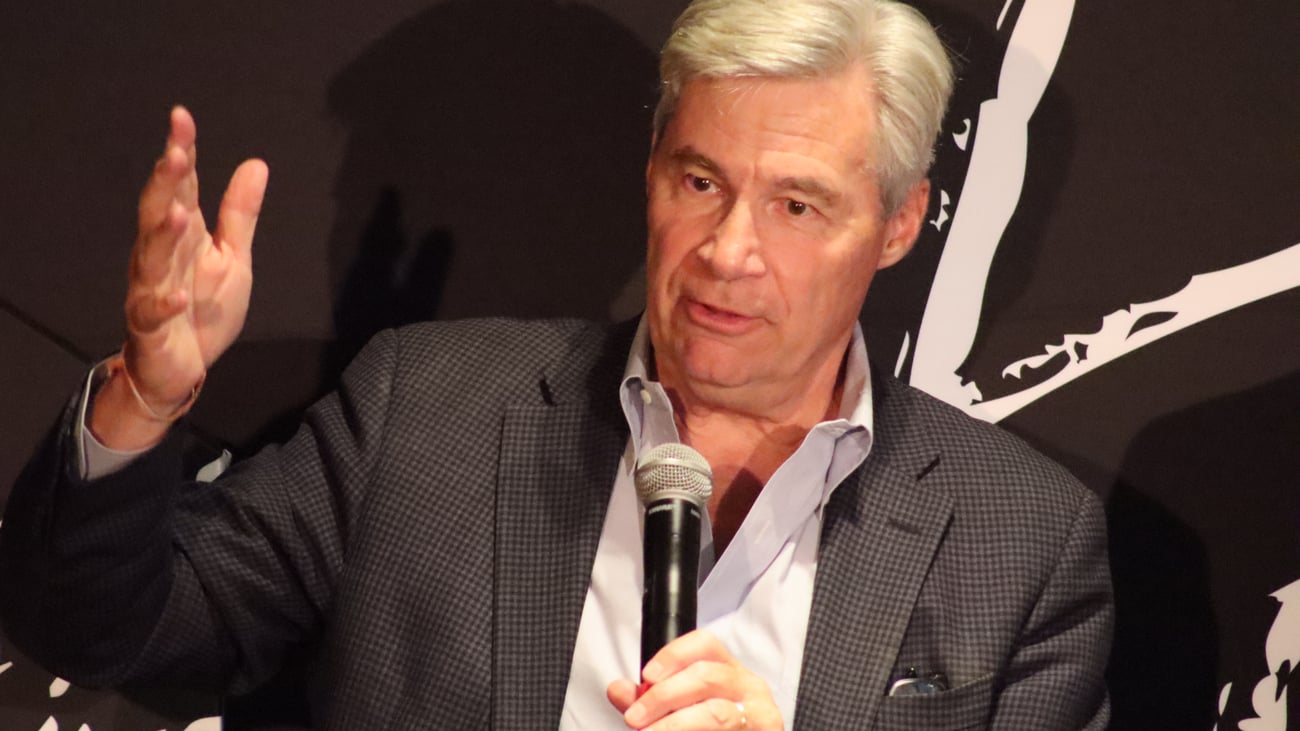
WASHINGTON (CN) — Rhode Island Senator Sheldon Whitehouse issued a stark warning to the Senate Judiciary Committee on Thursday, urging his colleagues to claw back their power over White House judicial nominees and end what he called a “slow-mo self-destruction” of the influential Senate panel.
The strong statement from the top Senate Democrat — and the apparent favorite to assume the Judiciary Committee gavel if Republicans lose the majority in November — comes as the Trump administration has taken a novel legal approach to its selection of U.S. attorneys that critics have framed as an end run around the Senate’s role of advice and consent.
Speaking from the committee dais Thursday morning as the panel met to vote on a slate of the White House nominees for vacancies on federal district courts and U.S. attorneys’ offices, Whitehouse argued that for years the upper chamber’s judicial affairs committee has slowly ceded its power to the executive branch.
“The net result is, as the politics balance out, that we transferred our power on this committee, individual senators’ power on this committee, to the executive branch, and we’ve never gotten it back,” said the Rhode Island Democrat. “We just gave it away.”
That “slow-mo self-destruction” of the Judiciary Committee’s authority, he claimed, began when the panel did away with senators’ ability to reject White House nominees for appellate court vacancies in their home states.
Known as the Senate blue slip, the century-old practice was initially designed as a mechanism to give lawmakers a say in the judicial selection process and to avoid the White House foisting unqualified nominees onto Congress. But some critics of blue slips have said they’ve become a tool of obstruction, and in 2017 the Senate’s Republican majority said it would no longer honor them for circuit court nominees.
Iowa Senator Chuck Grassley, who chaired the panel then and who holds the gavel presently, argued at the time that the blue slip should not serve as a blanket veto for judicial nominees whose jurisdiction covers multiple states. The Senate, however, still honors blue slips for federal district courts and U.S. attorneys.
But that hasn’t stopped President Donald Trump, who sees the blue slip as an impediment to his agenda, from taking an unusual approach to keep some of his federal prosecutor picks on the job without Senate confirmation.
The Justice Department has used this novel strategy for Trump’s U.S. attorney nominees in states such as New York and New Jersey, where Democratic senators had promised to withhold their blue slip support for candidates they viewed as unqualified. In districts where it employed the gambit, the administration fired the first assistant attorney and replaced them with its desired U.S. attorney nominee. That official is then named as a “special attorney,” in effect allowing them to assume the duties of U.S. attorney without the required approval from Congress.
Judges have repeatedly disqualified Trump prosecutors installed this way. A New Jersey court last year ruled that Alina Habba, the president’s former personal lawyer and interim U.S. attorney in the Garden State, had been serving unlawfully. And a federal judge in Virginia similarly disqualified Lindsey Halligan, a former White House attorney tapped by then-Attorney General Pam Bondi to serve as top federal prosecutor in the Eastern District of Virginia.
Both Habba and Halligan’s Senate nominations were effectively dead on arrival thanks to blue slip objections by the states’ Democratic lawmakers.
Despite the Trump administration’s spotty record sidestepping the Judiciary Committee on its U.S. attorney nominees, Whitehouse warned that the effort could set a precedent for a future Democratic majority.
“If you kill the Judiciary Committee process for U.S. attorneys, please don’t think that that’s just a one-way ticket,” said the Rhode Island Democrat. “We will permanently disable this committee’s ability to have a say in U.S. attorneys if we don’t do something about what this Department of Justice is doing right now.”
Responding to Whitehouse’s comments, Grassley said he was “not going to try to refute” anything his colleague said but argued that the Senate blue slip process in its current form has worked as intended.
“I think the way this really works, in the states where it has worked, is that the senators have encouraged cooperation with the White House and been in communication with the White House,” said the committee chairman. He added that the panel would continue honoring blue slips under the framework he established in 2017 and that Democrats maintained under the Biden administration.
Grassley has long defended the blue slip practice, even under fire from Trump himself, who has urged the top Senate Republican to abandon the tradition.
Whitehouse, meanwhile, argued that Judiciary Committee Republicans had also weakened the panel’s oversight function. He claimed that witnesses who have testified before the panel duck questions and assert “fake privileges” that go unchallenged.
The senator pointed to testimony given to the committee last week by Jeffrey Clark, a former Justice Department official who faced questions about his role in efforts to overturn the results of the 2020 presidential election. Clark refused to answer Democrats on the panel, invoking executive privilege and other legal protections.
“This is the Senate Judiciary Committee,” said Whitehouse. “If we’re going to allow witnesses to make up fake privilege and then act as if that’s okay — again, look out for when that turns.”
A spokesperson for the Trump administration did not return a request for comment on the senator’s remarks.
Whitehouse is widely viewed as the lawmaker best positioned to become the Democratic ranking member or possibly even chairman of the Senate Judiciary Committee next year. Illinois Senator Dick Durbin, currently the top Democrat on the panel, said that he will retire at the end of his term.
If Democrats retake the Senate in November’s midterm elections, the Rhode Island senator could find himself in a powerful position to conduct oversight on the Trump administration and could severely hamper the president’s judicial agenda.
 Follow @BenjaminSWeiss
Subscribe to our free newsletters
Our weekly newsletter Closing Arguments offers the latest about ongoing trials, major litigation and rulings in courthouses around the U.S. and the world, while the monthly Under the Lights dishes the legal dirt from Hollywood, sports, Big Tech and the arts.