
 Search Articles


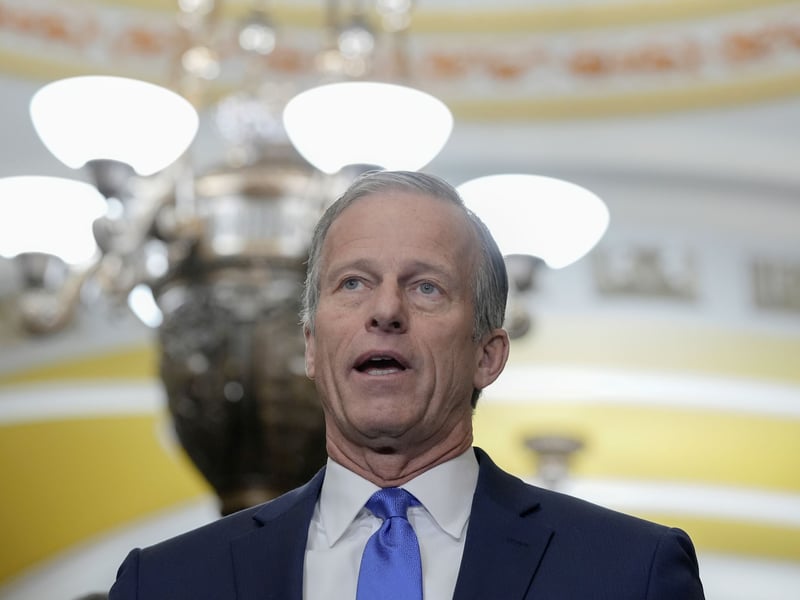
WASHINGTON (CN) — Senate Majority Leader John Thune said Monday that he would move to change chamber rules and speed up consideration of hundreds of President Donald Trump’s nominees to break months of procedural obstruction from Democrats.
Senate Republicans have for weeks considered invoking the so-called “nuclear option” as they chafe Democrats’ effort to slow-walk White House appointments using procedural levers, such as forcing roll call votes on nominees for positions that have traditionally been approved by voice vote. The gambit would allow the GOP to change Senate rules on a simple majority vote rather than the two-thirds majority typically required for such action.
And Republicans are proposing a rule change that would permit lawmakers to consider certain nominees “en bloc” in batches of 10 or more, a move aimed at speeding up the confirmation process.
Writing in a column published Monday morning in Breitbart, Thune argued that rule changes were necessary to break what he called Democrats’ “historic obstruction” that has prevented the Senate from considering other legislative business such as national defense authorizations and the federal budget.
“Republicans aren’t going to tolerate this obstruction any longer,” the Senate’s top lawmaker wrote. “We have tried to work with Democrats in good faith to batch bipartisan, noncontroversial nominees and clear them expeditiously, according to past precedent. Democrats have stood in the way at every turn.”
The GOP’s plan is based on a similar one proposed in 2023 by Minnesota Senator Amy Klobuchar, which would have allowed the Senate majority leader to bring up a batch of as many as 10 nominees who were advanced out of the same committee.
Senate rules currently only allow en bloc considerations under a process known as unanimous consent, where all senators agree to approve them without a recorded vote — the Republican proposal would eliminate the unanimous consent requirement and permit senators to confirm batches of nominees on a single roll call vote.
Thune said Monday that the Senate GOP had also “modified” Klobuchar’s plan to increase the cap of batched nominees from 10, a change he said would “account for the added obstruction” by Democrats.
Klobuchar’s plan excluded nominees for certain roles, such as circuit court judges, from en bloc consideration. Republicans have said that their “nuclear option” framework would include similar limitations on judicial nominees, and Thune has signaled that the proposed rules change would apply only to executive branch appointments.
Democrats have argued that their slow walking of Trump’s nominees is aimed at ensuring the president’s picks for high-level executive positions receive the appropriate level of Senate scrutiny. But Thune contended Monday that his colleagues were creating an unreasonable backlog, pointing out that without changing the rules lawmakers would need to take as many as 600 roll call votes to clear the current hopper of nominees. He added that, at the current pace, there would be “hundreds” of administration vacancies by the end of Trump’s term.
“I refuse to accept that reality,” the Republican leader wrote. He said that he would begin taking procedural steps this week to change Senate rules and allow for en bloc voting.
“No party should be able to weaponize the confirmation process the way that Senate Democrats are doing now, in a way that has never been done before,” Thune said. “This total obstruction simply cannot be the standard moving forward — both in principle and in practicality.”
Republicans, however, have also used the Senate’s procedural foibles to block nominees under Democratic presidents.
In a post on X Monday morning, Senate Majority Whip John Barrasso backed the move, writing that Senate Republicans were “determined” to confirm all of Trump’s nominees.
“For decades, noncontroversial nominees moved through the Senate in a timely manner,” said Barrasso. “Democrats destroyed this tradition by treating every Trump nominee as controversial. It’s time to change Senate confirmation rules.”
Senate Republicans have been kicking around the idea of invoking the “nuclear option” since before Congress’ August recess, when they failed to reach an agreement with Democrats to advance a raft of nominees ahead of the break. In addition to the proposed changes to en bloc voting rules, lawmakers have also weighed cutting down the two-hour debate limit on individual nominees.
It wouldn’t be the first time the GOP has used the “nuclear option” to advance Trump’s nominees. During the president’s first term, then-Senate Majority Leader Mitch McConnell used the lever to end a Democratic filibuster on Supreme Court nominee Neil Gorsuch.
The late Nevada Senator Harry Reid, the Democratic majority leader under former President Barack Obama, also invoked the procedural bomb in 2013 to push through several of the White House’s judicial nominees.
In present day, Senate Minority Leader Chuck Schumer has said that any changes to Senate rules would be a “huge mistake.” A future Democratic Senate would likely impose a similar framework on the Republican minority.
 Follow @BenjaminSWeiss
Subscribe to our free newsletters
Our weekly newsletter Closing Arguments offers the latest about ongoing trials, major litigation and rulings in courthouses around the U.S. and the world, while the monthly Under the Lights dishes the legal dirt from Hollywood, sports, Big Tech and the arts.