
 Search Articles


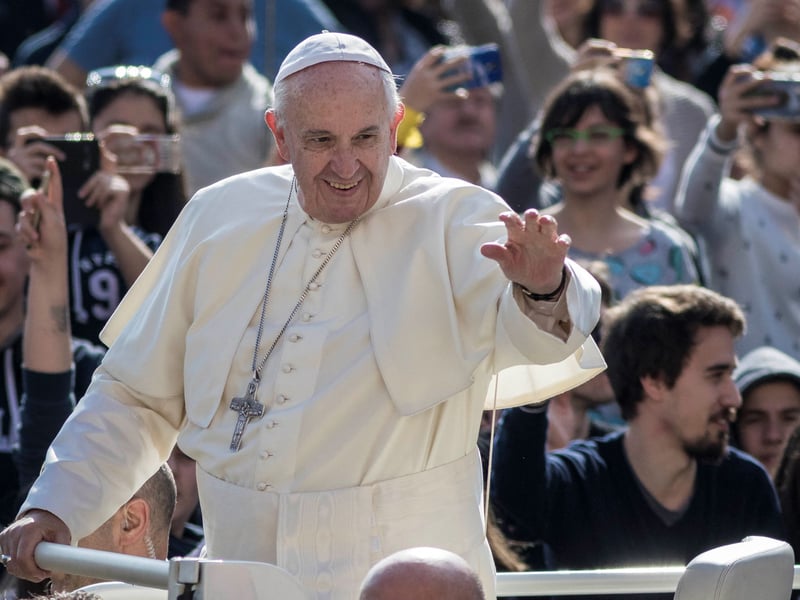
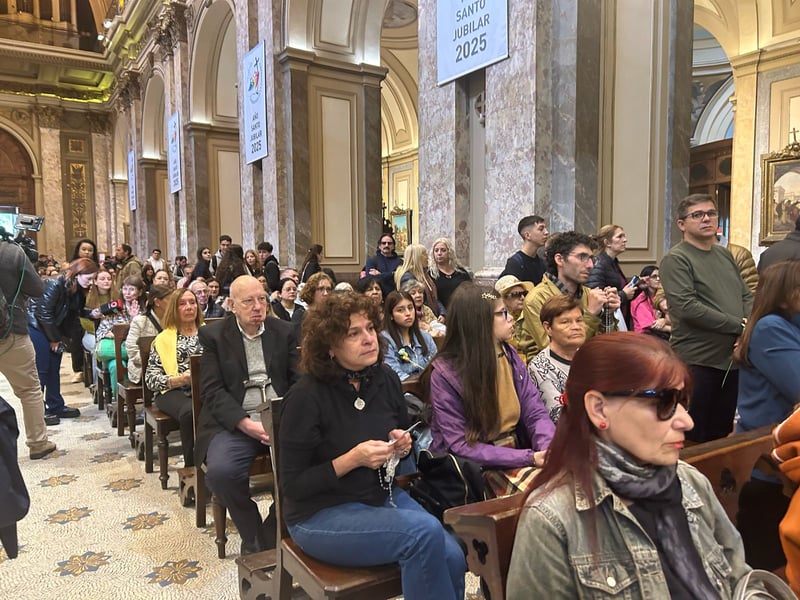
BUENOS AIRES (CN) — The Metropolitan Cathedral in Buenos Aires is often filled with tourists and school visits, but Monday morning, they blended with mourners gathering from everywhere in the city after hearing the news of the death of Pope Francis.
The 88-year-old leader of 1.4 billion Catholics died at 7:35 a.m. Vatican time, or 3:35 a.m. in Argentina, meaning most citizens woke up to the news on the radio, TV and newspaper covers. It was a nationwide shock to the many gathered in sacred places.
Ernesto Guzmán, 69, a retired worker, walked towards the Cathedral and sat silently on a side bench as he waited for the collective prayers to start.
“He changed many things in the Church — things that were for the good of us, the poor. That was very important,” Guzmán said.
Although he never saw Francis in person, Guzmán said he followed the news about the pope and listened to the homilies.
“I followed him closely, everything he said and did,” he said. Guzmán was one of the millions who felt touched by Francis’ closeness to people and his humility, but his devotion also came from what they shared — their homeland.
Pope Francis — his secular name, Jorge Mario Bergoglio — was born in Buenos Aires in 1936. He worked as a chemistry technician and taught literature and psychology before becoming a priest in 1969, for which he had started his studies a decade before.
He spent most of his life in the southern area of Buenos Aires, composed of traditional, low-middle-class neighborhoods that shaped his view of the world, inequality and community. He was a devoted fan of San Lorenzo, one of Argentina’s top football clubs.
He lived through one of Argentina’s darkest times, the 1976-1983 dictatorship. Back then, he served as Provincial Superior of the Jesuits in Argentina. In that capacity, he exercised leadership over fellow Jesuit priests and worked discreetly to aid those threatened by the regime.
His tenure became controversial when two young Jesuits he had reassigned — Orlando Yorio and Francisco Jalics — were kidnapped, tortured and interrogated by security forces; critics charged that his — back then, Bergoglio — decision to remove them from their parish in a poor Buenos Aires neighborhood had directly contributed to their ordeal.
Bergoglio always denied collaborating with the military junta, and in later years, both Yorio and Jalics affirmed that they did not believe he betrayed them. While human rights groups continue to debate whether he spoke out forcefully enough against the abuses of the time, no credible evidence has emerged of any direct cooperation between Bergoglio and the military government.
After the return of democracy in Argentina in 1983, he continued his studies. He became Auxiliary Bishop of Buenos Aires in 1992, and Archbishop of Buenos Aires in 1998. He was known for leading an austere life, and he was often seen riding the subway or the bus.
After being elected pope in 2013, Francis left for the Vatican and never returned home. Reasons remain unclear, but it’s mostly believed that he was avoiding any suspicion of interference or affiliation in Argentina’s often turbulent politics.
When asked, many mourners said they felt sad that they hadn’t been able to greet him in his homeland. But Francis, the first Latin American pope, remained connected to Argentina’s reality and its people.
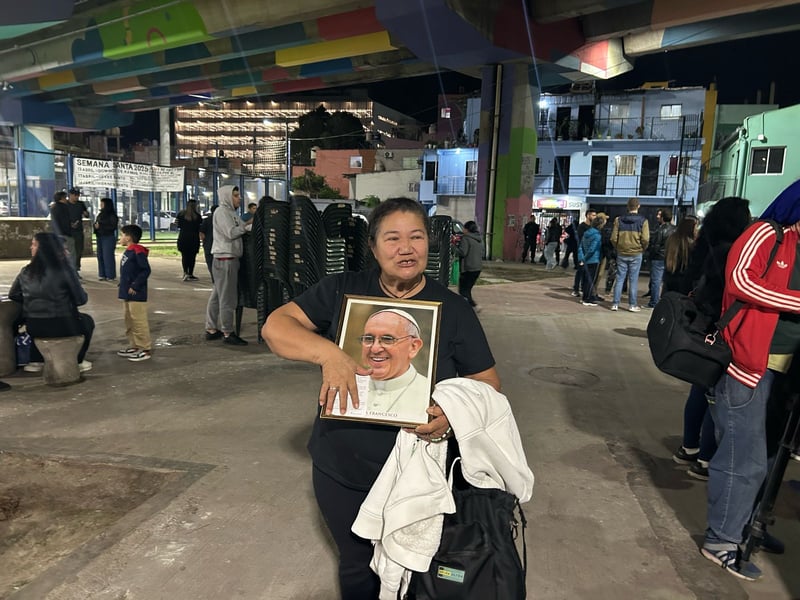
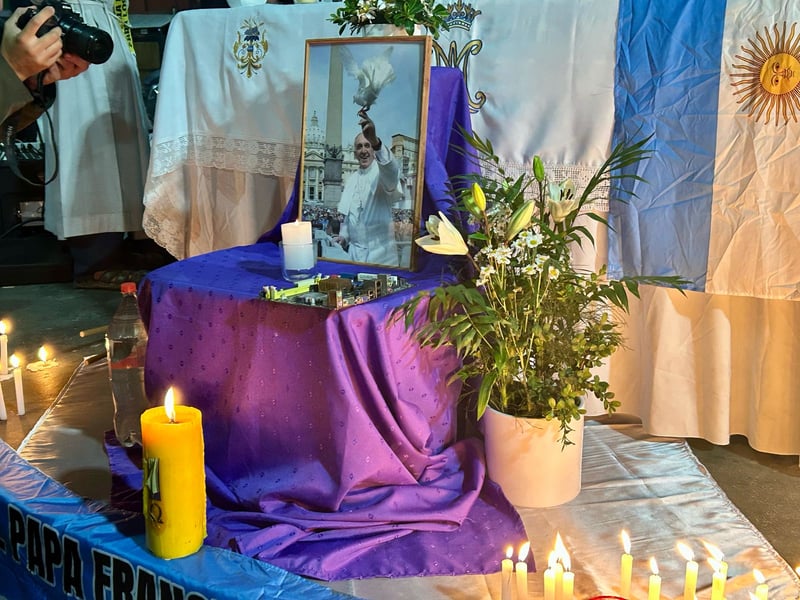
On Monday, as they heard the news of his passing, many said they felt that they were losing someone close to them. The offerings seen in the improvised send-offs comprised merch from his football club San Lorenzo, candles, photos of him, Argentine flags and shirts. People placed them in ad-hoc altars created spontaneously and fed throughout the day.
President Javier Milei announced a weeklong national mourning. In a statement, he wrote that “despite the differences, which now seem minor,” he was grateful to have met him.
During his presidential campaign, Milei’s tweets and comments about the pope sparked worry of a potentially broken relationship between the leaders if he won office. Milei called Francis “the representative of evil on earth,” among other things, due to his more progressive views.
But for many mourners on Monday, it wasn’t just his religious views that mattered to them, but also his role in challenging conservatism in one of the world’s most historical institutions.
“He stood up for those who are generally seen as ‘different,’” Guzmán said.
In the early days of his papacy, Francis expressed an unseen openness of the Vatican regarding LGBT communities.
“If someone is gay and he searches for the Lord and has good will, who am I to judge?” he said then.
Julián Cidanes, a 25-year-old therapist, was working in the Cathedral, leading a group of schoolchildren as mourners arrived.
“He was revolutionary in terms of the church’s doctrine,” Cidanes said. “Some liked him, some didn’t — but I think that he was, in the end, more popular than disliked.”
The criticism, said Cidanes, came from those opposing Francis’ views. Francis took measures and made gestures that adopted a more modern ideology, including discussing climate change, the inclusion of women in the Catholic Church and the acceptance of transgender people.
Argentina pioneered several progressive policies in Latin America during his years in the Vatican, including the legalization of abortion, which he did not attempt to counteract.
More recently, his words against violence and conflict were also seen as a message to those living in his homeland. He condemned Israeli bombings in Gaza as “cruelty," and faced criticism for his connection to a Gaza parish, where he spoke to a priest daily. He kept an open mind and seemed willing to host any world leader in his office, often providing advice.
His rebellious character brought the interest of the youngest, sometimes further from institutions like the Catholic Church.
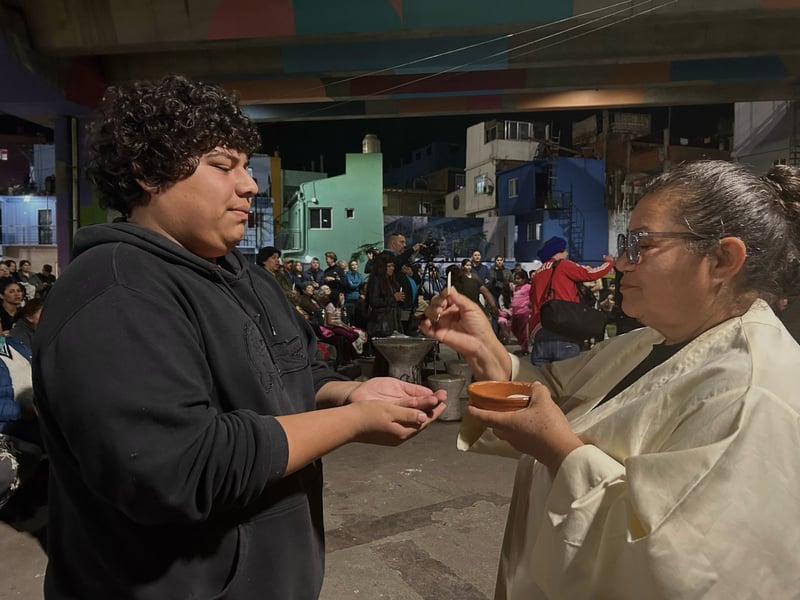
At 7 p.m. on Monday, the parish from Villa 31, a slum close to the center of Buenos Aires, held an open-air mass welcoming all the barrio neighbors.
“I was very proud of having an Argentine Pope,” Francisco Córdoba, 16, a school student, said. “It was huge — Messi represents us in football, and the pope in Catholicism.”
Córdoba, born a long time into the Argentine democracy, said that he felt spoken to by Francis.
“In the past, people didn’t have rights, opportunities, freedom of expression,” he said, referencing the 1976 dictatorship. “He accepted people of color, homosexuals … it took him some time, but he did.”
Araceli Álvarez, 45, with her eyes full of tears, said she felt “orphaned.” A nurse working for a public hospital in the city and a neighbor of Villa 31, she felt the pope had addressed her and the poorest like nobody else.
“He talked about housing rights, labor, human rights — I had never felt a pope siding with the poor," Álvarez said.
She said she hoped that Argentines would honor the late pope living up to his legacy.
“We have to work, just like he did, for those who are less privileged, we can’t leave the elderly alone, and we have to continue demanding access to health and housing,” she said.
At the end of the mass, Father Nacho, from the local parish, said he wanted to add something before letting everyone go. He addressed the people in front of him and those around, in the small, stacked houses around the playground where he was holding the mass.
“We’re standing in the middle of el barrio,” he said, a word bearing a sense much broader than just a neighborhood — more like a community, an identity, a home. “And right across this place — this is where he used to walk.”
 Follow @luciacholakian
Subscribe to our free newsletters
Our weekly newsletter Closing Arguments offers the latest about ongoing trials, major litigation and rulings in courthouses around the U.S. and the world, while the monthly Under the Lights dishes the legal dirt from Hollywood, sports, Big Tech and the arts.