
 Search Articles


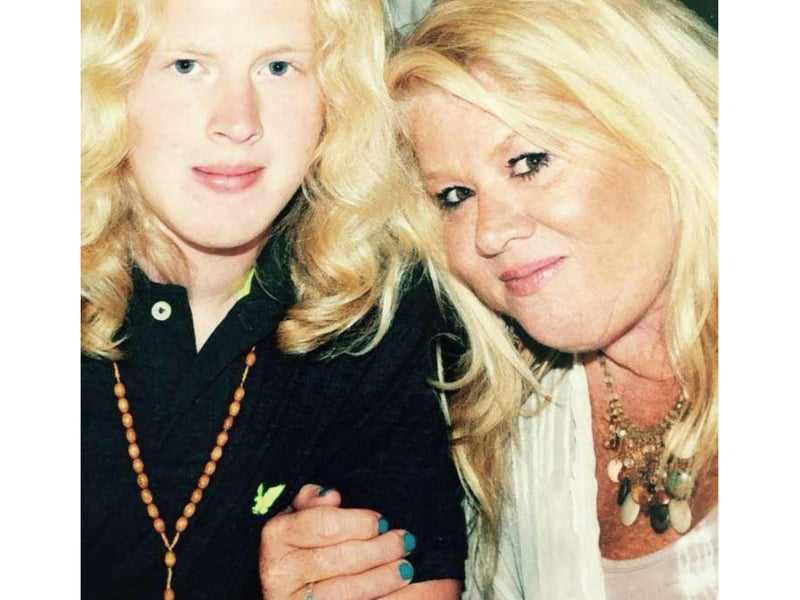
(CN) — Debi Sanders’ son Jake had just turned 20 when he died in October 2018 of non-Hodgkin lymphoma, an agonizing and lethal type of blood cancer.
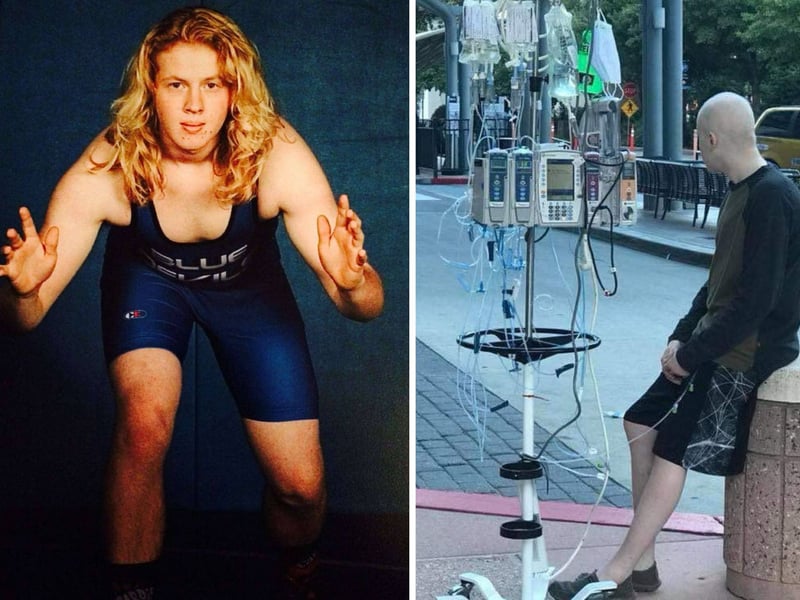
He was athletic in high school, earning letters in three different sports. He had seemed healthy and full of promise as he pursued a doctorate degree at the University of Montana. And yet a year prior, a tumor had shown up unexpectedly in his chest.
As the tumor grew and started blocking his airways, Sanders was life-flighted to Salt Lake City, then taken to MD Anderson Cancer Center in Houston. But it soon became clear he was dying. “The cancer had advanced to the point where there was nothing left to do,” Debi Sanders said.
Shortly before he died, Sanders took her son back home to Darby, Montana. She said they were greeted by an ad hoc welcome committee.
“The whole valley came out and lined the streets,” she said. “People with signs at four in the morning. The house was lit up like a Christmas tree.”
In his final year of life, the young Jake Sanders searched for an explanation for why he was suddenly dying of cancer. He came across studies suggesting a possible link between certain types of the disease, particularly non-Hodgkin lymphoma, and the chemical glyphosate.
Glyphosate has long been an active ingredient in many Roundup-brand weed killers, a product from agricultural giant Monsanto. Sanders had used the product almost daily for years. Since he was in seventh grade, he’d done yard work for various ranches near his small hometown of Darby. For all of them, he sprayed Roundup.
“He was so convinced [Roundup] caused his cancer,” Debi Sanders said in an interview. “He spent his last six months of his life fixated on going after Monsanto.”
A leader in the U.S. agricultural industry, Monsanto ushered in a new age for farmers in the 1970s with two key inventions: Roundup, a glyphosate-based herbicide, and genetically engineered crops capable of dramatically expanding food production.
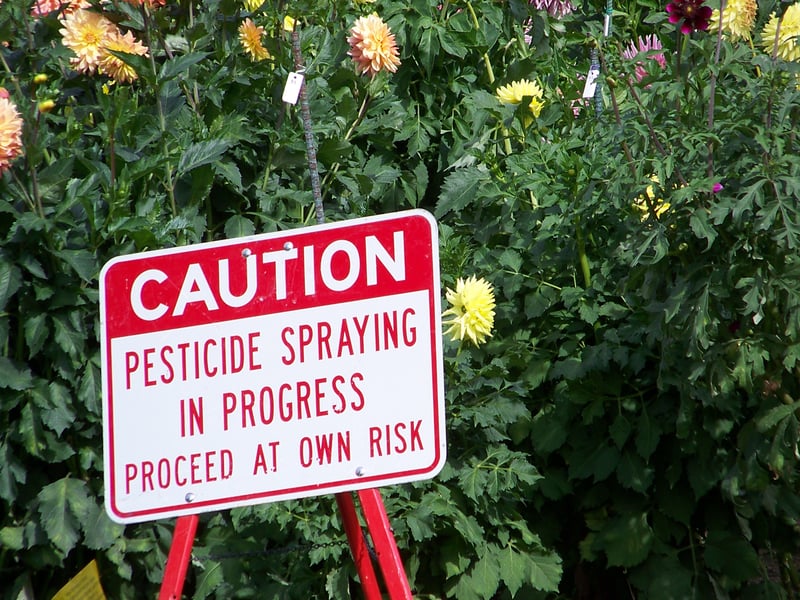
All that success has not come without controversy. Now owned by the pharmaceutical company Bayer, the agri-giant has already agreed to pay $10 billion in settlements for Roundup related litigation. There have been more than 170,000 lawsuits, including around 67,000 active cases as of January.
Last year, Bayer began removing glyphosate from its residential products — though it’s kept the chemical in its agricultural weed killers. The company says it did so not for health reasons but to manage litigation risks.
Among the plaintiffs in the ongoing Roundup lawsuits are Debi Sanders and her deceased son.
“I’m suing them on behalf of Jake,” Sanders said in an interview. She said her son’s dying wish was to save at least one person.
Bayer, on the other hand, is determined to stop the Roundup lawsuits. It’s spent years lobbying U.S. officials, arguing that if Roundup was safe enough for the U.S. Environmental Protection Agency, it should be good enough for citizens and the courts as well.
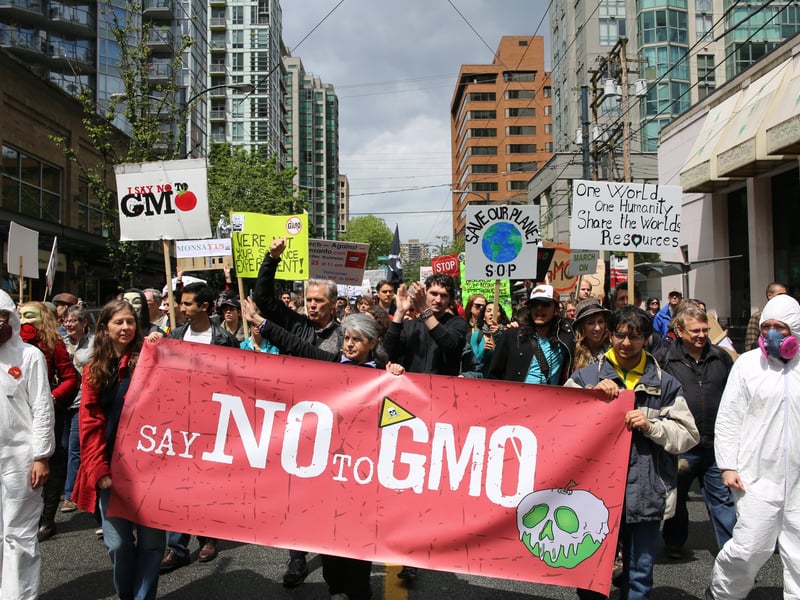
Monsanto may have revolutionized agriculture — by the 2010s, controversy was catching up with the company. It faced increasing political and economic pressure, including the “March Against Monsanto” movement and California Proposition 37 in 2012, which would have required labels on genetically engineered foods. (The measure narrowly failed.)
In 2018, German pharmaceutical giant Bayer acquired the mired company for $66 billion. It was one of the largest corporate mergers in German history, and it came with a big problem: It made Bayer liable in costly Roundup litigation. (In a statement after publication, a Bayer spokesperson stressed that nonetheless, Monsanto remained the named defendant.)
Noting that Roundup had been approved by the Environmental Protection Agency, the company twice asked the U.S. Supreme Court to find that “failure to warn” claims in state-level lawsuits were preempted by federal law.
The high court rejected the request both times, but a new petition is currently pending. The company has convinced the Third Circuit, but the Ninth and Eleventh circuits, as well as state appellate courts in California, Missouri and Oregon, have ruled the opposite.
Bayer has also taken its corporate advocacy to the legislative branch, launching a nationwide campaign to shield itself from liability at the state level. It’s lobbied state farm bureaus and put money into political races. In the 2018 election cycle, the Bayer employee political-action committee gave less than $300,000 to state and local candidates. But that number ballooned over the next three cycles, with the PAC spending $568,908 in 2024.
Bayer argues that Roundup is not carcinogenic. It has sought to consolidate and resolve legal claims in order to “bring a long period of uncertainty to an end," CEO Werner Baumann has stated.
By 2025, growing numbers of lawmakers were coming around to Bayer’s way of seeing things.
At least eight states this year have considered or passed bills limiting “failure to warn” liability for these types of claims. At the national level, there’s also the proposed U.S. Agricultural Labeling Uniformity Act. Though it hasn’t yet passed, it has bipartisan support.
At least two states — Georgia and North Dakota — have passed the Bayer-backed bills. In May, Georgia Republican Governor Brian Kemp signed Senate Bill 144, which prevents people from suing pesticide producers for failing to warn of health risks beyond what is required by the EPA. The law goes into effect in January.
Kemp’s signing of SB 144 came shortly after a state jury awarded a man nearly $2.1 billion, finding that decades of Roundup use had caused him to also develop non-Hodgkin lymphoma. Evidence at trial suggested Monsanto was aware of potential links between glyphosate and cancer risks but did not warn the public.
Reached for comment, Bayer reiterated the company’s position: Roundup products have been approved by and registered with the EPA. It says warning labels on the products are consistent with the EPA’s findings and should be sufficient to satisfy U.S. health and safety requirements.
In short, Bayer says there’s no legal basis to sue.
“Bayer stands behind the safety of glyphosate — backed by the EPA and all leading regulators around the world,” a spokesperson said in an email to Courthouse News. “It also supports legislation that would help keep crop protection tools in the hands of American farmers.”
As for shield laws like Georgia’s, “these bills are important because they reinforce the authority of the EPA’s rigorous, science-backed labeling decisions,” the spokesperson said. “When the EPA determines what a crop protection label should say, that decision is consistent and reliable for everyone.” In a news release after SB 144 was passed, the company described the law as a “win for farmers.”

Bayer has been candid about its efforts to lobby officials. A company webpage, entitled “Managing the Roundup™ Litigation,” details the company’s work to “seek [a] positive ruling from the U.S. Supreme Court” and “engage with policymakers for clarity outside the courtroom.”
“Glyphosate will continue to play a key role in agriculture,” Bayer states.
Critics, on the other hand, are sounding the alarm about what they describe as a cynical effort to protect Bayer’s bottom line and avoid more costly court judgments.
SB 144 “has nothing to do with real farmers and has everything to do with major corporations like Bayer,” said Gabriel Sanchez, a Democratic Georgia state representative who voted against the measure.“Unfortunately, our government has been captured by major corporations and the wealthy elite and [will] do anything for them, to ensure they keep donating to their campaigns and getting them reelected.”
Like the tobacco settlements of the 1990s, the Roundup failure-to-warn lawsuits are premised on the idea that company executives knew about the dangers of Roundup but didn’t tell people.
In the recent Georgia case, lawyers claimed the EPA originally classified glyphosate as a possible carcinogen to humans but was ultimately manipulated by Monsanto, which they say hired researchers to lobby the agency. Those same researchers — from the now-shuttered Craven Laboratories in Austin, Texas — were later convicted in 1994 of falsifying research data related to pesticide-residue tests over a 10-year period.
If Monsanto sought to reassure regulators, its efforts had the opposite effect on public opinion. Although glyphosate was first approved as a pesticide more than 50 years ago in 1974, the controversy around its safety has never really ended.
In 2020, the EPA reaffirmed that glyphosate is unlikely to be a human carcinogen. Just two years later, a federal appeals court ordered the agency to reassess the human cancer and ecological risks of glyphosate, finding it defied its own cancer guidelines. That review remains ongoing. Meanwhile, on the global stage, the International Agency for Research on Cancer classified glyphosate as a probable human carcinogen in 2015.
It’s a messy fight without clear fault lines. Bayer’s strategy has gained opportunity with President Donald Trump’s pro-business and anti-regulation EPA. At the same time, it conflicts with the efforts of Robert F. Kennedy Jr., secretary of Health and Human Services, to “Make America Healthy Again.” Despite mixed evidence, Kennedy has called attention to what he sees as serious health risks associated with pesticides.
Some public health advocates agree with Kennedy about the risks of glyphosate. They see Bayer’s efforts to enact shield laws as setting a dangerous precedent.
“The Georgia bill is designed to protect Bayer,” Bill Freese, science director for the advocacy group Center for Food Safety, said in an interview. “It’s shameful that the state legislature would prioritize protecting Bayer over its own citizens.”
At the same time, agricultural experts say there are real dangers to the efforts to scale back pesticide use. After all, it was crop failures and famines that first led humanity to look for ways to prevent pests from eating or crowding out staple crops.
“With less than 1.9 million family farms left in our country, the burden of feeding a growing population at home and abroad is a daunting task,” said Stanley Culpepper, a crop and soil science professor at the University of Georgia. “The bottom line is that science clearly confirms that safe and effective pest management tools must be available for our family farms.”
EPA science is reliable and trusted, Culpepper said. Unlike the courts, the agency has the tools and expertise to make science-based decisions about pesticide safety and efficacy.
“The more than 500 scientists in the U.S. EPA’s Office of Pesticide Programs work diligently daily to ensure these tools are safe for the applicator, the consumer, the environment, and endangered/threatened species,” he added.
Eric Prostko, a colleague of Culpepper’s and the resident “weed specialist” at the University of Georgia’s Department of Crop and Soil Sciences, noted that the EPA’s registration of pesticides is a long, complicated and scientific process involving more than 140 different tests.
Like Culpepper, he stressed that a shrinking number of farms still needed to feed a growing population. Uncontrolled weeds cause huge economic losses to farmers, he said.
While organic solutions exist, they can be less reliable and more costly, Prostko said. For some pests, including velvetbean caterpillars that colonize soybean fields and rootworms that infest and destroy peanuts, he said synthetic pesticides remain the only economical method of control.
“The weed science community is always looking for other methods — such as seed mills, sterile pollen, robotics, lasers [and] electrocution — to control weeds. [It] strongly encourages growers to use all possible cultural, mechanical, and chemical strategies available,” Prostko said. “However, these strategies must also be economical, or the American farmer cannot stay in business.”
Jay Feldman, cofounder of nonprofit Beyond Pesticides, has spent decades educating farmers about the risks of pesticides. The group has also worked to advance alternative practices and increase yields for pesticide-free crops.
He and Freese, the Center for Food Safety director, argue that when it comes to glyphosate-based pesticides like Roundup, the EPA has caved to pressure from agricultural conglomerates like Bayer.
Just four companies — Bayer, Syngenta, Corteva and BASF — dominate the global seed and pesticide market. Austria, Mexico and Germany have made efforts to phase out the use of Glyphosate. Several countries have restrictions on its usage, primarily in public spaces and residential areas.
“The real issue is we need greater transparency around pesticides rather than less,” Freese said. “If we had more honest warnings on labels, we could save lives — but instead, we’re going in the opposite direction.” He cited bills like Georgia’s, which he argued “tries to forbid honest labels on pesticides that might differ from EPA’s.”

As Bayer curries political favor and experts debate the pros and cons of pesticides, those who use products like Roundup have gotten sick and died from non-Hodgkin lymphoma. At least, those are claims in the thousands of lawsuits filed against Monsanto.
After the loss of her son, Debi Sanders said she didn’t think she could survive it.
“I was very, very attached to my child,” Sanders said. The pair were “joined to the hip,” especially after the loss of her oldest son in 2007. And yet more than six years after filing suit, her legal fight against Monsanto and its successor Bayer has continued. She says she’s rejected settlement offers from the company, arguing they’re an admission of guilt.
“It wasn’t about the money,” Sanders explained. “It was about hopefully helping somebody not have to go through with what we went through.” Even so, her son’s yearlong bout with cancer had taken a big hit out of the family finances. “I had to pay everything out of pocket [at MD Anderson Cancer Center] in Houston, all his medication, anything outpatient,” she said. “I had like a $2 million bill when he died.”
Coping with her grief, Sanders sought solace in Costa Rica.
While she got away from Montana, she couldn’t get away from Roundup. As she soon learned, the pesticide is widely used in the country.
“I wouldn’t eat a banana or pineapple that was imported from the states to save my life,” she said, “and I wouldn’t eat one here unless it came from an all organic farm where they don’t use Roundup.”
Debi Sanders hopes to return to the United States. She wants to become a yoga instructor focused on mothers whose children are sick with cancer, teaching them to “release their grief on a yoga mat.” It would be her way of honoring her son and his promising life cut short. “I know when people die we put them on a pedestal, but Jake was really one of these rare humans,” Sanders said. “He was a really special person. He had a big heart.”
 Follow @Megwiththenews
Subscribe to our free newsletters
Our weekly newsletter Closing Arguments offers the latest about ongoing trials, major litigation and rulings in courthouses around the U.S. and the world, while the monthly Under the Lights dishes the legal dirt from Hollywood, sports, Big Tech and the arts.