
 Search Articles


STRASBOURG, France (CN) — Article 42.7 of the EU’s founding treaty has one job: guarantee that no member state faces an armed attack alone. The EU never got around to the details.
That gap, long theoretical, has become suddenly urgent after an Iranian drone struck a British military base in Cyprus on March 2. Nine days on, European lawmakers are still working out what the EU would actually do if it happened again.
“Cyprus is not Europe’s periphery,” Cypriot Deputy Minister for European Affairs Marilena Raouna told the European Parliament on Wednesday. “It is Europe’s front line and its lighthouse in the eastern Mediterranean.”
The clause works roughly like NATO’s Article 5: If one member is attacked, the others are obligated to help. It has been invoked once — by France in 2015 after the Paris terrorist attacks. On paper, it obligates every member state to provide “aid and assistance by all the means in their power.”
But unlike NATO, the EU has no standing military command, no unified armed forces and no established procedure for triggering a response.
In practice, each country decides individually what form its assistance takes, ranging from military deployments to intelligence sharing to diplomatic backing. “It has never really been made more concrete what these obligations would be,” said Niklas Helwig, a senior research fellow at the Finnish Institute of International Affairs.
“In a practical, operational sense, this article is meaningless,” said Jacob Funk Kirkegaard, a senior fellow at the Brussels-based Bruegel think tank.
NATO’s Article 5 carried weight not because of its legal text, Kirkegaard said, but because of what stood behind it. “There was always the obvious political consensus and expectation that this is what would happen — by the United States.” No such consensus has ever existed inside the EU.
The Cyprus strike exposed a further complication. The Akrotiri base is legally British sovereign territory — a remnant of the 1960 independence agreement that left London with two military enclaves on the island. Britain left the EU in 2020, so it cannot invoke Article 42.7.
As a NATO member it could theoretically trigger Article 5 instead — but Cyprus is not in NATO, leaving any defense of the island to be improvised. “An ad hoc military operation by EU member states,” as Kirkegaard put it.
The strike may not even have cleared the clause’s own threshold. Article 42.7 requires “armed aggression” — a bar the drone incident likely did not meet. “Otherwise Russian drone incursions in Poland, Romania and the Baltic states would have triggered it already,” said Chris Kremidas-Courtney, a senior visiting fellow at the European Policy Centre.
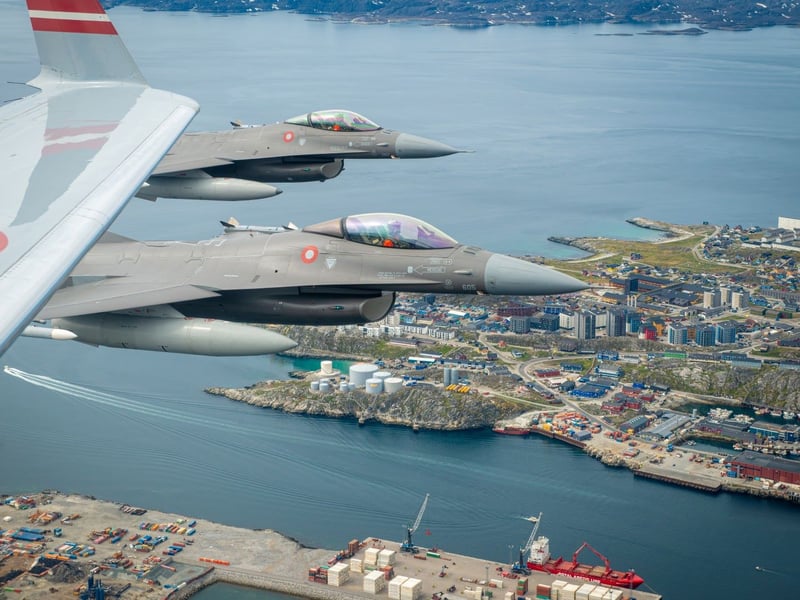
The response so far has come together country by country. Greece deployed two frigates and four F-16s to Cyprus. France sent a frigate and repositioned its aircraft carrier. Britain moved naval and air-defense assets to the region.
French President Emmanuel Macron, who flew to Cyprus on Monday to meet Cypriot and Greek leaders at the air base where Greek F-16s are now deployed, pledged two additional warships to the EU’s antidrone escort mission in the Red Sea and eastern Mediterranean. “When Cyprus is attacked, it is Europe that is attacked,” he said.
But solidarity cannot be improvised in the middle of a crisis, warned Jeroen Lenaers, a lawmaker from the center-right European People’s Party, during a plenary debate in Strasbourg on Wednesday. “If a member state is attacked, Europe needs to know how it responds.”
European Commission President Ursula von der Leyen addressed Parliament on Wednesday and pledged solidarity with Cyprus — but stopped short of explaining what that solidarity would actually require of member states. “Your security is our security,” she told Raouna directly.
The appearance of unity masked a rare public rift. Two days earlier, von der Leyen told EU ambassadors that Europe “can no longer be a custodian for the old world order” — drawing swift rebukes from European Council President António Costa and her own deputy Teresa Ribera, who both said the framing went too far.
In Strasbourg, von der Leyen walked it back: The EU was “founded as a peace project” and would “always uphold these principles.”
The back-and-forth illustrated the core problem: Europe’s leaders agree that Article 42.7 needs to mean something, but disagree sharply on what. Iratxe García Pérez, who leads the center-left Socialists and Democrats — Parliament’s second-largest group — argued vague talk of a “new world order” gave implicit cover to actors already testing European resolve.
“The problem is not whether the world order is old or new,” García Pérez said. “The problem is who you allow to violate this order.”
Renew Europe chief Valérie Hayer offered a different diagnosis. The bloc’s weakness, she argued, was ultimately economic: Europe had let itself become “a subcontractor for the United States” rather than building the kind of independent power that commands respect.
Still, six nations have pledged forces to Cyprus without Article 42.7 ever being invoked. “European nations have responded to ensure the security of Cyprus,” said Kremidas-Courtney.
But goodwill and a functioning defense clause are not the same thing. Europe hasn’t built the latter — and nobody knows yet whether the former holds under real strain.
Courthouse News correspondent Yuval Molina is based in Brussels, Belgium.
Subscribe to our free newsletters
Our weekly newsletter Closing Arguments offers the latest about ongoing trials, major litigation and rulings in courthouses around the U.S. and the world, while the monthly Under the Lights dishes the legal dirt from Hollywood, sports, Big Tech and the arts.