Search Articles


(CN) — Death doesn’t always end a species’ impact on its environment.
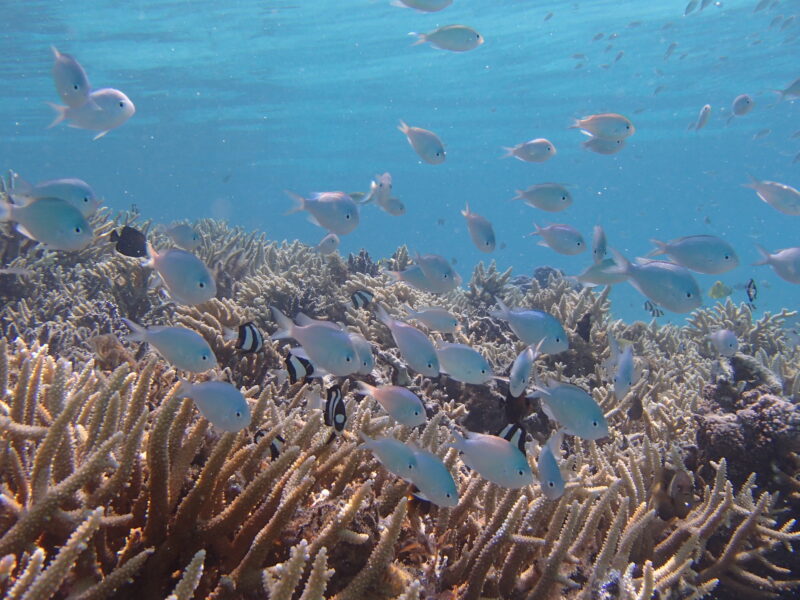
Researchers studying ecosystems across the country found that the remains of foundation species such as oysters, corals and trees can continue shaping habitats for years or even decades after their death, sometimes helping future generations thrive and sometimes accelerating their decline.
The findings, published Wednesday in the journal Science Advances, suggest dead organisms often play a larger role in ecosystems than scientists have traditionally recognized.
Foundation species are organisms that help create and maintain the physical structure of an ecosystem, providing habitat, resources and stability for many other species.
To better understand what happens after those species die, researchers analyzed observations and experiments spanning between two and 32 years across 10 marine and terrestrial ecosystems in the U.S. Long Term Ecological Research Network.
Rather than acting as passive remnants of the past, the remains of those species frequently continued influencing the environments they helped create.
Researchers found the effects varied widely depending on the ecosystem. In coral reefs, dead branching coral skeletons left behind after marine heat waves accelerated coral decline.
In oyster reefs, however, dead oyster shells provided a foundation for new oysters to settle and grow, increasing the density of living populations.
“What was most striking to me was not that dead foundation species had strong influences in any particular ecosystem, but rather that they so commonly had strong influences in all these very different of ecosystems we looked at,” wrote Kai Kopecky, a postdoctoral research fellow at the University of Colorado Boulder and one of the study’s authors, in an email.
“This goes to show that dead foundation species may play important roles in many more ecosystems than previously thought, beyond just those we included in our study,” Kopecky said.
The research team examined five terrestrial and five marine ecosystems.
“We sort of expected there might be some clear divides in our results, for example between marine and terrestrial ecosystems, but we didn’t necessarily find that,” Kopecky said.
Instead, they found the lingering effects generally fell into two categories.
“One grouping we did find was that dead foundation species seemed to have either structural effects, modifying the physical environment in some way, or resource effects — changing the amounts of light or nutrients,” Kopecky said. “In each of these categories, we found that dead foundation species can be either beneficial or detrimental for populations of living foundation species.”
Kopecky said the role of dead foundation species may have been overlooked because of scientists’ preconceptions.
“While there are a few important exceptions, it seems that most often when ecologists think of death, we think of loss — for example, the reduction of a population of organisms,” he said. “More rarely is death thought of as actually altering an ecosystem in fundamental ways, like modifying its physical structure or availability of resources.”
According to researchers, the findings could have practical implications for ecosystem restoration and management.
In some cases, managers already take advantage of the effects of dead foundation species. Prescribed burns remove dead grass litter to reduce fuel loads and encourage new growth, while restoration projects often place dead oyster shells in waterways to help establish new oyster reefs.
Researchers say the widespread influence of these material legacies suggests similar approaches may prove useful in other ecosystems as environmental pressures continue to mount.
“Because we found influences of dead foundation species to be so common, we may be able to leverage them in more contexts as nature-based solutions to strengthen ecological resilience, especially under global change,” Kopecky said.
Subscribe to our free newsletters
Our weekly newsletter Closing Arguments offers the latest about ongoing trials, major litigation and rulings in courthouses around the U.S. and the world, while the monthly Under the Lights dishes the legal dirt from Hollywood, sports, Big Tech and the arts.
Additional Reads

 Guts may hold the key to happiness June 10, 2026