
 Search Articles


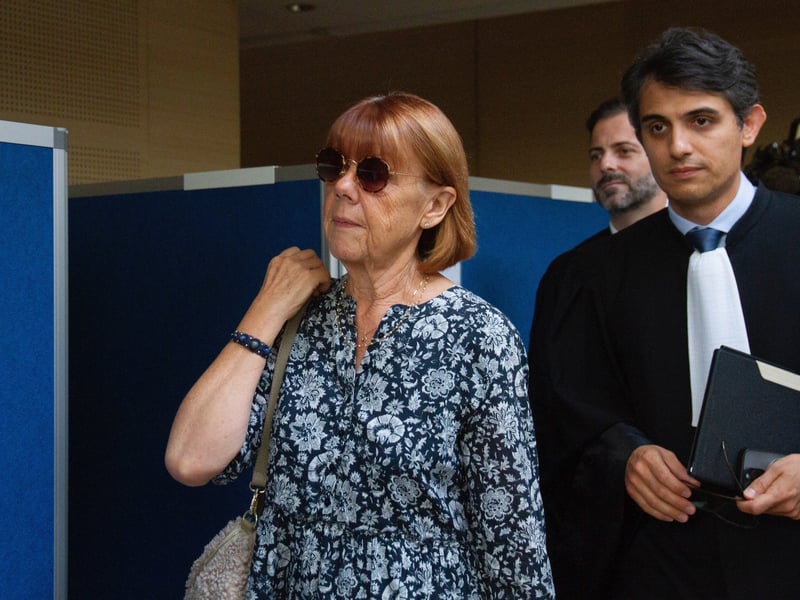
AVIGNON, France (CN) — Every day, Gisèle Pelicot sits in a courtroom to watch testimonies and defense arguments from the 51 men on trial for raping her. Dominique Pelicot, her ex-husband who orchestrated and filmed the assaults, sits in her direct line of vision on the opposite side of the room, detained in a glass box.
Dominique Pelicot pleaded guilty to inviting strangers to rape his ex-wife while she was drugged and unconscious. The brunt of the abuse happened between 2010 and 2020 in the Pelicot’s family home in Mazan, a small Provençal town with approximately 6,000 residents. When police investigated him for another crime — trying to film up women’s skirts in a supermarket — they found thousands of meticulously documented photo and video evidence of sexual abuse.
The images are one of the reasons that Gisèle Pelicot decided to waive her right to anonymity and make the trial public. Most survivors of sexual violence don’t have proof. Thousands of files clearly show Pelicot in a state akin to comatose, and Dominique has admitted to using lorazepam, a tranquilizing pharmaceutical used to treat epilepsy and anxiety, to lull his ex-wife into this condition.
“The concept of consent is difficult for a judicial authority, because the majority of sexual offenses are the word of one against the word of the other,” Nicolas Paganelli, a Paris-based lawyer, told Courthouse News.
In French law, rape is defined as an act of sexual penetration by violence, coercion, threat or surprise. Consent is notably absent from the definition, which sparked a nationwide debate that led French President Emmanuel Macron to vow that he would inscribe consent into law. But experts argue the addition would ultimately be an act of political “cosmetics,” since consent is at the heart of the issue already.
“As soon as we can demonstrate that the victim was assaulted, coerced, threatened or surprised, the victim did not consent,” Paganelli said. “The notion of consent is at the heart of the criminal trial, the heart of everything.”
It will take months for the 51 men to testify, and the verdict is scheduled for Dec. 20. The head judge Roger Arata asks them all the same question: Do you believe that Gisèle Pelicot was capable of giving consent, or not giving consent?
Despite the evidence, the answer is usually “I don’t know.”
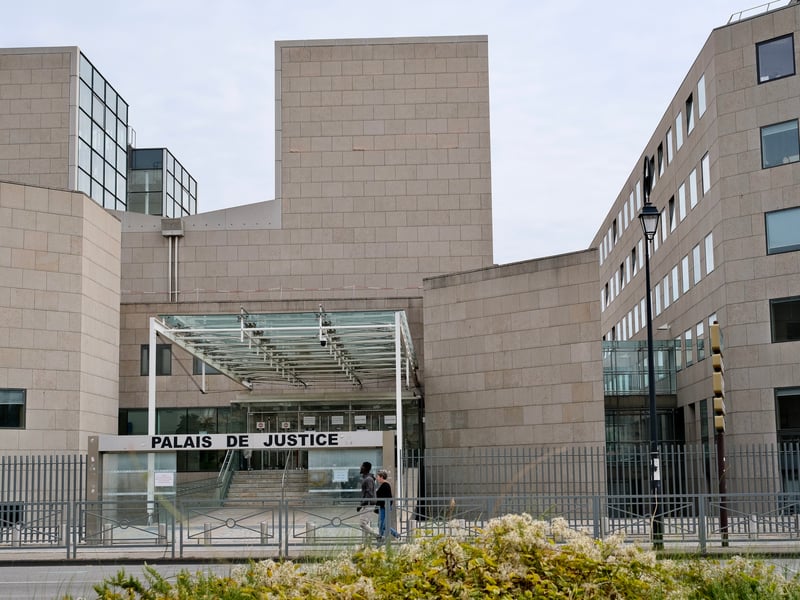
On Thursday morning, three of the accused arrived in the courtroom together a few minutes before 9 a.m. and sat a few feet away from Gisèle Pelicot. Lawyers were the only barrier between them. While psychiatrist Laurent Layet delivered his analyses, the trio huddled together, whispering.
During a 15-minute break, one of the men put on a denim jacket and a baseball cap before strolling out of the courtroom. He walked into the lobby and weaved through the dozens of people that show up daily in solidarity and watch a livestream of the trial from a separate viewing room.
His presence went unnoticed. Though 51 people are on trial, only 18 men are detained. The rest enter and exit the courtroom as members of the public.
Cyril B., a 46-year old truck driver, was one of the three men in the troupe. Back in the courtroom, his glasses were placed on top of the baseball cap on the bench next to him. It almost looked like a mannequin surrounded by the crumpled tissues he used to continuously wipe his brow.
In the afternoon, a woman was slowly escorted to the stand. She had short, blonde hair and wore a knee-length floral dress. This was Cyril B.’s mother.
“He is very nice, very nice to his parents, very polite,” she pleaded to the judge as her voice cracked between sobs. “I saw this on TV, but now I’m trembling.”
She maintains that Cyril B. was manipulated by Dominique Pelicot. She said that he’s too nice, and that he doesn’t know how to say no to anyone — including the man that directed him to assault his wife. When she was dismissed from the stand, she blew Cyril B. a kiss through teary eyes and waved a tissue in the air.
His sister was next.
“Maybe he did something stupid,” she said, crying. Gisèle Pelicot calmly looked on from the righthand side of the room, leaning her head against the wall, but not breaking eye contact. “My brother is naïve and doesn’t know how to say no.”
The family left the room before Cyril B.’s testimony.

“Do you contest the rape?” Roger Arata asked.
“Yes,” Cyril B. responded.
Cyril B. became increasingly agitated as the questioning ensued. He raised his voice, prompting one judge to demand that he adjust his aggressive tone.
Cyril B. maintains that he thought he was participating in a sort of sex game with the Pelicots. Though he believed Gisèle Pelicot was asleep, he never asked himself questions about her state of consciousness during the rape or afterward. He shrugged off never seeing her face.
“Have you ever had sexual relations with someone without seeing their face before?” one judge asked him.
He hesitated, before replying that “yes,” he had.
“So the face isn’t important, right, is doesn’t matter?” the judge continued.
“No, it doesn’t matter, it’s about sex,” he said. “Sex is sex.”
Cyril B. dodged the question of whether he thought Gisèle Pelicot was in a state to give consent or not. Arata decided to play the video evidence in the courtroom; Gisèle Pelicot fought for the videos to be shown in court as evidence, since most survivors of sexual assault don’t have the advantage of proof.
“If there are any minors in the room, leave now,” Arata said, adding that the footage would be explicit, and anyone with trauma or sensitivity shouldn’t watch. Gisèle Pelicot’s relatives and two other men accused of raping her were the only people that left the room.
The courtroom fell silent. Soon, the room echoed with audio of Cyril B.’s breathing and Gisèle Pelicot’s snoring as he penetrated her. His hands rested on her hips; she was on her side in bed, under dim light, with her bra straps pulled down to her shoulders, and was motionless.
Dominique Pelicot came into the frame holding a cellphone camera with its flashlight turned on, getting another angle of the rape. When he tried to assault her at the same time, she abruptly moved; Cyril B. jumped away, and Dominique Pelicot threw the duvet over her body and head. The video stopped.
Cyril B. said that although Gisèle Pelicot was asleep, he thought this was part of the couple’s sex game, and she would eventually wake up.
“If you thought she would wake up eventually, why did you panic when she eventually moved?” the judge asked, to which he didn’t have a clear response.
While Cyril B. eventually conceded that Gisèle Pelicot was not in a state to give or withhold consent, he maintained that it was not a rape.
Gisèle Pelicot has been lauded for her bravery in making the trial public, and attending it every day. Every morning, her arrival in the courtroom is preceded by the roar of applause that comes from supporters in the lobby. She said that she wanted to shift the blame from the victim to the perpetrator.
The case is drawing newfound attention to consent.
“In some cases of rape or sexual assault, we find ourselves at the heart of this complication [of consent], because it already exists at the heart of sexual relations anyway, not just inside gruesome rapes,” Veronique Le Goaziou, a sociologist and researcher specializing in sexual violence at the Mediterranean Sociology Laboratory, told Courthouse News. “I think that we’re currently trying to create a culture of consent.”
 Follow @lilyradz
Subscribe to our free newsletters
Our weekly newsletter Closing Arguments offers the latest about ongoing trials, major litigation and rulings in courthouses around the U.S. and the world, while the monthly Under the Lights dishes the legal dirt from Hollywood, sports, Big Tech and the arts.