
 Search Articles


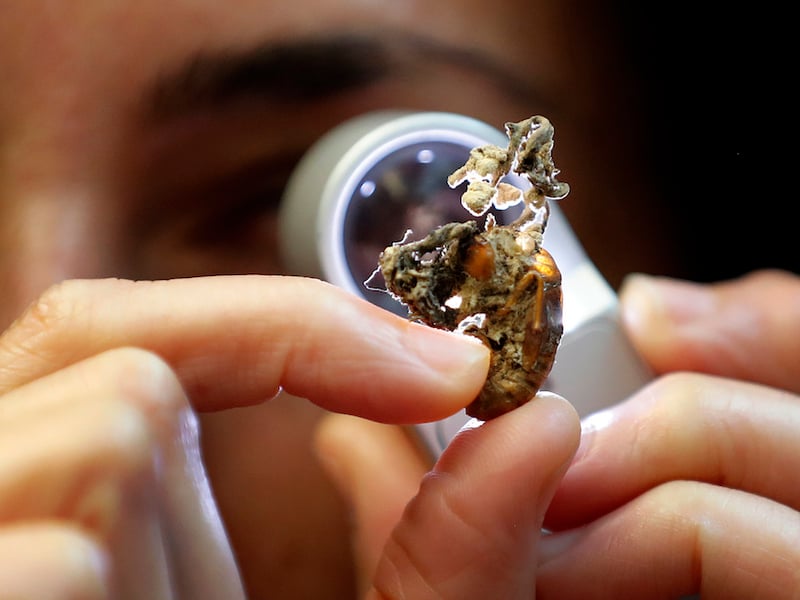
(CN) — The future may be closer than you think. Engineers have recently developed a living material that could serve as a sustainable alternative to traditional building materials like concrete. Composed of bacterial cells and the root-like mycelium of fungi, this groundbreaking innovation marks a major step forward in the growing field of engineered living materials.
Unlike traditional cement production — which is responsible for 5–8% of global carbon dioxide emissions — engineered living materials leave a remarkably small environmental footprint. Beyond sustainability, these materials can offer incredible properties such as self-healing and responsiveness to environmental changes.
Previous versions of engineered living materials — like cyanobacteria-based bricks that used photosynthetic bacteria to bind sand particles — showed promise but were limited by simple internal structures and low microbial viability. Now, that could be changing.
A study published April 16 in Cell Reports Physical Science, a journal by Cell Press, details the creation of this innovative material, which owes its self-repairing capabilities to its living-cell composition. The key to its development? Fungal mycelium used as a biological scaffold.
Mycelium, the vegetative root network of fungi, can be found in soil, decomposing logs, compost and even coffee grounds. Its naturally intricate, overlapping structure inspired researchers at Montana State University to explore it as a biological scaffold — a support structure also found in nature in mineralized forms like bone and coral.
Biological scaffolds not only offer strength but also support microbial life within the material, preserving its living, self-healing properties for longer periods. The research team hypothesized that using a mycelium scaffold could enhance bacterial survival — and they were right.
Led by first author Ethan Viles, the team built complex, bone-inspired internal structures using beams made from two types of bacteria: Neurospora crassa, chosen for its non-pathogenic profile and rapid mycelium growth, and Sporosarcina pasteurii, a soil bacterium commonly used in biomineralization.
Both microorganisms demonstrated high viability — even after four weeks of storage at temperatures between 73 and 83°F. This longevity is a significant improvement over earlier biomaterials, which typically lasted only days or weeks. The mineral-rich material was even strong enough for the researchers to fabricate structural scaffolds and beams that resembled the tough outer layer of bones.
“We learned that fungal scaffolds are quite useful for controlling the internal architecture of the material,” said corresponding author Chelsea Heveran, assistant professor at Montana State University. “This is exciting, because we’d like the cells to be able to perform other functions as well.”
While the material isn’t yet as strong as conventional concrete, the outlook is promising. As researchers continue to focus on extending the lifespan of the living cells and scaling up production, there’s hope that these biomaterials will evolve from experimental beams and bricks to the building blocks of entire structures.
Subscribe to our free newsletters
Our weekly newsletter Closing Arguments offers the latest about ongoing trials, major litigation and rulings in courthouses around the U.S. and the world, while the monthly Under the Lights dishes the legal dirt from Hollywood, sports, Big Tech and the arts.