
 Search Articles


In our war against state bureaucracies, we have lately been nearly knocked over by a wave of reason.
South Dakota just last week agreed to return public access that once upon a time was in place throughout the Midwest.
“There was a time when — and some in this room may remember it — when you took a pleading to the courthouse and the clerk stamped it physically and it went into different bins and it was available immediately,” said Judge Bobby Shepherd.
He said that from the 8th Circuit bench during a hearing in one of our campaigns for public access.
On the same bench, Judge Ralph Erickson, with a different zing, addressed the publicly paid lawyer who was arguing against public access.
“What we’re saying is that, oh, for about 230 years, you can walk into a courthouse, into the clerk’s office, and say, ‘Hey, can I see what’s been filed today.’”
Rolling against our experience with court bureaucracies over the last 20 years, the court administrator in South Dakota turned out to be fair and agreeable to returning the traditional access described by the 8th Circuit panel, with those intentions summarized in an order by U.S. Judge Lawrence Piersol.
“Defendants have agreed to implement an online portal to provide registered users with on-receipt access to new non-confidential civil complaints filed with all South Dakota circuit courts upon the complaints’ receipt by the South Dakota courts via the statewide e-filing system.”
Where did all that reasonableness come from.
Looking back over the last few months, the tide did seem to be turning. Before South Dakota, Maryland also agreed to return traditional public access, and in recent months, New Mexico, Iowa, Oregon and Missouri have done the same.
The deluge of reason has certainly not swept across all court bureaucracies, definitely not.
At the tail-end of September, Idaho’s court officials lost a First Amendment case brought by Courthouse News after three years of legal skirmishing.
Answering one of Idaho’s many legal gambits, U.S. Judge David Nye wrote that the responsibility for the contents of a filed record lay with the lawyer filing it, and even if forbidden numbers are included, they can soon be redacted.
“This is not to say the information cannot ever be corrected,” wrote Nye. “It can — just after it first becomes available to the public. While it may seem counterintuitive to correct something once it becomes publicly available, the Court sees this happen quite frequently in federal court.”
The same thing has happened in Courthouse News filings in First Amendment cases where a mistake was made in the filing, a federal clerk flagged it, and the mistake was quickly fixed.
“The entire process does not crumble because edits have to be made to documents — even documents that are publicly available,” wrote Judge Nye.
He ruled as one in a procession of black-robed figures — Harmon, Otero, Kennelly, Ramos, Wardlaw, Morgan, Gee, Reiss, Morrison — who have enjoined or declared unconstitutional the policy described by the Ninth Circuit in its 2020 Planet III opinion as “no-access-before-process.”
But nearly all those decisions came at a great cost, and even in victory, Courthouse News often receives just a piece of what has been spent. The litigation in Idaho, for example, was fought with tooth and nail and racked up close to a million-dollar bill as motions piled on discovery piled on more motions, over the years.
The outlandishness of the situation was pegged by the Courthouse News complaint against Minnesota, one of the court bureaucracies still fighting the tide.
“Despite its reach, Courthouse News remains a small company,” said the complaint. “At great expense, it has undertaken litigation against large state bureaucracies that are using publicly funded legal teams to deny the tradition and the right of access.”
Even though I have seen it for so long, it still gives off the reek of injustice to see a state court bureaucracy, funded by the public and operating under the mantle of public authority, use its massive heft and the public’s money to fight a scorched earth campaign, employing publicly paid lawyers and staff — against public access, against the public they serve.
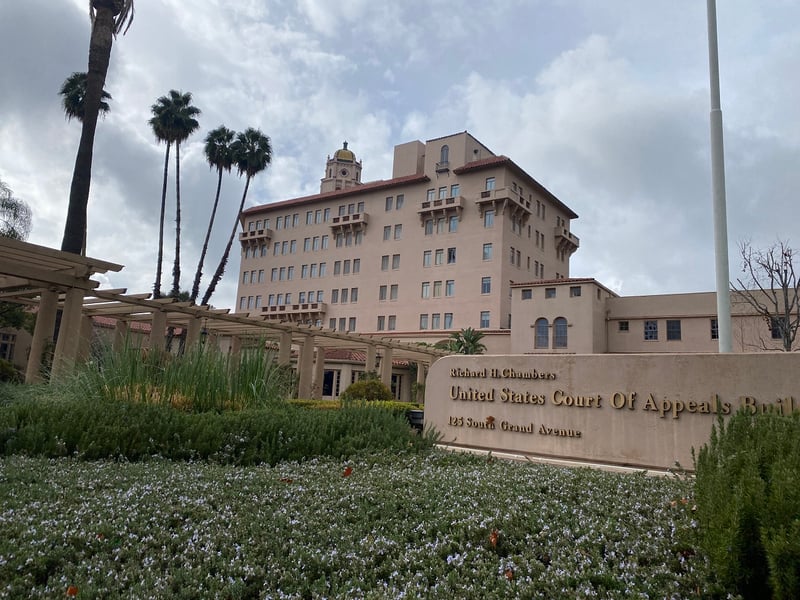
Just so the latest news from Idaho. After employing those tactics, and losing, the court bureaucracy has chosen to soldier on. The bureaucracy is appealing Nye’s ruling, taking it to the Ninth Circuit which four years ago ruled against California on its nearly identical defense of no-access-before-process.
Subscribe to our free newsletters
Our weekly newsletter Closing Arguments offers the latest about ongoing trials, major litigation and rulings in courthouses around the U.S. and the world, while the monthly Under the Lights dishes the legal dirt from Hollywood, sports, Big Tech and the arts.