
 Search Articles


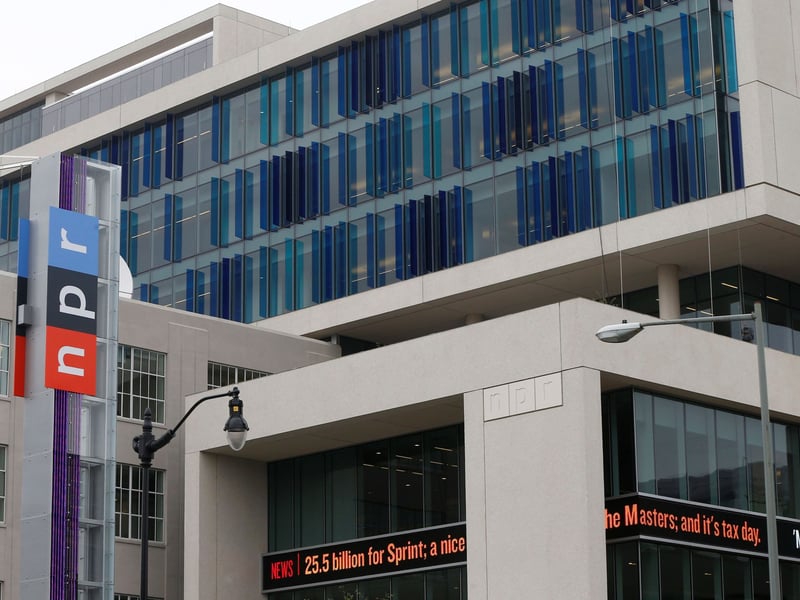
WASHINGTON (CN) — National Public Radio and three local stations sued the Trump administration on Tuesday, challenging an executive order freezing federal funding for public broadcasting the administration disfavors, warning it “threatens the existence of a public radio system.”
President Donald Trump’s order derides NPR’s content as “left-wing propaganda,” citing its coverage of the Covid-19 pandemic’s origin, its “refus[al] to cover the Hunter Biden laptop story” and an apparent apology for using the term “illegal immigrant,” a term no longer used under AP style.
The order is “textbook” First Amendment retaliation and viewpoint discrimination, NPR said, violating the separation of powers and spending clauses by disregarding Congress’s funding decisions in the Public Broadcasting Act of 1967.
“The order’s objectives could not be clearer: the order aims to punish NPR for the content of news and other programming the president dislikes and chill the free exercise of First Amendment rights by NPR and individual public radio stations across the country,” NPR said.
Colorado member stations Aspen Public Radio, Colorado Public Radio and KSUT Public Radio joined the lawsuit. PBS did not, indicating it would file its own suit.
The coalition urges U.S. District Judge Randolph Moss, a Barack Obama appointee, to declare the executive order as unconstitutional and enjoin the Corporation for Public Broadcasting and the National Endowment for the Arts from withholding funding based on the order.
NPR receives about 1% of its funding directly from the federal government, while its 146 member organizations, operating more than 1,000 stations nationwide, receive on average 8% to 10% of their funds from the CPB, according to NPR.
Meanwhile, PBS and its stations receive approximately 15% of their revenues from CPB funding.
Trump issued the order on May 1, titled “Ending Taxpayer Subsidization of Biased Media,” directing the CPB’s board of directors to halt funding for NPR and the Public Broadcasting System over apparent inaccurate and biased reporting.
“The CPB’s governing statute reflects principles of impartiality: the CPB may not ‘contribute to or otherwise support any political party,’” Trump wrote. “The CPB fails to abide by these principles to the extent it subsidizes NPR and PBS. Which viewpoints NPR and PBS promote does not matter.”
Trump also faces a lawsuit from three terminated board members of the CPB, who are challenging the president’s authority to suddenly dismiss members of a private corporation created by Congress.
Moss was assigned that case in April, and is currently weighing a temporary restraining order sought by the terminated board members, Laura Ross, Thomas Rothman and Diane Kaplan.
The CPB has also pushed back on Trump’s order targeting NPR and PBS, dismissing the validity of the order in a statement on May 2.
“CPB is not a federal executive agency subject to the president’s authority,” the corporation said. “Congress directly authorized and funded CPB to be a private nonprofit corporation wholly independent of the federal government.”
Further, Trump’s conduct goes against the “fixed star in our constitutional constellation,” that no official can decide what is “orthodox” in politics or opinion, according the Supreme Court’s 1943 decision in West Virginia State Board of Education v. Barnette.
“These fundamental First Amendment principles apply in full force in the context of public media and doom executive order 14290, which expressly aims to punish and control plaintiffs’ news coverage and other speech the administration deems ‘biased,’” NPR said.
NPR’s case mirrors those brought by major law firms who asserted that Trump retaliated against them for representing individuals and causes he disfavored — specifically litigation related to the 2016 election, the employment of former special counsel Robert Mueller and his team.
Federal judges in Washington have sided with the law firms, most recently with firm Jenner Block on Friday, finding Trump clearly retaliated against them for practicing their First Amendment rights and for their expressed viewpoints.
Trump has also tried to exert further control over media organizations tied to the federal government, such as Voice of America, Radio Free Europe and Radio Free Asia, among others. Those efforts have similarly failed due to Congress’s role in creating the outlets via statute.
NPR and the member stations are represented by Katie Townsend of Gibson Dunn.
 Follow @Ryan_Knappy
Subscribe to our free newsletters
Our weekly newsletter Closing Arguments offers the latest about ongoing trials, major litigation and rulings in courthouses around the U.S. and the world, while the monthly Under the Lights dishes the legal dirt from Hollywood, sports, Big Tech and the arts.