
 Search Articles


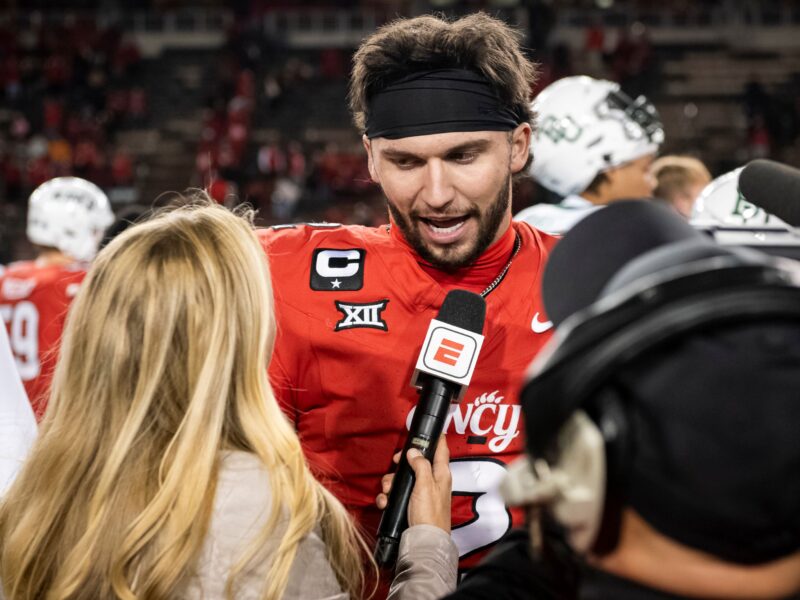
(CN) — On Monday, as the NCAA filed an appeal to challenge a Texas judge’s ruling barring its suspension of Texas Tech quarterback Brendan Sorsby, the Big 12 Conference took Texas’ attorney general and Texas Tech University to federal court, seeking confirmation of its authority to punish Sorsby and/or the university.
The world of college sports was set abuzz last week when Lubbock District Court Judge Ken Curry enjoined the NCAA from prohibiting Sorsby from playing in the upcoming season after it found he had violated the association’s rules regarding sports gambling. Following the decision, the NCAA filed a notice of appeal with the Seventh District of Texas in Amarillo, asking it to allow for the enforcement of its rules.
Sorsby’s history with betting on sports goes back to when the 22-year-old was a high school senior traveling from Texas to gamble at a casino on the Oklahoma border. Throughout his collegiate career — playing for Indiana University and the University of Cincinnati before joining the Red Raiders earlier this year — Sorsby placed thousands of bets totaling tens of thousands of dollars.
In April, after the NCAA notified Sorsby and Texas Tech that it had opened an investigation into Sorsby’s betting, he admitted to violating the association’s rules and checked into a treatment program to address his addiction.
Sorsby, in his original complaint, accused the NCAA of stalling reinstatement proceedings, jeopardizing his chances to be eligible for the NFL supplemental draft. According to reports late Monday, Sorsby plans to enter the NFL supplemental draft. It was not immediately clear how that decision would affect the pending litigation.
In an emergency motion filed with the Seventh Court of Appeals, the NCAA claims Curry’s order must be stayed for going far beyond what is permitted under Texas law.
“It undermined the integrity of college sports, rewrites member-adopted rules of the National Collegiate Athletic Association, immunizes Brendan Sorsby from discipline for admitted and serial violations of NCAA anti-gambling rules, incentivizes a run on courthouses across the country to challenge even the most obvious and straightforward student-athlete eligibility decisions and demolishes the status quo,” the NCAA wrote.
The association also filed an emergency motion to expedite so that a decision on the appeal can be made by Aug. 28, a day before the start of the college football season.
Days after Sorsby’s case made waves in the sports community, Republican Texas Attorney General Ken Paxton entered the fray by threatening the Big 12 Conference if it sought to sanction Texas Tech, which was not a party in the NCAA case, for abiding by Curry’s injunction and supporting Sorsby.
“Any sanction against Texas Tech for acting consistent with the Order would be a per se violation of federal and state antitrust laws — a naked horizontal agreement among competitors to disadvantage Texas Tech by cutting off access to the resources it needs to compete,” Thomas York, chief of the antitrust division at the Office of the Attorney General, wrote in a letter to the conference.
In response, the conference shot back at Paxton with a 47-page federal lawsuit filed Monday with the U.S. District Court for the Northern District of Texas. The Big 12 is asking a judge to “vindicate its rights” to sanction Texas Tech over its handling of Sorsby and prevent Paxton, who is currently running for U.S. Senate, from following through on his threats. Moreover, the conference argues its authority to impose sanctions is protected under the First Amendment.
“The Big 12 and its member institutions (apparently save TTU) have no interest in being required to endorse or even appearing to endorse unethical and indeed unlawful conduct that strikes at the heart of athletic integrity,” the conference wrote in the filing.
The Texas Attorney General’s office did not return Courthouse News’ request for comment before publication.
The Big 12 details in its lawsuit how Texas Tech had communicated its intent to let Sorsby play in the upcoming season despite officials at other member institutions requesting the university not to allow him to participate. With the university looking likely to allow Sorsby to take the field in conference games, the Big 12 board of directors has expressed interest in imposing sanctions.
“The Big 12 has long spoken out about the dangers of sports wagering by student-athletes and remains committed to protecting the competitive integrity of conference competition,” the board said in a statement Monday. “Universities should not field players who have bet on their own team’s games in college athletics.”
If the board does choose to punish Texas Tech, it could result in monetary penalties or a ban on competing in the conference’s championship game.
Sorsby’s drama with the NCAA and Paxton’s with the Big 12 have far-reaching consequences for the world of college sports, and officials in other states have not been afraid of speaking out. Republican Oklahoma Attorney General Gentner Drummond, who previously called on the Big 12 to sanction Texas Tech, praised the conference for filing its suit “to defend its authority to enforce its own bylaws.”
Kansas Attorney General Kris Kobach, who is also a Republican, said in a letter to the conference that Paxton’s claims of violations of antitrust law are incorrect and that it should not be intimidated. Additionally, Republican Utah Attorney General Derek Brown also sent a letter to the conference offering to assist it with its litigation.
Sorsby, in his original complaint, accused the NCAA of stalling reinstatement proceedings, jeopardizing his chances to be eligible for the NFL supplemental draft. According to reports late Monday, Sorsby plans to enter the NFL supplemental draft. It was not immediately clear how that decision would affect the pending litigation.
 Follow @KirkMcDanie1
Subscribe to our free newsletters
Our weekly newsletter Closing Arguments offers the latest about ongoing trials, major litigation and rulings in courthouses around the U.S. and the world, while the monthly Under the Lights dishes the legal dirt from Hollywood, sports, Big Tech and the arts.
Additional Reads
 Federal judge tosses oil leases on sage grouse habitat June 15, 2026