
 Search Articles


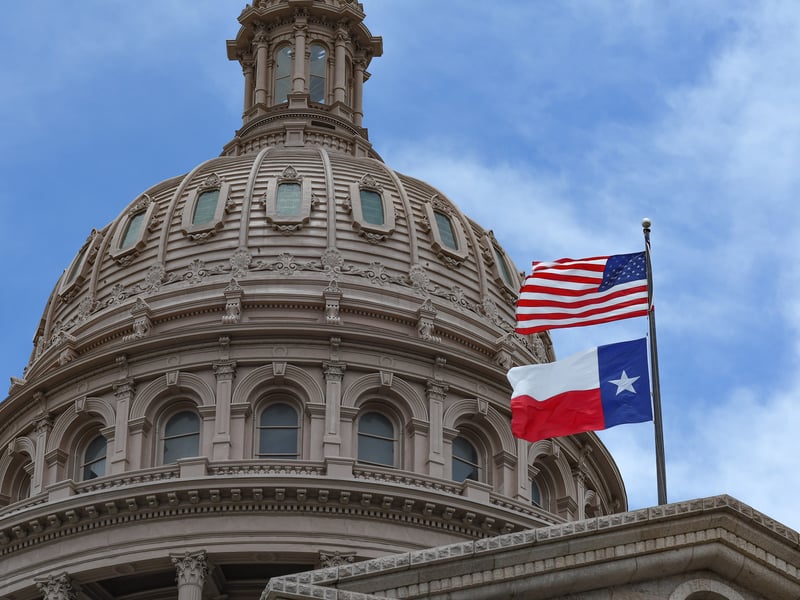
AUSTIN, Texas (CN) — A Texas bill to bar cities from passing and enforcing myriad ordinances including gun sales and noise regulations violates the state constitution, a judge ruled Wednesday, two days before it was set to take effect.
Yet a Texas Attorney General’s Office spokesperson said the statute will still go on the books as scheduled because the agency has appealed the ruling. “This will stay the effect of the court’s declaration pending appeal. As a result, HB 2127 will go into effect on September 1,” said Paige Willey, the agency’s communications director.
The Republicans who spearheaded passage of HB 2127claim it is necessary to eliminate a patchwork of local regulations that diminish Texas’ goal of being the most business-friendly state in the union.
Dubbed the “Death Star” bill by opponents, it has been framed as the latest example of Republican state legislators undercutting the state’s Democratic-led major cities of Dallas, Austin, Houston, El Paso and San Antonio.
But the opposition does not run along party lines.
While Houston sued Texas over the bill in early July, and El Paso and San Antonio joined the challenge as interveners, dozens of cities and local officials weighed in with amicus briefs urging Travis County District Court Judge Maya Guerra Gamble to strike the legislation.
“Cities from Denton to Laredo, from El Paso to Pasadena, cities large and small, red, blue, and every shade of purple in between, have come to this court and they speak with one voice,” Jane Webre, with the Austin firm Scott, Douglass & McConnico, told Guerra Gamble in a hearing Wednesday.
With a monthslong heat wave roasting the Lone Star State, critics of the bill have been sounding the alarm it would nix Dallas and Austin ordinances that require water breaks for construction workers.
Houston Mayor Sylvester Turner, a Democrat and former longtime state legislator, has railed against the statute for months, warning that it will preempt city regulations on boarding homes, music festivals, booting and towing cars and airport contracts.
Collyn Peddie, a Houston city attorney, argued in Wednesday’s hearing HB 2127 impedes the power of home-rule cities: A 1912 amendment to the Texas Constitution gave cities with more than 5,000 residents authority to change to this form of government through elections and to pass any ordinance and regulation not specifically barred by state law.
Peddie said Texas Supreme Court precedent stipulates that preempting home-rule city ordinances requires showing a “direct and irreconcilable conflict” between state and local law, and an intent by the state to preempt the local law with “unmistakable clarity.”
“The problem is HB 2127 doesn’t involve a conflict because it takes that requirement out of the Texas Constitution," Peddie argued. “The state itself can just say, ‘There’s a conflict there,’ or, ‘I want to take that area out of regulation because I don’t think you should regulate there.’”
Peddie said Houston’s legal department is discussing what laws to enforce and what laws to stop enforcing in light of HB 2127.
But its attorneys are operating in the dark, she complained, because the statute vaguely says that if there’s one provision in state code addressing a subject, any local ordinance in that “field of regulation” is unenforceable.
Charles Eldred, a Texas assistant attorney general, argued the challengers lack standing because anyone can file a lawsuit claiming an ordinance is preempted by HB 2127, but the state itself does not have authority to do so.
“It’s not good enough to say, ‘Well, anybody enforces the law, so the state must be good enough, too,’” Eldred argued.
Texas cities have griped the bill would invite trade associations to bury their legal departments in lawsuits over numerous regulations.
But Taylor Gifford, another Texas state lawyer, pointed to how the bill has means of avoiding litigation: Any party taking on a local regulation must give a city notice of the dispute three months before they can sue, Gifford explained, a period she said would give time to resolve the dispute.
Peddie, Houston’s counsel, fumed that Gifford’s suggestion that the waiting period makes the law palatable for cities illustrates a “stunning level of arrogance” from the state that “we know how to run your city better than you do.”
“She suggests 2127 is so much better than other preemption statutes,” Peddie continued, “because we have three months to eliminate offending regulations — not thinking about the fact they shouldn’t have been preempted at all.”
After two hours of arguments Judge Guerra Gamble, a Democrat, sided with the cities, saying she believes their argument against the bill “is the right one.”
“So I’m ordering the motion for summary judgment filed by Houston and joined in by San Antonio and El Paso is granted, and declaring HB 2127 unconstitutional,” she said.
 Follow @cam_langford
Subscribe to our free newsletters
Our weekly newsletter Closing Arguments offers the latest about ongoing trials, major litigation and rulings in courthouses around the U.S. and the world, while the monthly Under the Lights dishes the legal dirt from Hollywood, sports, Big Tech and the arts.