
 Search Articles


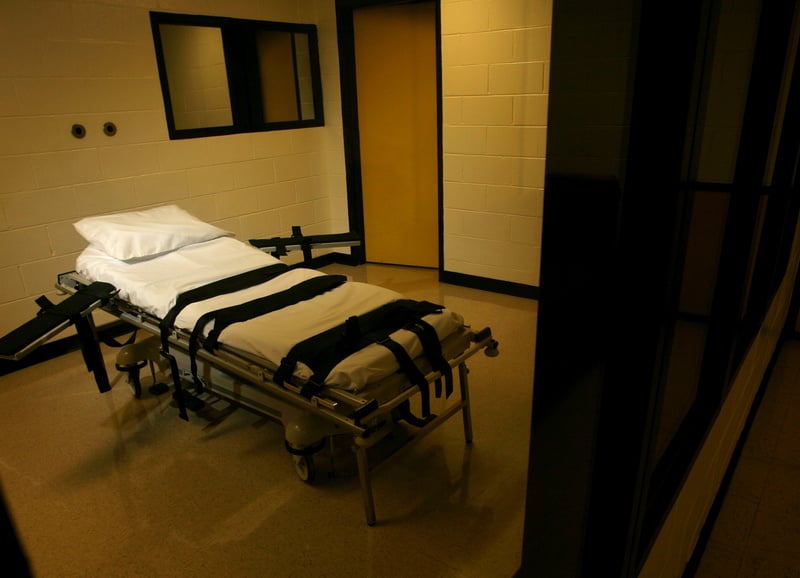
(CN) — Texas told the full Fifth Circuit Court of Appeals Wednesday that a three-judge panel was wrong in finding that a death row inmate’s murder conviction should be vacated because the state failed to disclose evidence drawing a key witness’s credibility into question.
In the panel’s majority opinion, Senior U.S. Circuit Judge Patrick Higginbotham laid out the story of Brittany Holberg, “a bright young woman who — after a childhood and adolescence marked by repeated sexual abuse and trauma — fell into the iron grip of crack cocaine and turned to prostitution to support her addiction.”
In November 1996, Holberg crashed her car while high on crack and sought refuge in the apartment of 80-year-old A.B. Towery, a former prostitution client. It was in that apartment that a violent encounter ensued, leaving Towery dead with 58 stab wounds and a lamp shoved five inches down his throat.
Although Holberg admitted to killing Towery, she claimed he’d attacked her after becoming angry when he found her crack pipe in his kitchen and that she’d acted in self-defense. The prosecution, however, argued Holberg had killed Towery in order to steal money and medications from him. A jury in Amarillo, Texas, convicted Holberg of capital murder in 1998 and sentenced her to death. She was just 23 years old.
Twenty-seven years later, two out of three judges on the Fifth Circuit panel voted in March 2025 to overturn Holberg’s conviction. In what it called a “showcase” of prosecutorial misconduct, the majority found the state had wrongfully withheld the fact that a critical witness, Vickie Kirkpatrick, had served as a paid informant for the Amarillo Police Department in other cases.
Kirkpatrick, Holberg’s former cellmate, testified at trial that Holberg told her killing Towery was “fun and amazing," that his blood was “pretty like a fountain" and that she had shoved the lamp down his throat because she had gotten tired of hearing him make “gurgling noises.” Kirkpatrick also testified that Holberg said she killed Towery to get money for a “fix” and that she would do it all over again.
“At the time of Holberg’s trial, the state knew about Kirkpatrick’s confidential informant work for the Amarillo police but presented her to the Amarillo jury as a disinterested individual who ‘wanted to do the right thing’ and was attempting to be ‘as truthful … and complete as [she] could be,” Higginbotham, a Ronald Reagan appointee, wrote. “The state did not disclose Kirkpatrick’s work as a paid informant until after Holberg was sentenced to death.”
If this information had been disclosed, Higginbotham wrote, the defense would have been able to point to a “trove” of evidence to undermine Kirkpatrick’s credibility, including that she had been paid thousands of dollars for helping the Amarillo police department in other other cases and that, the same day she produced a statement detailing Holberg’s confession, her police handler got a criminal trespass charge against her dropped and helped her get released on bond.
Kirkpatrick’s testimony “was critical to the state’s case, providing the supporting evidence for the robbery, undercutting Holberg’s account of self-defense, and painting her as an unremorseful addict who posed a continued threat to society,” the majority found.
But Billy Cole, Texas’ principal deputy solicitor general, told the full court that Kirkpatrick’s paid informant status wasn’t material, arguing there was ample evidence in the case besides her testimony, such as the number of times Towery was stabbed and testimony that he had health problems and was physically feeble, to undermine Holberg’s claim of self-defense.
“The most powerful testimony was not the 19 pages of Kirkpatrick,” Cole said. “It was the testimony of the crime scene investigators. It was the medical examiner.”
U.S. Circuit Judge Stephen Higginson, a Barack Obama appointee who joined Higginbotham in the panel’s majority, pushed back on the argument that the information wasn’t material, pointing out that Kirkpatrick was the only witness who testified that Holberg had said she’d enjoyed killing Towery.
“Isn’t it unreasonable for a court to say it’s immaterial to the defense?” Higginson asked.
But other judges seemed to disagree. U.S. Circuit Judge Stuart Duncan, a Donald Trump appointee, brought up the lamp lodged in Towery’s throat.
“The autopsy report showed that it was shoved so far down his throat that it nicked his carotid artery,” Duncan said. “Let’s say Kirkpatrick is impeached. If I’m on the jury: ‘Ah, okay, now I understand the lamp down the throat was in self-defense’ — that’s the theory?”
Subscribe to our free newsletters
Our weekly newsletter Closing Arguments offers the latest about ongoing trials, major litigation and rulings in courthouses around the U.S. and the world, while the monthly Under the Lights dishes the legal dirt from Hollywood, sports, Big Tech and the arts.