
 Search Articles


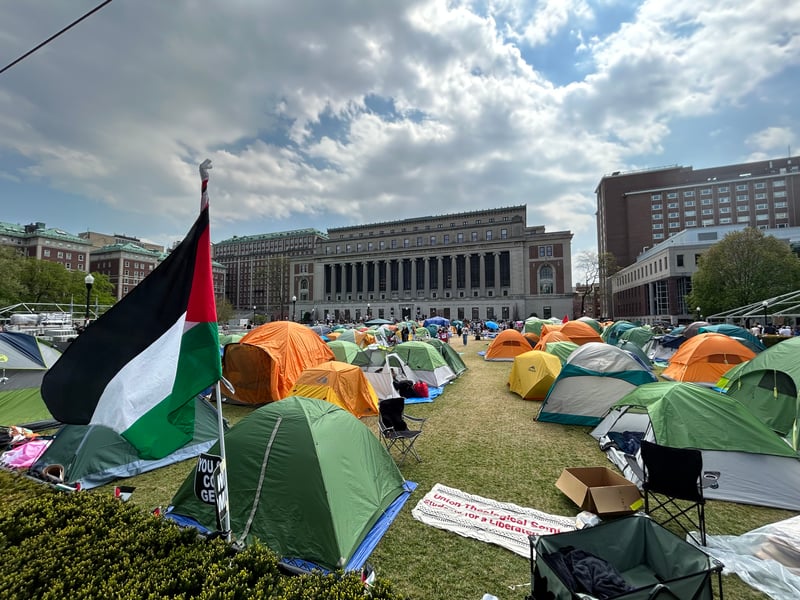
(CN) — Analysts with the Department of Homeland Security were moved from counterterrorism, trade and cybercrime units to establish a “Tiger Team” aimed at targeting pro-Palestine protesters on college campuses, according to an agency official.
Peter Hatch described the reshuffling on Wednesday while testifying at a federal trial against the Trump administration’s arrests and deportations of those protesters, which some students and faculty say is chilling their First Amendment rights.
Hatch is an analyst for Homeland Security Investigations, a subcomponent of Immigration and Customs Enforcement that specializes in violations of immigration law. He says Trump administration officials tasked his unit with gathering reports on foreign-born college students protesting Israel’s bombing campaign in Gaza with an eye toward deporting them.
Hatch said he had to move some personnel from units like counterintelligence to form what he called a “Tiger Team” homed in on probing the demonstrators.
“It required me to reallocate some of our analysts because of the workload,” he testified.
The shake-up started in March, Hatch said, when Homeland Security officials presented his team with a list of protesters’ names. A majority of the more than 5,000 names came from the Canary Mission, a controversial anonymously run website known for doxxing critics of Israel.
“Most of the names came from that website,” Hatch said. “But we were getting names and leads from many different sources.”
When probing the protesters, Hatch said his team was on the lookout for “indicators” that could suggest support for foreign terror groups like Hamas, like statements in support of terrorist leaders or donations to organizations affiliated with terror groups.
But even a statement like “free Palestine” could raise flags to the analysts, Hatch said Wednesday.
“These are on a case-by-case basis, but it could be [relevant] depending on the circumstances of that individual,” Hatch said.
Similarly, he acknowledged “it would not be against policy” for an analyst to include statements condemning the Israeli government in reports on a subject.
“The presence or existence of a report of analysis does not presume guilt or innocence,” Hatch clarified. “It’s just fact finding.”
But those reports would be passed along to the State Department, which has ultimately made the call to deem certain protesters, like Columbia University student Mahmoud Khalil, threats to U.S. foreign policy in their bids to deport them.
Hatch, who has been in his role since 2019, said he’d never before been ordered to look into foreign-born students’ roles in political protests.
“I don’t recall any instance where I was asked to review protest activity,” he said.
The plaintiffs in this case — higher education groups like the American Association of University Professors and the Middle East Studies Association — claim the government’s targeting of these protesters is dissuading students and faculty from engaging in their constitutionally protected rights to protest.
Several professors have already testified that the arrests of students like Khalil and Tufts University’s Rumeysa Ozturk intimidated other scholars from doing their work or speaking about certain issues.
“Following the arrest and the detention and the threat of deportation of several students … I felt that it was too risky for me to do research in the Middle East,” Brown University international studies professor Nadje Al-Ali told the court on Monday.
The plaintiffs argue this is an example of the government creating “a climate of repression and fear on university campuses.”
“It is terrorizing students and faculty for their exercise of First Amendment rights in the past, intimidating them from exercising those rights now, and silencing political viewpoints that the government disfavors,” the groups say in their lawsuit, filed in Boston’s federal court.
The two-week bench trial will be decided by U.S. District Judge William Young, a Ronald Reagan appointee who previously, in a separate lawsuit, lambasted the Trump administration for “palpable” discrimination in the slashing of public health funding.
 Follow @Uebey
 Follow @uebey.bsky.social
Subscribe to our free newsletters
Our weekly newsletter Closing Arguments offers the latest about ongoing trials, major litigation and rulings in courthouses around the U.S. and the world, while the monthly Under the Lights dishes the legal dirt from Hollywood, sports, Big Tech and the arts.