Search Articles


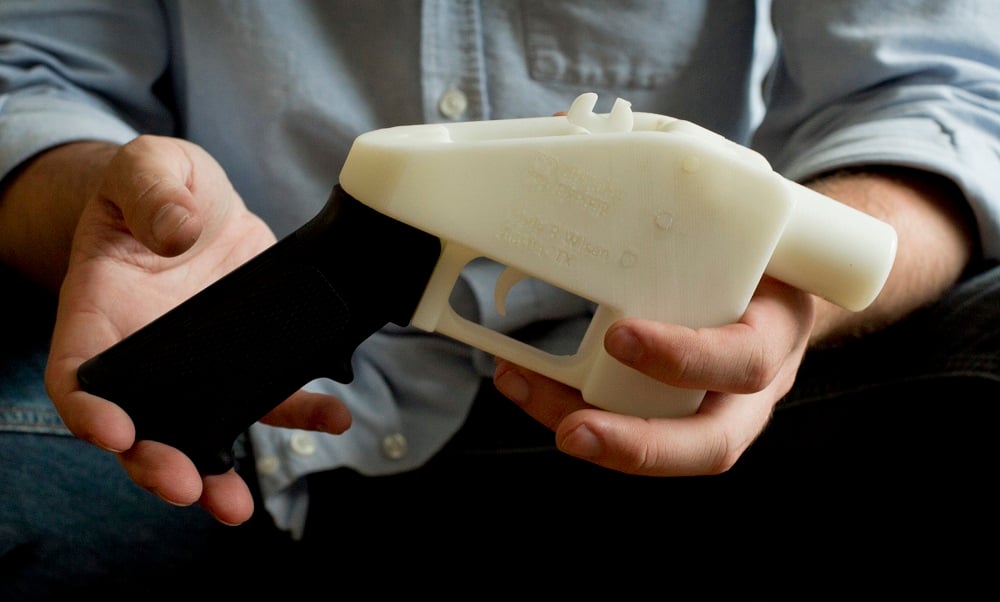
DENVER (CN) — A group of gunowners lack standing to seek an injunction against Colorado’s 2023 ban on the 3D printing of gun frames and receivers, a 10th Circuit panel has ruled.
Even so, those gunowners may seek relief against prohibitions on possessing and acquiring unserialized gun parts, the panel court said Thursday in a ruling that partially reversed a lower court. They also said the law “unambiguously” did not ban the practice of making guns from parts kits.
In 2023, Colorado lawmakers passed a law aimed at preventing unmarked homemade firearms or “ghost guns” from being used to commit crimes.
The law, which took effect in 2024, required homemade guns to be serialized. It also prohibited the 3D printing of frames and receivers without a license.
Joined by several Colorado residents who had bought unserialized gun parts, the National Association for Gun Rights sued the state in January 2024.
U.S. District Judge Gordon Gallagher, a Joe Biden appointee, denied an injunction in May 2024.
In his ruling, Gallagher said that several plaintiffs lacked standing. He also said the matter wasn’t ripe for suit because a rule from the Bureau of Alcohol, Tobacco, Firearms and Explosives already required parts to be serialized. The gun rights group appealed, bringing the case to the 10th Circuit.
On review, the appeals court affirmed the standing of Christopher Richardson, who owned unserialized parts that were rendered illegal under the new law. It declined to review whether other plaintiffs who gave up banned parts could also sue.
On the issue of ripeness, though, the 10th Circuit split with the lower court.
In a 25-page opinion, U.S. Circuit Judge Joel Carson, a Donald Trump appointee, noted that the U.S. Supreme Court was reviewing the ATF rule and that it was uncertain whether it would remain in effect.
Although the high court affirmed the rule in March 2025, it did not address the Colorado gunowners’ specific concerns over parts kits. The federal rule also does not address private sales, as Colorado’s law did.
“Unlike Colorado’s statute, the ATF final rule is inapplicable to private individuals,” Carson wrote. “The remaining question, then, is whether plaintiffs’ intended conduct includes purchasing unserialized firearm parts kits from private individuals.”
Under the appeal court’s review, the Colorado’s ban on manufacturing guns only addressed 3D printing — it did not prevent the assembling of parts kits, as plaintiffs had worried.
“After considering the statute in context, we conclude that the manufacturing ban unambiguously excludes plaintiffs’ intended conduct of making PMFs [privately made firearms] from firearm parts kits,” Carson wrote.
Carson was joined on the opinion by U.S. Circuit Judge Allison Eid, also a Trump appointee.
Senior U.S. Circuit Judge Paul Kelly, a George H.W. Bush appointee, penned his own 6-page opinion. He concurred on Richardson’s standing but disagreeing with the majority’s decision to resurrect the gunowners’ acquisition claims for private sales.
Given the court’s overall analysis and recent rulings, Kelly also suggested instructing the lower court to reconsider whether the state’s prohibition on possessing unserialized frames and receivers really falls squarely within the Constitution. Whether Gallagher takes the advice as he reevaluates the gunowners’ request for an injunction remains to be seen.
The Colorado Attorney General’s office did not immediately respond to a request for comment. The National Association for Gun Rights and the gunowners are represented by Denver attorney Barry Arrington, who also did not immediately respond to a request for comment.
This year, lawmakers introduced a new measure further restricting 3D printed guns which might be designed to evade receivers. After passing a final reading in the statehouse, the bill awaits the governor’s signature — and a promised challenge from Second Amendment advocates Rocky Mountain Gun Owners.
 Follow @bright_lamp
Subscribe to our free newsletters
Our weekly newsletter Closing Arguments offers the latest about ongoing trials, major litigation and rulings in courthouses around the U.S. and the world, while the monthly Under the Lights dishes the legal dirt from Hollywood, sports, Big Tech and the arts.