
 Search Articles


CHARLOTTE, N.C. (CN) — NASCAR and two teams suing it met once again in a Charlotte courtroom Tuesday over the teams’ attempt to dismiss NASCAR’s antitrust counterclaims.
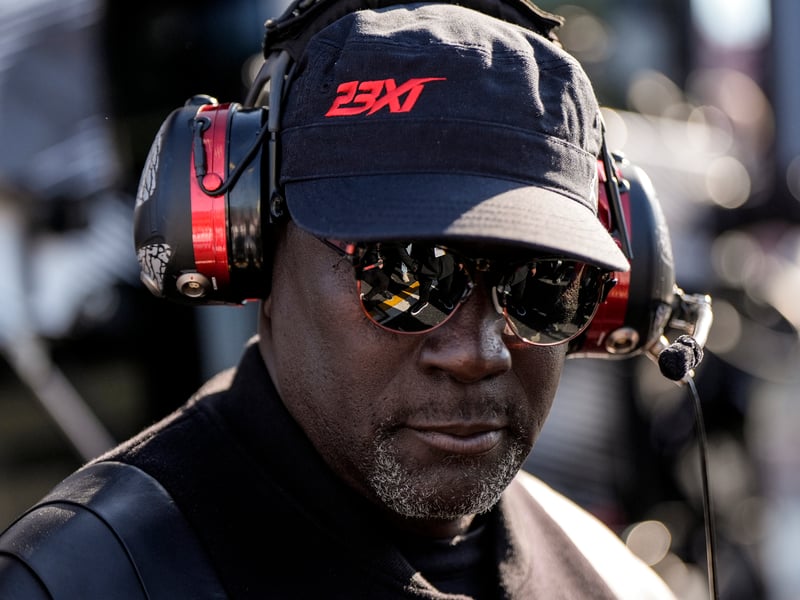
Front Row Motorsports and 23XI Racing — partially owned by basketball legend Michael Jordan — have asked the court to dismiss NASCAR’s countersuit. The teams sued the racing giant and its CEO, James France, in October 2024, claiming that NASCAR has a monopoly on the stock car racing industry and is forcing teams to sign anticompetitive contracts.
NASCAR, which filed counterclaims against the teams in March, filed an amended complaint in May, including a more detailed timeline of the teams’ negotiations over charter agreements, which grant them guaranteed race entry in the Cup Series.
In their original claims, NASCAR said that the teams and 23XI owner and sports agent Curtis Polk “engaged in a conspiracy and agreement in unreasonable restraint of interstate trade and commerce,” violating the Sherman Act, the same antitrust regulation the teams originally sued over. The teams put pressure on NASCAR to make terms more favorable to them and threatened teams that wanted to leave the team alliance that was negotiating new charter terms, NASCAR said.
In its amended arguments, NASCAR said that documents provided during discovery have allowed it to determine that teams colluded, and it added additional, redacted instances in which it claimed Polk conspired to drive negotiations in favor of the teams, which it says are horizontal competitors who cannot work together for better terms.
The teams stuck to a collectively agreed-upon plan, it said, even when teams had individual negotiations with NASCAR, monitoring each other to ensure they did not stray from the collective goal, instead acting as a unified body to seek permanent charters and more fixed revenue.
Front Row Motorsports and 23XI Racing participated in the Race Team Alliance, which jointly negotiated terms for the 2025 charter agreements for all the stock car racing teams. All the teams signed the same agreements, and they were not customized for the team or owner.
Joint negotiations with other teams don’t suffice as antitrust activity, Front Row and 23XI Racing claim. NASCAR also failed to define a relevant market, or claim any anticompetitive effects that resulted from the teams’ actions, they said, nor has it claimed an antitrust injury to competition other than itself.
In court Tuesday afternoon, attorney Jeffrey Kessler, representing the teams, argued for dismissal, claiming that NASCAR and its owner, France, are using the suit to retaliate against the teams and saying that simply participating in group negotiation is not a violation of the Sherman Act.
NASCAR agreed to participate in joint negotiations, he said, and they can’t now claim that group negotiations are anticompetitive behavior. NASCAR also can’t prove that the group negotiations hurt trade or the industry, he said, just NASCAR.
“The only thing they’ve alleged is that without bargaining, they would have had a better deal,” he said. “Harm to one competitor is not going to be a restraint to competition.”
Lawrence Buterman, who represented NASCAR and France, argued that the teams’ decision to boycott a team and owner meeting forced NASCAR into negotiating.
“NASCAR understood that they had no choice,” he said, because the teams may next boycott a race.
The joint negotiations also were anticompetitive because they harmed performance-based competition, Buterman said, as less money was going to races, meaning less funds going to teams to invest in cars and drivers. Had the negotiations not been collective, there would have been more funds, he said, which would have led to more competition between chartered teams and between open teams, who have to qualify for race entry.
The judge struggled with NASCAR’s application of antitrust claims on just the counterdefendants and not all the teams that had participated in the negotiating process.
“We are permitted to sue the individual who we want to,” insisted Buterman, saying that NASCAR does not have any issue with the rest of the teams.
The teams held group discussions until the 11th hour and then entered into individual negotiations, which Buterman said is “exactly how cartels operate.”
“How can you have individual negotiations over terms that impact everybody?” U.S. Circuit Court Judge Kenneth Bell asked.
NASCAR consented to group negotiations, Kessler said.
Kessler also emphasized that arguments Buterman raised over the impact of the joint negotiations on competition were not brought up in NASCAR’s counterclaim, and they are not clear allegations specified in the complaint. NASCAR did not allege that conditions or agreements for open teams got worse because of renegotiating, he said, and instead, the open team agreement did not change.
The joint negotiations were just that — group negotiations, he said. That doesn’t make them a “conspiracy and a restraint of trade.”
“Joint negotiation by itself is not an antitrust violation that restricts trade,” he said. Kessler said after the hearing that the teams are not seeking to invalidate the charter agreements, but are instead looking for basic monopolization relief.
“Merely having joint negotiations is not an antitrust violation,” he said. “They had them in 2016 and never complained about them. They had them again in ‘24, ‘25, and never complained about them until after this lawsuit was filed and they looked for something to retaliate with, that’s all that this is about.”
Bell didn’t appear fully convinced of either party’s claims, urging them to come to some kind of agreement.
“It’s hard to picture a real winner coming out of this if this goes to the mat,” said Bell.
The case has been tumultuous for all participants. The parties finally agreed for the teams to compete as open teams, before the court required NASCAR to allow them to compete as charter teams without waiving their ability to sue the sports company. NASCAR appealed this, and early in June, a Fourth Circuit panel reversed the order, finding that NASCAR should not have been forced to allow the teams to compete under their preferred terms, with guaranteed race entry, although Kessler confirmed Tuesday that the teams would race through the end of the season. The case is scheduled to go to trial on Dec. 1, in advance of the 2026 racing season.
Counsel for NASCAR and France declined to comment.
 Follow @SKHaulenbeek
 Follow @shaulenbeek.bsky.social
Subscribe to our free newsletters
Our weekly newsletter Closing Arguments offers the latest about ongoing trials, major litigation and rulings in courthouses around the U.S. and the world, while the monthly Under the Lights dishes the legal dirt from Hollywood, sports, Big Tech and the arts.