Search Articles


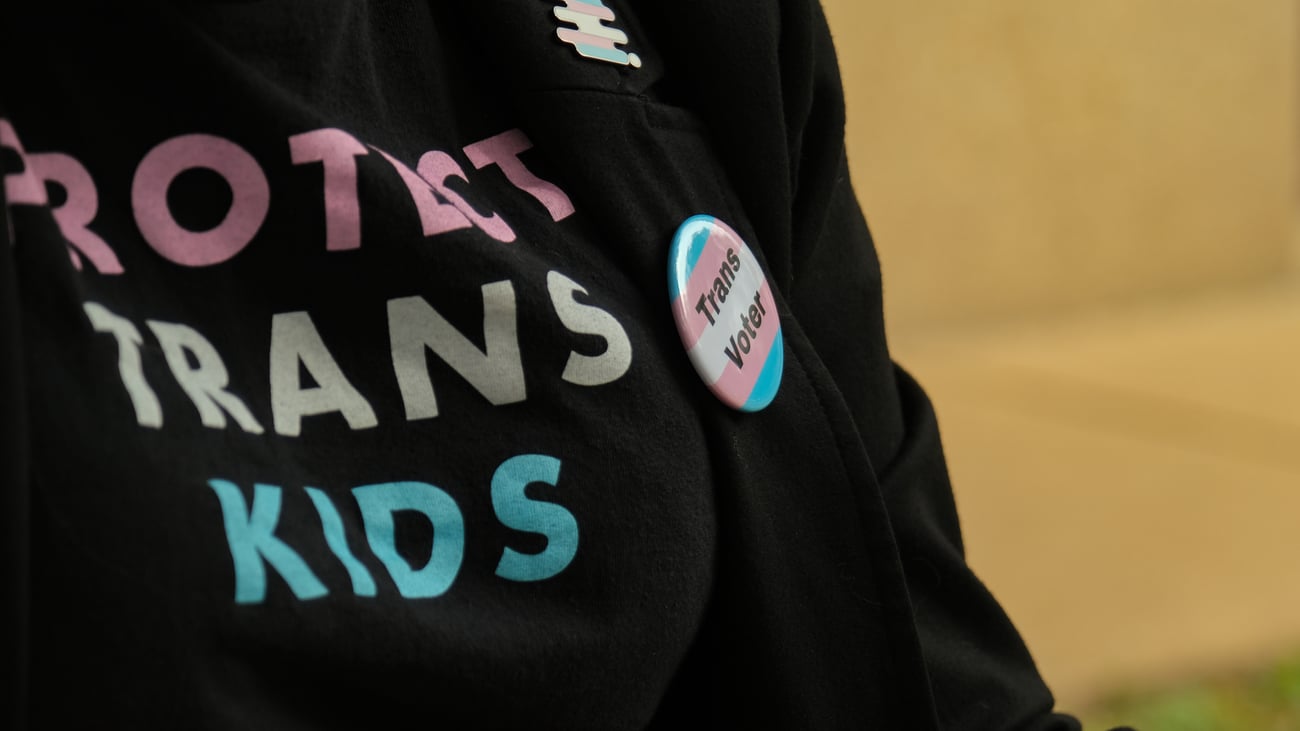
BOSTON (CN) — Bonnie Manchester, a middle school teacher in Ludlow for 23 years, was fired because she revealed to a father his 11-year-old wanted to start using a boy’s name and masculine pronouns. She told the First Circuit Monday her termination was unconstitutional — and while the three-judge panel seemed divided, most of the questions suggested an interest in seeing the case at least move forward to the next stage.
“We have an 11-year-old. Don’t the parents have a right to know what’s happening to their daughter?” asked a skeptical U.S. Circuit Judge Gustavo Gelpí.
This is the second time the town of Ludlow has had to defend itself in the First Circuit over the school’s actions regarding this particular child. The incident in early 2021 created a ruckus in part because the school adamantly claimed it had a right to keep parents in the dark about students’ gender identities while supporting their transitioning, with the superintendent publicly accusing any parents who objected of “intolerance, prejudice and bigotry.”
In 2023, the court heard a claim brought by the child’s parents that the school had violated due process by keeping the child’s gender identity a secret. After mulling the question for a year and five months — an unusually lengthy period — the court ultimately decided the school hadn’t violated the parents’ fundamental right to direct their child’s upbringing.
Manchester, who had previously received “exemplary” evaluations for communicating with parents about sensitive personal matters, was dismissed for “conduct unbecoming a teacher” after she informed the father what was happening. She claims she has a First Amendment right to speak about a matter of public concern and that the town is liable because she was fired pursuant to an unconstitutional municipal policy.
Gelpí, a Joe Biden appointee, seemed focused on what he perceived as the unfairness of the situation. “If this is not a matter of public concern,” he said, then “parents of young children aren’t entitled to know that the school is helping a child with a gender transition. No matter how mature, the child is still 11 years old … . If the parents have a right, then the teacher was supporting that right.”
But U.S. Circuit Judge O. Rogeriee Thompson, a Barack Obama appointee, said there was little evidence of a municipal policy that differed from state regulations. “Are there any other allegations of enforcement of this so-called unwritten policy?” she asked.
Manchester’s lawyer, Ryan McLane, said he couldn’t cite any, but that was because the trial judge had dismissed the case without allowing his side to conduct discovery.
“You talk about these folks going rogue,” Thompson replied. “A policy means a policy that’s applicable across the board. … There has to be a plausible allegation based upon some type of factual assertion about an unwritten policy.”
However, U.S. Circuit Judge Joshua Dunlap repeatedly suggested the school’s actions appeared to contravene state regulations and that Manchester was deprived of a chance to conduct discovery and establish that this was a repeated practice.
“What would be enough on the unwritten policy?” the Donald Trump appointee asked. “Plaintiffs need to allege facts they’re not privy to. What’s enough to get discovery?”
Ludlow’s lawyer, David Lawless of Robinson Donovan in Springfield, said Manchester could have gotten more information by making public records requests. He also said Ludlow’s policy was simply to follow state regulations.
“But they didn’t,” Dunlap commented.
The judges also tangled over whether Manchester was speaking about a matter of public concern or simply breaking a school rule.
“There are few issues in America today that have attracted more public interest,” commented Manchester’s other lawyer, Frank McNamara. “Even the lower court said the speech touched on a matter of public concern.”
But Lawless insisted “speech can include both matters protected by First Amendment and matters that aren’t,” and “one child’s gender identity is no more a matter of public concern than whether the child got an A or a D in history last semester.”
In this case, he said, Manchester “wasn’t terminated for talking to the father about general matters of public concern. She was fired for talking about the student when she had been told not to.”
“So if she was acting as a teacher, it was OK to fire her?” Gelpí asked.
“Yes,” Lawless answered. “It may be distasteful, but it doesn’t violate the Constitution.”
“What if instruction was unlawful?” Gelpí persisted. “Can she be fired? Is that a constitutional violation?”
“It may be unlawful as to the parent’s rights,” Lawless said, “but not as to the teacher’s rights.”
Subscribe to our free newsletters
Our weekly newsletter Closing Arguments offers the latest about ongoing trials, major litigation and rulings in courthouses around the U.S. and the world, while the monthly Under the Lights dishes the legal dirt from Hollywood, sports, Big Tech and the arts.
Additional Reads

 Chief on the hook for excessive force April 6, 2026
 Three-day delay to pick up guns April 6, 2026