
 Search Articles


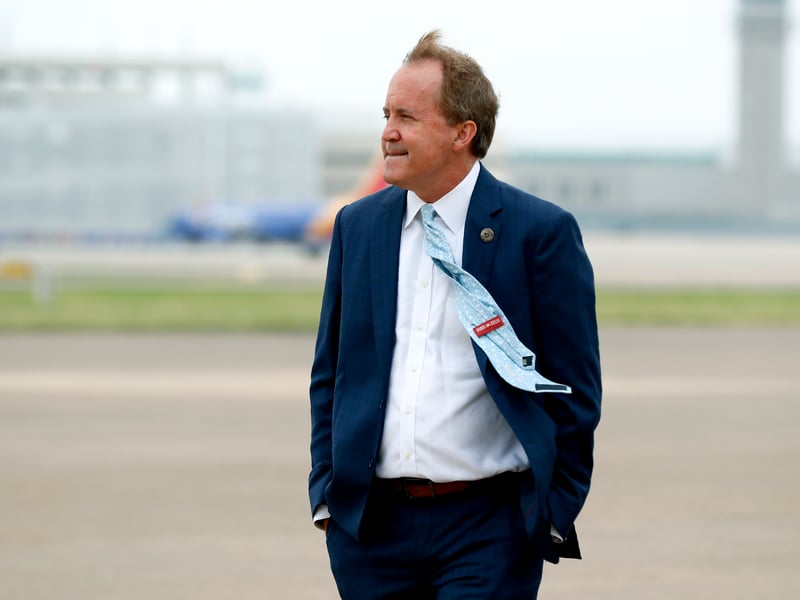
WASHINGTON (CN) — A D.C. Circuit panel appeared skeptical on Wednesday of Texas Attorney General Ken Paxton’s effort to sink a First Amendment suit brought by progressive watchdog Media Matters.
The challenge stems from an investigation Paxton opened into the organization following its report that major ad campaigns on X, formerly Twitter, ran next to white nationalist and antisemitic content on the app in the wake of Elon Musk’s takeover of the social media site.
As part of the probe, Paxton issued a civil investigative demand — a type of subpoena commonly referred to as CID — to the organization, seeking documents related to X, Musk or X CEO Linda Yaccarino. Paxton claimed Media Matters had engaged in fraud against X and violated Texas law.
Aria Branch, of Washington firm Elias Law, represented Media Matters on Wednesday and rejected Paxton’s assertion, describing the case as unique with potentially major impacts on the First Amendment and Washington courts’ authority.
“It involves the extraordinary overreach by a retaliatory attorney general who came to D.C. to harm a D.C.-based media organization by serving a sweeping demand for their internal and external documents because he didn’t like their speech,” Branch said.
Media Matters objected to Paxton’s demand as an infringement on its free speech and press rights before filing suit, in which U.S. District Judge Amit Mehta granted a preliminary injunction barring Paxton from enforcing the demand.
Paxton appealed, arguing that as a state attorney general, the Washington courts had no jurisdiction over him in the case.
Media Matters argues that even the unenforced demand harmed the group by chilling its speech in the first place.
“They could not wait for Paxton to decide to enforce the demand and have the CID hanging over every email they send, every editorial decision they make, every article they decide to publish, like the sword of Damocles,” Branch said.
U.S. Circuit Judge Harry Edwards, a Jimmy Carter appointee, asked Branch whether any precedent supported her argument that a First Amendment chill was enough to survive Paxton’s challenge.
Branch pointed to two Fourth Circuit Court of Appeals cases, State v. Haynes and Futrell v. Cook , which held that a First Amendment chill amounted to a present and ongoing injury.
Lanora Pettit, the principal deputy solicitor general for Texas, urged the panel to reject Media Matters’ First Amendment claims, arguing that the organization’s reporting amounted to fraud.
Pettit said that the article violated Texas’ Deceptive Trade Practices Act — specifically Section 17.46(b)(8), which prohibits “commercial disparagement of the good or service of another” — by making inaccurate representations about X’s brand-protection technology that “possibly harmed advertisers and consumers in Texas.”
Media Matters’ reporting seemingly led large advertisers like Apple and Disney to pull their ads from the platform, after which X sued the organization in November 2023, in the Northern District of Texas. The social media platform accused Media Matters of misrepresentation.
U.S. Circuit Judge Florence Pan, a Joe Biden appointee, appeared unconvinced and expressed concern that Pettit’s argument could lead to far-reaching impacts.
“Is it your position that Attorney General Paxton can issue a CID, which is fairly intrusive and asks for a lot of information, to any news outlet in the United States that publishes a story he believes contains something that might be misleading?” Pan asked.
Pettit quickly denied that interpretation, clarifying that the deceptive trade practices statute requires a connection to a good or service in Texas.
She said that because X is now based in Bastrop, Texas — after Musk moved the headquarters from California in September — the loss of advertisers, X’s primary customers, due to supposed misrepresentations potentially satisfied the statute’s requirements.
When Pan again pushed Pettit on whether Paxton could issue a demand to any news outlet anywhere, Pettit said he could, so long as there was a “sufficient nexus to Texas.”
Pettit argued that the panel could easily dispose of the case by following the 1964 Supreme Court case Reisman v. Caplin, which held that a preenforcement challenge to a non-self-executing documents request was not ripe for review.
Otherwise, Pettit said, the case should ultimately be addressed in Texas state court because Media Matters had violated state law.
“This federal court is not the appropriate location to adjudicate the validity of an effort by the attorney general of Texas to investigate the potential violations of Texas law in Texas, an effort which is, in any event, entirely valid,” Pettit said.
U.S. Circuit Judge Karen Henderson, a Ronald Regan appointee, rounded out the panel.
 Follow @Ryan_Knappy
Subscribe to our free newsletters
Our weekly newsletter Closing Arguments offers the latest about ongoing trials, major litigation and rulings in courthouses around the U.S. and the world, while the monthly Under the Lights dishes the legal dirt from Hollywood, sports, Big Tech and the arts.