
 Search Articles


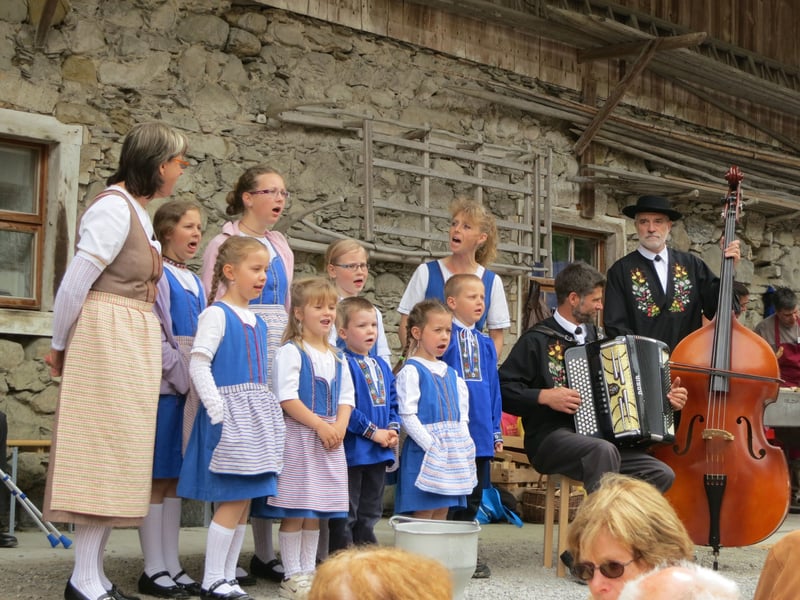
GENEVA (AFP) — Yodeling, the traditional singing of herders in the Swiss Alps, was recognized by the United Nations on Thursday as part of the world’s cultural heritage.
Yodeling was added to UNESCO’s Representative List of the Intangible Cultural Heritage of Humanity, at a meeting in New Delhi.
“As the emblematic song of Switzerland, yodeling encompasses a wide variety of artistic expressions and is deeply rooted in the population,” the Swiss culture ministry said.
Yodeling is passed on in families, clubs, music schools or simply between singers.
More than 12,000 yodelers are members of one of the 711 groups of the country’s Federal Yodeling Association.
“As a characteristic vocal technique, yodeling alternates between chest and head voice and uses meaningless syllables that are often associated with local dialects,” the culture ministry explained.
Natural yodeling consists of melodies without lyrics, while the yodeling song combines verses and refrains and often touches on nature and everyday experiences, it added.
“Whether soloist, in small groups or in choirs — sometimes accompanied by instruments such as the accordion — the yodel is characterized by its rich sound and its presence at concerts, festivals and competitions, which are often associated with the wearing of regional costumes.”
Connection to the mountains
For Markus Egli, choir director of the Burgerturner-Jodler club in Lucerne, UNESCO recognition is a good way to bolster the continuation of yodeling.
“This singing is part of our culture, of Switzerland’s identity,” he told AFP recently, adding that according to oral tradition, it was originally “a means of communication from one mountain to another.”
Dressed in traditional attire and wearing a felt hat, 79-year-old Max Britschgi, a member of the choir for nearly 50 years, saw it as a celebration of nature, explaining that he felt “connected to the mountains” through yodeling.
The tenor also appreciates the “camaraderie and connection with others” brought by singing together.
Switching between chest voice and the higher head voice is “the most complicated” aspect, according to Yvonne Eichenberger, 35, the choir’s soprano.
“It requires time and practice,” she said.
Degrees and ‘yodelton’
Julien Vuilleumier, who advised the Swiss culture ministry on the UNESCO application, said the origins of yodeling were unclear.
However, “yodeling as we know it today was codified in the 19th and 20th centuries” with “cross-influences” from southern Germany, and the Tyrolean mountains of Austria and Italy, he told AFP ahead of UNESCO’s decision.
The reach of yodeling extends beyond Switzerland. Through waves of emigration, it has become integrated into U.S. folk music, including country.
It is continuing to evolve, extending into “more experimental forms, bordering on jazz, pop and rock,” Vuilleumier explained, highlighting “yodelton” — a creation by a Swiss artist that blends yodeling with reggaeton rhythms.
Yodeling is even now in higher education, with a master’s program established in 2018 at Lucerne University of Applied Sciences and Arts.
—
By ROBIN MILLARD Agence France-Presse
Subscribe to our free newsletters
Our weekly newsletter Closing Arguments offers the latest about ongoing trials, major litigation and rulings in courthouses around the U.S. and the world, while the monthly Under the Lights dishes the legal dirt from Hollywood, sports, Big Tech and the arts.