
 Search Articles


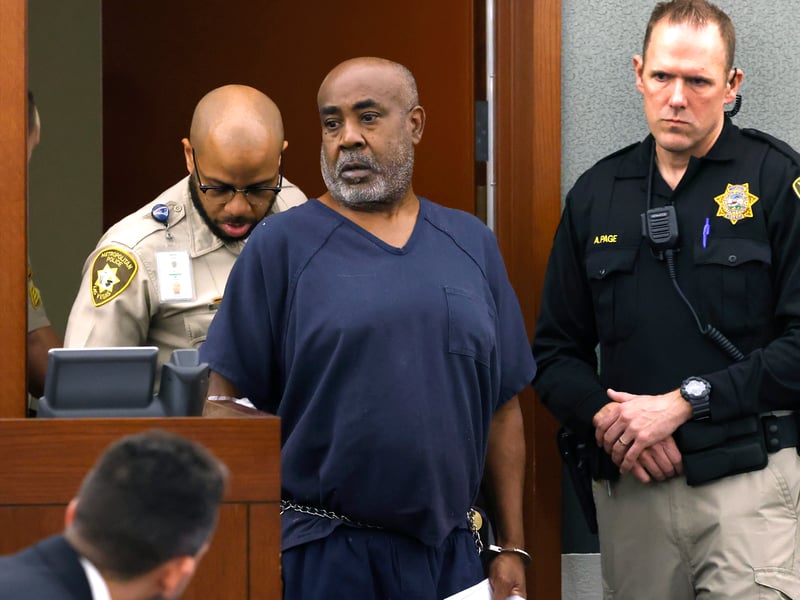
LAS VEGAS (CN) — The suspect facing trial in the 1996 murder of rapper Tupac Shakur was arraigned on a battery charge Thursday, stemming from a jailhouse altercation with another inmate in December.
According to a grand jury indictment, Duane “Keffe D” Davis and the other inmate got into a fight and continued fighting even after officers ordered them to stop and tried to separate them. The other inmate, Rochlon Hamilton, faces the same battery charge.
Davis pleaded not guilty to the battery charge before Judge Nadia Krall and invoked his right to a fair and speedy trial. A calendar call is set for April 1 and the battery trial is set for April 7. Bail in the case had previously been set at $50,000. Hamilton pleaded not guilty and waived his right to a fair and speedy trial.
Davis had been set to appear in court Tuesday for a trial readiness hearing in the Tupac murder case but did not show. When asked by Judge Carli Kierny if he wanted to waive his client’s appearance, Davis’ attorney Carl Arnold said “No, he’ll probably want to be here, your honor.” Kierny continued the hearing until Feb. 18.
Las Vegas prosecutors charged Davis on one count of murder with use of a deadly weapon, and he’s pleaded not guilty to first-degree murder. He claimed in a memoir that he was in the car with his nephew, Orlando “Baby Lane” Anderson, who he claims was responsible for shooting and killing Shakur on a Las Vegas interstate on Sept. 7, 1996.
Anderson denied involvement in the death of Shakur and was killed in 1998 in a shooting in Compton, California. Authorities believe Shakur’s murder stemmed from competition between East Coast members of the Bloods and the West Coast group called the Crips. Davis was part of the latter group fighting for dominance in the “gangster rap” genre.
Davis has been a source of controversy throughout the proceedings, specifically with his bail. Music manager Cash Jones, also known as “Wack 100”, paid $112,000 to a bail bondsman for Davis’ release. However, prosecutors say Jones gave Davis the bail money in exchange for the right to produce a series about Davis’ life — a deal that would violate Nevada’s law barring “profit or benefit from wrong.” Kierny set Davis’s bail at $750,000 in January 2024.
In sworn testimony, Jones said such a deal never existed, claiming it was only a gift.
However, prosecutors played recordings of an interview Jones gave on VladTV and a jailhouse phone call between Jones and Davis. In both recordings, Jones spoke about the prospect of a creating a series with Davis — even claiming on VladTV that the series would be a “stipulation” of him paying bail.
Jones downplayed the interview with VladTV, saying his comments were made up for views. Still, Kierny denied releasing Davis from jail in June before his trial because of Jones posting his bond.
“It’s a shame that the world takes what we vlog about as real,” Jones said.
That’s not the only controversy surrounding Davis’s bail money. His family started an online fundraiser called “Free Keefe Davis” to secure his release from jail while he awaits trial, which encouraged anonymous donations. The family placed blame on the criminal justice system, stating that Davis had a “generous benefactor pay for his bail.”
“The person’s motive should have never been legally considered by Judge Kierny just solely by the legitimacy of the business,” the fundraiser said.
 Follow @IceColdWJacob
Subscribe to our free newsletters
Our weekly newsletter Closing Arguments offers the latest about ongoing trials, major litigation and rulings in courthouses around the U.S. and the world, while the monthly Under the Lights dishes the legal dirt from Hollywood, sports, Big Tech and the arts.