
 Search Articles


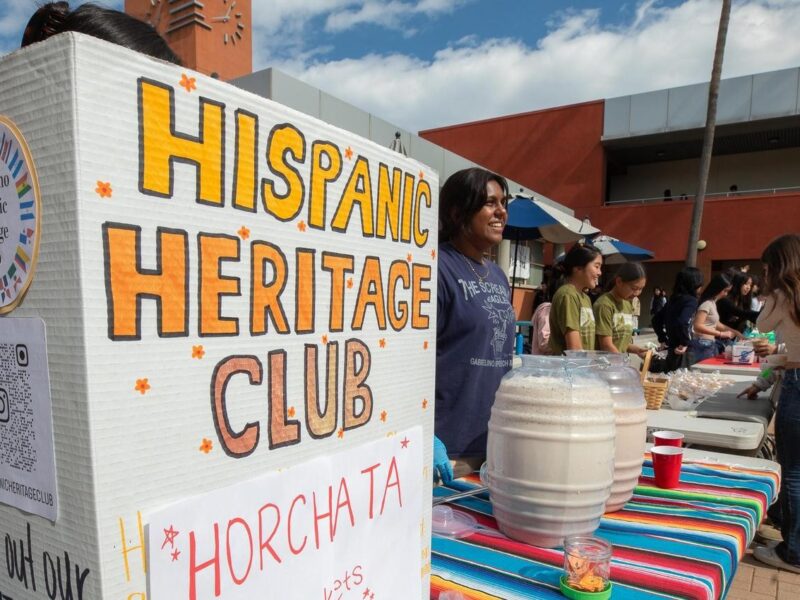
(CN) — U.S. Hispanics are divided on whether their identity helps or hurts them in America, according to a new survey from the Pew Research Center.
A third of participants in the Center’s National Survey of Latinos say being Hispanic hurts their ability to get ahead in America to some extent, according to a new report. A quarter of participants say being Hispanic helps while 40% percent say it makes no difference.
Similarly, about a third of participants told the center they faced discrimination in the past year because of their Hispanic background. Conversely, another third of participants said someone had expressed support for them because of their heritage.
A majority (54%) say they have not experienced any of four discrimination incidents asked about in the survey, including offensive name calling or criticism for speaking Spanish in public.
Hispanics’ views about their identity differ sharply based on their political leaning, according to the center.
“Like Republicans and Democrats overall, Hispanic partisans disagree on issues ranging from the economy to immigration. Hispanics also see the impact of their Hispanic identity very differently depending on their 2024 presidential vote and their party affiliation, according to the October survey,” the center states.
Hispanics who voted for Donald Trump in the 2024 presidential election were far less likely than those who backed Kamala Harris to report discrimination or disadvantage because of their heritage.
Almost 5,000 Latino adults participated in the National Survey of Latinos this past October. The center notes the survey was conducted before violence erupted in Minneapolis this year in response to President Donald Trump’s aggressive immigration crackdown in the city, which may have influenced how Hispanics view their identity. A turbulent economy amid the on-again-off-again Iran War may also have impacted perceptions.
Hispanics are the second-largest racial or ethnic group in the U.S., accounting for about 20% of people in the country, according to the center. Forty-two percent of all Hispanic adults are immigrants. About 30% are second-generation Hispanics — people born in the U.S. to at least one immigrant parent — and about 25% of Hispanics are third generation or higher.
In the 2024 presidential election, nearly half of Hispanic voters backed Trump, up from 33% in the 2020 election. But results from the same survey released in November suggest U.S. Hispanics have soured on Trump since his election, with majorities disapproving of his job performance, immigration approach and economic impact.
A majority of respondents (57%) who voted for Trump in 2024 say being Hispanic neither helps nor hurts their ability to get ahead in America. About a quarter of Hispanic Trump voters say it helps to some degree and 15% say it hurts to some degree.
By contrast, almost 40% of Hispanics who voted for Kamala Harris say their heritage hurts their ability to get ahead. Another 38% says it neither helps nor hurts and 23% say it helps.
Harris voters are more likely to say being Hispanic is extremely or very important to how they see themselves (69%) compared to Trump voters (42%). Harris voters were also more likely than Trump voters to say they have been discriminated against or were treated unfairly because of their background by someone who is not Hispanic (39% vs. 15%).
About half of Harris voters say they feel an extreme or frequent responsibility to look out for other U.S. Latinos. By contrast, more than 60% of Hispanic Trump voters say they rarely or never feel the same responsibility.
Political differences also arise in how Hispanics identify themselves.
About 53% of Hispanics identify themselves by their country of origin or heritage, either on its own or combined with American (Mexican or Mexican American). Twenty-seven percent use a pan-ethnic term, such as Hispanic or Latino, and 18% describe themselves simply as American.
Trump voters and third-or-higher-generation Hispanics are more likely to say they are American (43% and 40%, respectively). By contrast, Harris voters and Hispanic immigrants are more likely to describe themselves by their country of origin — either alone or combined with American.
The survey found respondents strongly prefer the pan-ethnic term Hispanic over Latino (54% vs. 30%) — a preference that has persisted since the center began studying the issue in the early 2000s. Only 1% of respondents say they prefer Latinx or Latine.
 Follow @SteveGarrisonPC
Subscribe to our free newsletters
Our weekly newsletter Closing Arguments offers the latest about ongoing trials, major litigation and rulings in courthouses around the U.S. and the world, while the monthly Under the Lights dishes the legal dirt from Hollywood, sports, Big Tech and the arts.
Additional Reads



 John Deere settles tractor repair antitrust suit July 8, 2026